Demystifying the Text. Recovering the Context.
Welcome to Paper Calf, a platform dedicated to the critical, historical, and literary analysis of the Bible. We examine ancient Mediterranean and Near Eastern texts not as infallible divine dictation, but as profound human artifacts shaped by the socio-economic, political, and cultural realities of their time.
The Meaning Behind the Name
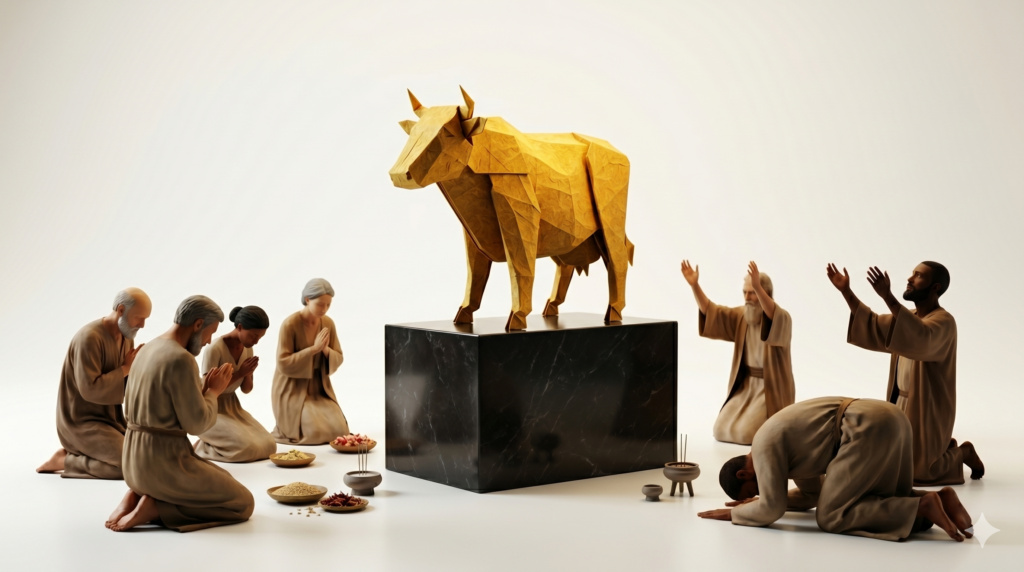
In biblical tradition, the Golden Calf represents the ultimate act of misdirected reverence—worshipping an object of human creation rather than the reality it was supposed to point toward. Today, a similar phenomenon exists in the form of biblical inerrancy: the elevation of the physical text to the status of a perfect, unquestionable divine object.
This is the “Paper Calf.”
When the Bible is venerated as an inerrant idol, its actual historical complexities, literary structures, and human origins are obscured. We seek to dismantle this approach, replacing dogmatic assumption with solid, evidence-based scientific research and historical-critical methodology.
Our Approach
We operate from a strictly non-devotional standpoint, rooted in academic consensus. Our daily articles strip away centuries of theological domestication to ask fundamental questions: Who wrote these texts? Under what geopolitical pressures? What were the socio-economic realities of their original audiences?
By treating these writings as human literature, we can appreciate the sophisticated ways ancient authors navigated their specific circumstances—from the literary framing of parables to the political realities underlying prophetic narratives.
Written For Us, Not To Us
Rejecting the “Paper Calf” does not mean discarding the text. We recognize immense value in these ancient stories when we approach them for what they actually are.
As a prominent scholar once noted, the Bible was written for us, but it was not directed to us. Its authors did not have modern readers in mind; they were addressing the urgent crises, theological debates, and cultural shifts of their own eras. By stepping into their world, we can draw distinct intellectual and philosophical benefits without forcing the text to bear the impossible weight of inerrancy.
We invite you to join us daily as we read critically, think historically, and explore the texts behind the traditions.