
Few biblical relationships have generated as much modern debate as the bond between David and Jonathan. In recent decades, the story has become a cultural battleground. For many traditionalists, they are the ultimate paradigm of platonic male friendship. For many modern LGBTQ+ readers, the text is a clear, ancient record of a same-sex romantic relationship.
The text certainly provides plenty of ammunition for the latter interpretation. 1 Samuel states that Jonathan’s soul was “knit to the soul of David,” and that Jonathan “loved him as his own soul.” Jonathan strips off his clothes and weapons and gives them to David. They weep and kiss each other. And in David’s famous lament after Jonathan’s death, he cries: “Your love to me was wonderful, passing the love of women.”
If we read this text through a modern, 21st-century Western lens, the romantic conclusion feels almost unavoidable. But when we step back and read it through the historical-critical lens of the ancient Near East, a very different—and highly political—reality emerges.
The Political Vocabulary of “Love”
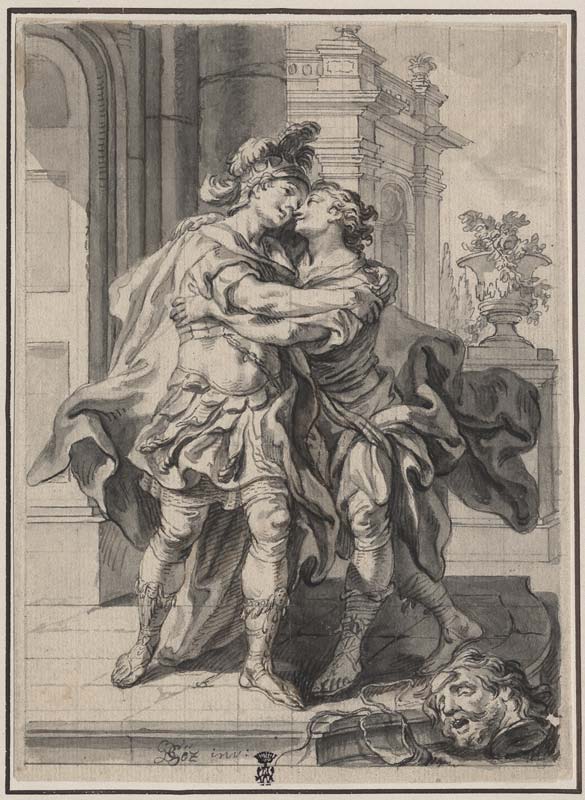
The first hurdle we face is linguistic. In modern English, “love” is almost exclusively an emotional or romantic term. But in the ancient Near East, the Hebrew word for love (‘ahabah) had a very specific, heavily utilized political meaning.
In the ancient world, international treaties and covenants between kings and their vassals were legally framed in the language of affection. A vassal was legally required to “love” his suzerain (the high king). In this context, “love” did not mean romantic butterflies; it meant absolute, undivided political loyalty.
When the biblical text repeatedly emphasizes that Jonathan “loved” David, it is making a profound political statement. Jonathan was the crown prince, the son of King Saul, and the rightful heir to the throne. By “loving” David, Jonathan is legally and politically pledging his loyalty to a rival dynasty.
The Stripping of the Armor
This political reality is vividly illustrated in 1 Samuel 18, when Jonathan strips off his robe, his tunic, his sword, his bow, and his belt, and hands them to David.
To a modern reader, stripping off clothes in a private meeting carries obvious sexual undertones. But to an ancient Israelite, this was a legally binding, symbolic act of abdication. In the ancient Near East, a person’s garments—especially royal robes and military weapons—represented their status and authority.
By handing his royal garments and weapons to David, Jonathan is physically transferring his right of succession. The biblical scribes are brilliantly using this scene to legitimize David’s usurpation of the throne. The text is telling the reader: David didn’t steal the crown from Saul’s family; the rightful heir voluntarily handed it to him.
“Passing the Love of Women”
But what about David’s heartbreaking lament in 2 Samuel 1, where he declares that Jonathan’s love surpassed the love of women?
To understand this phrase, we have to strip away our modern, romanticized view of marriage and look at the brutal reality of ancient patriarchy. In the ancient Levant, marriages were rarely about romance or soulmates. They were economic transactions and political alliances arranged between families. Women were often treated as property, existing to secure alliances and produce male heirs.
Because marriage was fundamentally an unequal, transactional arrangement, the ancient world rarely viewed the bond between a man and a woman as the highest form of relational intimacy. The highest, most noble bond a man could experience was the covenant loyalty between two warriors—a bond forged in blood, combat, and mutual survival between equals. When David says Jonathan’s love surpassed the love of women, he is elevating their warrior-covenant above the transactional, domestic reality of ancient marriage.
The Scribal Propaganda
So, were David and Jonathan lovers?
Historians generally agree that we simply cannot know what happened behind closed doors. Human sexuality has always been complex, and it is impossible to definitively rule out a physical relationship. However, trying to force David and Jonathan into modern categories of sexual orientation is ultimately an anachronism—it asks the text a question it was never designed to answer.
When we tear down the Paper Calf, we see the story for its primary literary function: it is a masterpiece of royal propaganda.
The scribes who wrote the Books of Samuel belonged to the southern court of Judah, centuries later. Their primary goal was to justify why David (a southerner) had the right to replace King Saul (a northerner). To do this, they crafted a narrative where Saul’s own son recognizes David’s divine right to rule. By wrapping this brutal political transition in the beautiful, emotional language of covenant loyalty and profound love, the scribes created a story that shielded David from accusations of treason, ensuring his dynasty would be remembered as legitimate, chosen, and beloved.
-
Beyond Abstinence: Defining the Architecture of Purity Culture
For many raised in late-20th-century evangelicalism, “abstinence” and “purity culture” are frequently treated as exact synonyms. However, while abstinence is a private historical ethical choice, purity culture is a modern, highly visible sociological construct. This article examines the architecture of the 1990s movement—from purity pledges to the courtship model—and explains why disentangling the ancient ethic from the modern subculture is the crucial first step in understanding its lasting psychological impact.
-
How Can Modern Churches Build Strong Communities Without Sacrificing Intellectual Honesty?
Can a church remain strong when its members question traditional interpretations of the Bible?Discover how shared values, meaningful relationships, and intellectual honesty can help modern Christian communities thrive without demanding agreement on every question.
-
A Voice from the Dust: How the Discovery of Ugarit Rewrote Biblical Scholarship
The accidental discovery of the ancient city of Ugarit in 1928 transformed biblical scholarship. Its texts provided crucial insights into Biblical Hebrew, uncovered the mythology of ancient Canaan, and revealed how Israelite religion developed within the wider cultural world of the ancient Near East.
-
Did Paul Believe Christians Go to Heaven? Paul’s Cosmos, Christology, and Hope of Resurrection
What did Paul think heaven was, who did he believe Jesus was, and what did he expect to happen after death? Explore Paul’s first-century Jewish apocalyptic worldview, his complex understanding of Jesus, and his expectation of bodily resurrection and the liberation of creation.
-
The Whistleblower in the Dirt: Unearthing the Socio-Economic Reality of the Talents
What’s the Parable of the Talents really about? Squadering your abilities or is there more? Let’s dig a little deeper.