
When reading the four Gospels, it is easy to blend them together into a single, seamless narrative. But when historians lay the Gospel of John side-by-side with the Synoptic Gospels (Matthew, Mark, and Luke) and track the timeline of Jesus’ final days, they hit a massive, irreconcilable chronological wall. The problem centers on one specific question: Was the Last Supper a Passover meal? Depending on which Gospel you read, you will get two entirely different, mutually exclusive answers. Modern apologists frequently try to resolve this glaring contradiction by claiming the authors were simply using “different calendars.” But when we examine the historical realities of first-century Jerusalem, this defense completely falls apart.
To understand why, we have to look at the conflicting timelines and the brutal logistics of ancient temple sacrifice.
The Synoptic Timeline: Jesus the Host
In the Synoptic Gospels (best represented by Mark 14), the timeline is unambiguous. The Last Supper is the Passover meal.
Mark explicitly writes that on the “first day of the Festival of Unleavened Bread, when it was customary to sacrifice the Passover lamb,” Jesus’ disciples ask him where they should prepare the Passover meal. They secure a room, the lamb is slaughtered, and they eat the sacred meal that evening (the beginning of the Jewish day of Nisan 15).
During this Passover meal, Jesus institutes the Eucharist (the bread and the wine). Later that night, he is arrested in Gethsemane, and he is crucified the following morning. In the Synoptics, Jesus is the host of a new Passover.
The Johannine Timeline: Jesus the Lamb
When you turn to the Gospel of John, the timeline shifts dramatically.
In John 13:1, the author explicitly states that the Last Supper takes place “just before the Passover Festival.” During this meal, they eat regular bread, not unleavened bread. Furthermore, John completely omits the institution of the Eucharist; instead, Jesus washes the disciples’ feet.
In John’s timeline, Jesus is arrested that night and brought before Pontius Pilate the next morning. John 19:14 gives us the precise time of the trial: “It was the Day of Preparation of the Passover; it was about noon.”
This is the catastrophic chronological collision. In the Synoptics, Jesus is crucified the day after the Passover lambs are slaughtered. In John, Jesus is crucified on the exact day, and at the exact hour (noon on Nisan 14), that the Passover lambs are actively being slaughtered in the Temple.
In John’s theology, Jesus does not eat the Passover lamb; he is the Passover lamb.
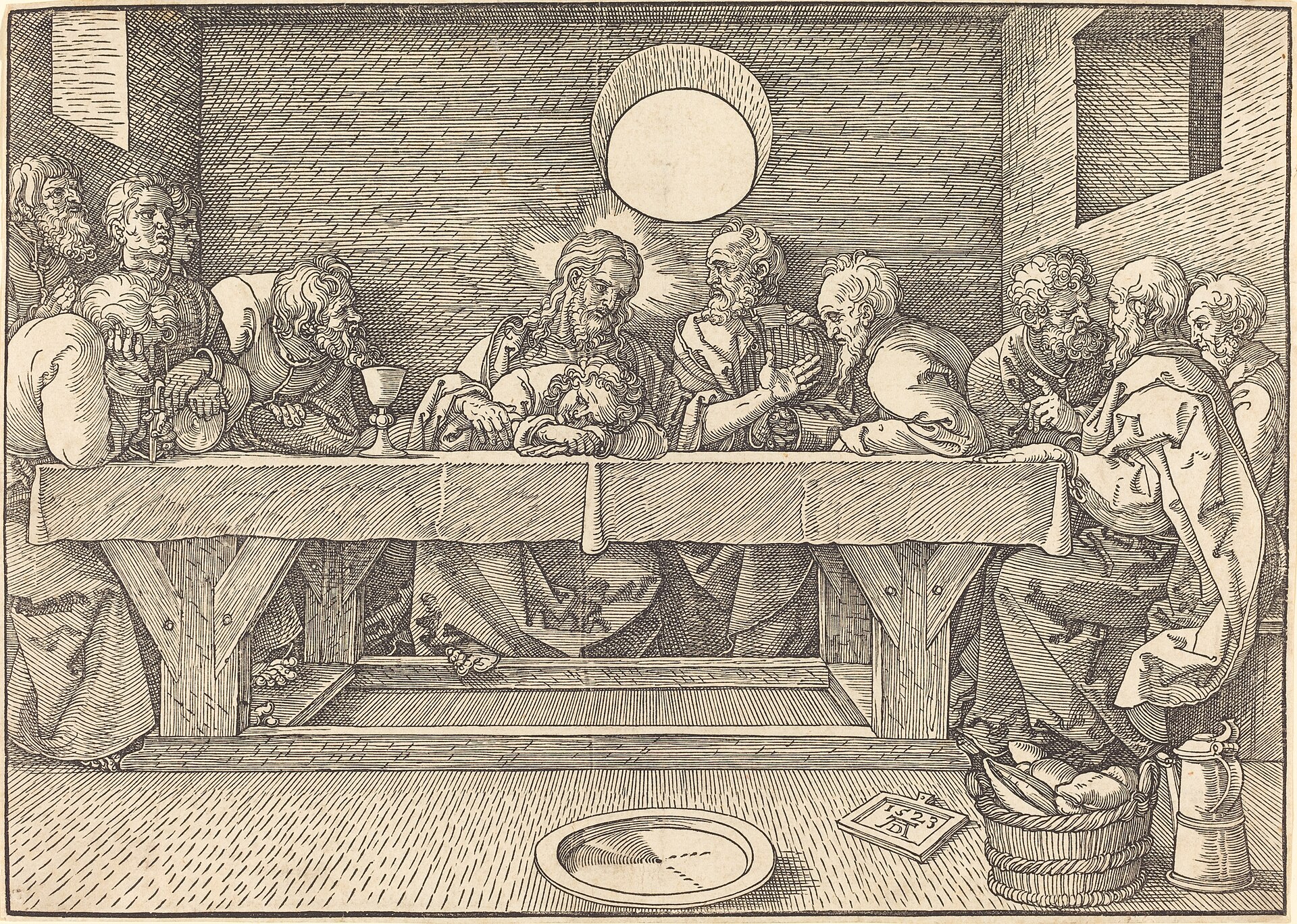
The Apologetic Fix: The “Different Calendars” Theory
For centuries, biblical literalists have tried to harmonize these two accounts to protect the idea that the Bible contains zero historical contradictions.
The most popular modern apologetic defense is the “Different Calendars” theory. Apologists argue that different Jewish sects in the first century used different calendars (e.g., a solar calendar used by the Essenes or a Galilean reckoning versus a Judean reckoning). Therefore, they claim, Jesus and his disciples used an alternative calendar to legitimately celebrate the Passover on Thursday night, while the Jewish leadership and the Gospel of John used the official calendar, slaughtering their lambs on Friday.
Why the Calendar Theory Fails
To a modern reader used to private holidays, this sounds plausible. But to a historian of ancient Judaism, it is a logistical impossibility. Here is why the calendar theory does not make sense:
1. The Temple Monopoly on Sacrifice
Passover was not a private dinner party where you could just buy a lamb at a market and roast it in your oven. According to the Torah (Deuteronomy 16), the Passover lamb could only be sacrificed at the central sanctuary—the Temple in Jerusalem.
This required the active participation of the Levitical priests. They had to slaughter the animal, catch its blood in basins, and dash the blood against the great altar. The priests operated on one strict, official, central calendar (the Sadducean high priestly calendar).
You could not walk into the Temple courtyard a day early, hand a priest a lamb, and say, “My sect uses a different calendar; please sacrifice this today.” The priests simply would not do it. If the Last Supper was a legitimate Passover meal requiring a ritually slaughtered lamb, it had to happen on the official Temple schedule.
2. John Denies It Was a Passover Meal
The calendar theory assumes John is still describing a Passover meal, just on a different day. But the text of John actively fights this. John goes out of his way to describe the Last Supper as an ordinary meal before the festival. When Judas leaves the dinner abruptly, the other disciples assume Jesus is sending him out to buy supplies for the upcoming feast (John 13:29). You cannot buy supplies for a feast if you are currently eating it.
3. It Ruins the Literary Brilliance of the Authors
The biggest tragedy of the “different calendars” theory is that it tries to fix a theological masterpiece by reducing it to a scheduling conflict.
Historical-critical scholars do not view this contradiction as an error to be harmonized; they view it as deliberate theological editing. The author of John likely knew the Synoptic timeline but deliberately altered it to make a profound theological point. John shifted the time of the crucifixion to perfectly align Jesus’ death with the slaughter of the Passover lambs, fulfilling John the Baptist’s earlier declaration: “Look, the Lamb of God, who takes away the sin of the world!” (John 1:29).
When we force the texts to agree using imagined calendars, we erase the distinct, brilliant theological voices of the individual Gospel writers.
-
Beyond Abstinence: Defining the Architecture of Purity Culture
For many raised in late-20th-century evangelicalism, “abstinence” and “purity culture” are frequently treated as exact synonyms. However, while abstinence is a private historical ethical choice, purity culture is a modern, highly visible sociological construct. This article examines the architecture of the 1990s movement—from purity pledges to the courtship model—and explains why disentangling the ancient ethic from the modern subculture is the crucial first step in understanding its lasting psychological impact.
-
How Can Modern Churches Build Strong Communities Without Sacrificing Intellectual Honesty?
Can a church remain strong when its members question traditional interpretations of the Bible?Discover how shared values, meaningful relationships, and intellectual honesty can help modern Christian communities thrive without demanding agreement on every question.
-
A Voice from the Dust: How the Discovery of Ugarit Rewrote Biblical Scholarship
The accidental discovery of the ancient city of Ugarit in 1928 transformed biblical scholarship. Its texts provided crucial insights into Biblical Hebrew, uncovered the mythology of ancient Canaan, and revealed how Israelite religion developed within the wider cultural world of the ancient Near East.
-
Did Paul Believe Christians Go to Heaven? Paul’s Cosmos, Christology, and Hope of Resurrection
What did Paul think heaven was, who did he believe Jesus was, and what did he expect to happen after death? Explore Paul’s first-century Jewish apocalyptic worldview, his complex understanding of Jesus, and his expectation of bodily resurrection and the liberation of creation.
-
The Whistleblower in the Dirt: Unearthing the Socio-Economic Reality of the Talents
What’s the Parable of the Talents really about? Squadering your abilities or is there more? Let’s dig a little deeper.