
To truly understand the massive theological earthquake that occurred in the first century, we have to engage in a brief historical thought experiment. Imagine the wealthy man from the Gospel of Mark (Chapter 10). Around the year 30 CE, this earnest, wealthy young aristocrat runs up to Jesus of Nazareth in Judea, falls on his knees, and asks the ultimate question: “Good teacher, what must I do to inherit eternal life?” Jesus gives him a devastating, economically radical answer, and the young man walks away weeping because he cannot part with his massive estate.
Now, imagine it is twenty-five years later. The year is 55 CE. The rich man is older, perhaps traveling on business in a bustling Greco-Roman city like Ephesus or Corinth. He hears about a controversial new teacher—a former Pharisee named Paul, who is spreading the message of that same Galilean rabbi. The rich man tracks Paul down, sits across from him, and asks the exact same question: “Paul, I asked your master this decades ago, and I failed his test. Tell me, what must I do to inherit eternal life?”
If we read the New Testament critically, the Apostle Paul’s answer would shock the wealthy man to his core.
Encounter One: The Rabbi’s Economic Demand (c. 30 CE)
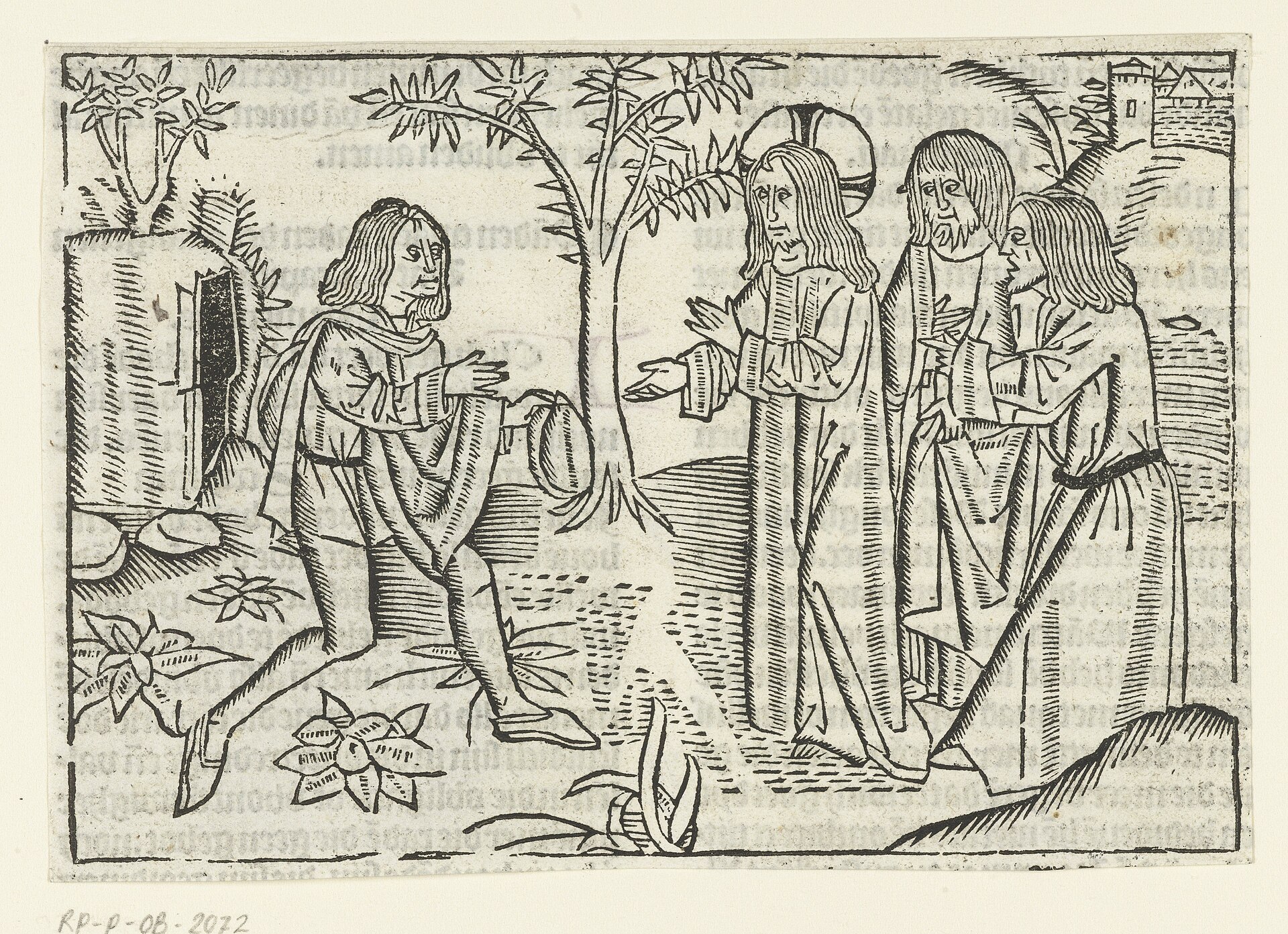
When the man first asked Jesus this question, Jesus did not offer a spiritualized theology of grace. He offered a gritty, action-oriented roadmap for participating in the imminent Kingdom of God.
Jesus told him two things:
- Obey the Torah: Do not murder, do not steal, do not defraud, honor your parents.
- Liquidate and Redistribute: When the man confirmed he had kept the laws perfectly, Jesus escalated the demand. “Go, sell everything you have and give to the poor, and you will have treasure in heaven. Then come, follow me.”
For the historical Jesus, participating in God’s coming Kingdom required a radical reordering of earthly resources. You could not claim to love God while hoarding wealth in a society starving to death. Jesus did not ask the man to believe a specific theological doctrine about his divine identity; he asked him to redistribute his capital.
Encounter Two: The Apostle’s Cosmic Grace (c. 55 CE)
When the older, still-wealthy man sits down with the Apostle Paul a few decades later, he braces himself to be told to sell his estate again. But Paul waves that away.
Instead, drawing on the theology he would codify in his letter to the Romans (10:9), Paul gives an entirely different blueprint for salvation: “If you declare with your mouth, ‘Jesus is Lord,’ and believe in your heart that God raised him from the dead, you will be saved.”
The rich man would be entirely bewildered. Just believe? What about the Torah? What about selling my land?
Paul would explain that a cosmic paradigm shift had occurred. Because of the crucifixion and the resurrection, the old system of earning your way into God’s favor through strict adherence to the Law (or through massive charitable works) was obsolete. In fact, Paul argued that human beings are so inherently flawed that no amount of good works could ever bridge the gap between humanity and the divine. Therefore, salvation is not a wage you earn by liquidating your estate; it is a free gift of grace, accessed entirely through faith (trust) in Christ.
The Ultimate Paradigm Shift
Why did the answer change so drastically in just twenty-five years? The answer lies in the completely different historical missions of the two men.
| Contextual Factor | Jesus of Nazareth (c. 30 CE) | The Apostle Paul (c. 55 CE) |
|---|---|---|
| The Audience | Jewish peasants living under the crushing weight of Roman occupation in rural Galilee and Judea. | Pagan, Gentile outsiders living in the wealthy, cosmopolitan urban centers of the Greco-Roman empire. |
| The Problem | How to prepare God’s chosen people for the imminent, physical arrival of a just, earthly Kingdom. | How to include non-Jews in a Jewish religious movement without forcing them to undergo circumcision and dietary laws. |
| The Solution | Radical obedience to the spirit of the Torah and extreme economic justice for the marginalized. | Justification by faith. The Law is removed as a barrier, making grace accessible to everyone regardless of ethnicity or past deeds. |
The Proclaimer Becomes the Proclaimed
For our hypothetical wealthy man, Paul’s answer might seem like an incredible loophole. He doesn’t have to sell his mansions; he just has to trust in the resurrection. (Though, to be fair to Paul, the Apostle still heavily demanded extreme financial generosity from his churches, just not as the prerequisite for salvation).
But the man’s dual encounters perfectly illustrate the great pivot of early Christianity. Jesus walked the earth as a prophet, pointing his followers away from himself and toward the radical, demanding justice of the Kingdom of God. But after the trauma of the cross, the early church shifted its gaze. Paul looked at the Galilean prophet and realized that the messenger had actually become the message.
The movement had evolved. To Jesus, salvation was a kingdom you built through radical ethics. To Paul, salvation was a gift you received through cosmic faith.
-
Beyond Abstinence: Defining the Architecture of Purity Culture
For many raised in late-20th-century evangelicalism, “abstinence” and “purity culture” are frequently treated as exact synonyms. However, while abstinence is a private historical ethical choice, purity culture is a modern, highly visible sociological construct. This article examines the architecture of the 1990s movement—from purity pledges to the courtship model—and explains why disentangling the ancient ethic from the modern subculture is the crucial first step in understanding its lasting psychological impact.
-
How Can Modern Churches Build Strong Communities Without Sacrificing Intellectual Honesty?
Can a church remain strong when its members question traditional interpretations of the Bible?Discover how shared values, meaningful relationships, and intellectual honesty can help modern Christian communities thrive without demanding agreement on every question.
-
A Voice from the Dust: How the Discovery of Ugarit Rewrote Biblical Scholarship
The accidental discovery of the ancient city of Ugarit in 1928 transformed biblical scholarship. Its texts provided crucial insights into Biblical Hebrew, uncovered the mythology of ancient Canaan, and revealed how Israelite religion developed within the wider cultural world of the ancient Near East.
-
Did Paul Believe Christians Go to Heaven? Paul’s Cosmos, Christology, and Hope of Resurrection
What did Paul think heaven was, who did he believe Jesus was, and what did he expect to happen after death? Explore Paul’s first-century Jewish apocalyptic worldview, his complex understanding of Jesus, and his expectation of bodily resurrection and the liberation of creation.
-
The Whistleblower in the Dirt: Unearthing the Socio-Economic Reality of the Talents
What’s the Parable of the Talents really about? Squadering your abilities or is there more? Let’s dig a little deeper.