
Modern readers often approach Matthew 25:31–46 as a call to personal acts of charity: feeding the hungry, welcoming strangers, visiting the sick, and caring for prisoners. That reading captures an important feature of the passage, but it can also encourage readers to overlook the larger social world in which Matthew presents the judgment of “all the nations.” While it is tempting to read modern political theories directly into the text, a careful historical-critical approach reveals a more complex picture. Matthew 25 is about concrete acts of mercy, but its collective judgment scene prevents those acts from being reduced purely to private morality. This allows modern readers to extend its ethical challenge to societal structures, provided that this application is distinguished from Matthew’s original historical context.
Who Are “All the Nations”?
The passage describes concrete acts of care performed toward vulnerable people, but it places those acts within a scene in which “all the nations” (panta ta ethnē) are collectively summoned before the Son of Man.
Matthew’s first-century Mediterranean world was socially structured in ways that do not map neatly onto modern Western individualism. People understood themselves through complex networks of family, community, ethnicity, religion, and social obligation. The scene is explicitly framed as a judgment of nations, giving the passage a collective dimension. While it does not give us a straightforward grammatical argument that Matthew is deliberately contrasting individual responsibility with modern systemic responsibility, this framing ensures the text should not be reduced automatically to private, atomized morality. It is also important not to impose a modern distinction between “personal” and “systemic” justice onto a first-century text whose categories were different from ours.
Who Are “the Least of These”?
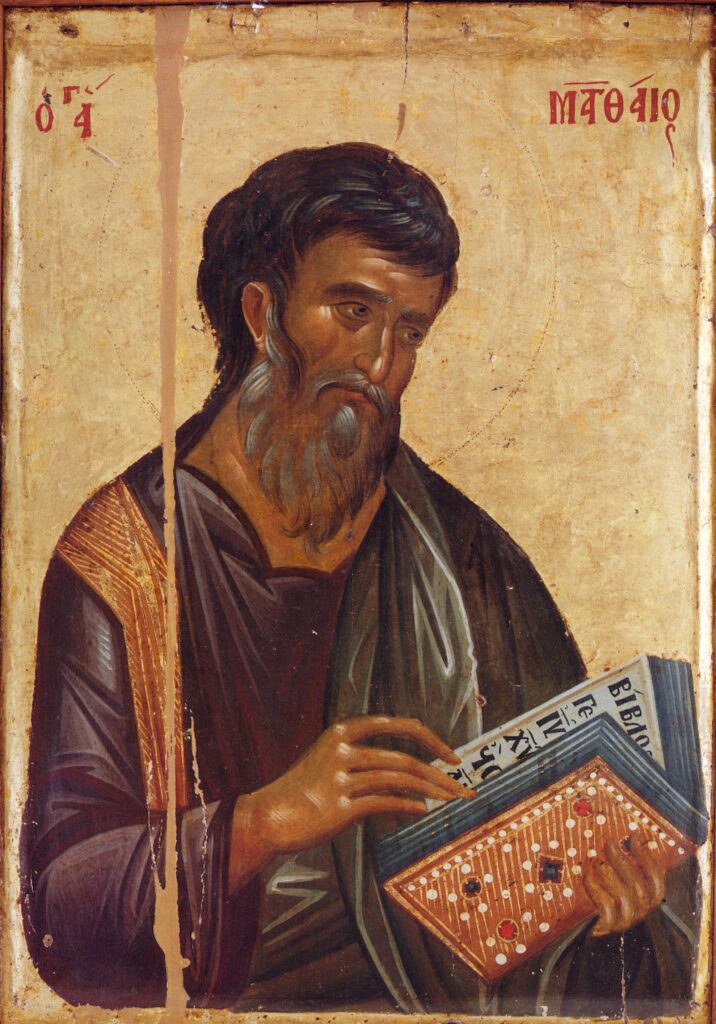
A central question for interpreters is the identity of “the least of these my brothers.” This phrase has generated an enormous and ongoing scholarly debate. Does it refer to humanity generally, the poor and vulnerable, Christians, or specifically Jesus’ missionary disciples?
A significant line of scholarship argues that “the least of these my brothers” refers specifically to Jesus’ disciples, particularly those who represent him as his emissaries. If that interpretation holds, Matthew 25 is not straightforwardly a general statement about government policy toward all disadvantaged people. Conversely, if “the least” means vulnerable people generally, the broader social-justice application becomes much more direct. Acknowledging this debate is essential, as it demonstrates that the scope of the judgment remains a contested issue in biblical scholarship.
Ezekiel’s Shepherds and the Responsibility of the Powerful
Matthew’s scene draws on earlier biblical imagery of divine judgment, particularly the enthroned Son of Man imagery of Daniel 7 and the shepherd imagery of Ezekiel 34.
Ezekiel 34 is especially significant as a conceptual background. In it, God condemns Israel’s shepherds for failing to care for the vulnerable members of the flock: the weak are not strengthened, the sick are not healed, the injured are not bound up, and the lost are not brought back. God then declares that he himself will judge between sheep and goats. This prophetic background places the treatment of vulnerable people at the heart of the divine judgment portrayed in Matthew.
From Individual Mercy to Social Responsibility
The six forms of vulnerability named by Matthew—hunger, thirst, being a stranger, nakedness, illness, and imprisonment—have obvious modern parallels in problems such as food insecurity, inadequate access to clean water, homelessness, healthcare inequality, and mass incarceration.
Matthew does not present a theory of modern social structures, nor does it prescribe particular political policies. Nevertheless, its judgment scene raises questions that cannot be confined to private acts of charity. For modern readers, this raises a further ethical question: if hunger, displacement, illness, and imprisonment are produced or intensified by social institutions, can responsibility for the vulnerable be limited to individual acts of charity? The ethical logic of the passage can reasonably be extended from individual acts of mercy to the structures that determine who remains vulnerable—provided this application is distinguished from Matthew’s original historical context.
What Matthew 25 Can—and Cannot—Tell Us
Matthew 25 does not give us a modern theory of systemic justice. It never discusses welfare states, economic policy, immigration law, healthcare systems, or mass incarceration. But neither does it allow modern readers to pretend that poverty and vulnerability are merely private problems. The passage places concrete human suffering at the center of this judgment scene and asks what people—and, potentially, the communities and societies they form—do about it.
-
Beyond Abstinence: Defining the Architecture of Purity Culture
For many raised in late-20th-century evangelicalism, “abstinence” and “purity culture” are frequently treated as exact synonyms. However, while abstinence is a private historical ethical choice, purity culture is a modern, highly visible sociological construct. This article examines the architecture of the 1990s movement—from purity pledges to the courtship model—and explains why disentangling the ancient ethic from the modern subculture is the crucial first step in understanding its lasting psychological impact.
-
How Can Modern Churches Build Strong Communities Without Sacrificing Intellectual Honesty?
Can a church remain strong when its members question traditional interpretations of the Bible?Discover how shared values, meaningful relationships, and intellectual honesty can help modern Christian communities thrive without demanding agreement on every question.
-
A Voice from the Dust: How the Discovery of Ugarit Rewrote Biblical Scholarship
The accidental discovery of the ancient city of Ugarit in 1928 transformed biblical scholarship. Its texts provided crucial insights into Biblical Hebrew, uncovered the mythology of ancient Canaan, and revealed how Israelite religion developed within the wider cultural world of the ancient Near East.
-
Did Paul Believe Christians Go to Heaven? Paul’s Cosmos, Christology, and Hope of Resurrection
What did Paul think heaven was, who did he believe Jesus was, and what did he expect to happen after death? Explore Paul’s first-century Jewish apocalyptic worldview, his complex understanding of Jesus, and his expectation of bodily resurrection and the liberation of creation.
-
The Whistleblower in the Dirt: Unearthing the Socio-Economic Reality of the Talents
What’s the Parable of the Talents really about? Squadering your abilities or is there more? Let’s dig a little deeper.