
If you read the Book of Daniel as a strict historical textbook, you will eventually run headfirst into a massive, unsolvable archaeological wall.
The book contains some of the most famous stories in Western culture, including Daniel in the lions’ den and the mysterious “writing on the wall.” But when historians and archaeologists line up the kings mentioned in the biblical text with the actual, physical records of the ancient Near East, the biblical timeline violently collapses.
The absolute center of this historical collision is a monarch known in the Bible as Darius the Mede. According to the Book of Daniel, he is the man who conquered Babylon. According to the scientific and archaeological consensus, he never existed.
To understand this problem, we have to look at the sequence of kings presented in the biblical text, compare it to the ancient Babylonian and Persian records, and understand how ancient authors compiled history.
The Biblical Timeline: The Fall of Babylon
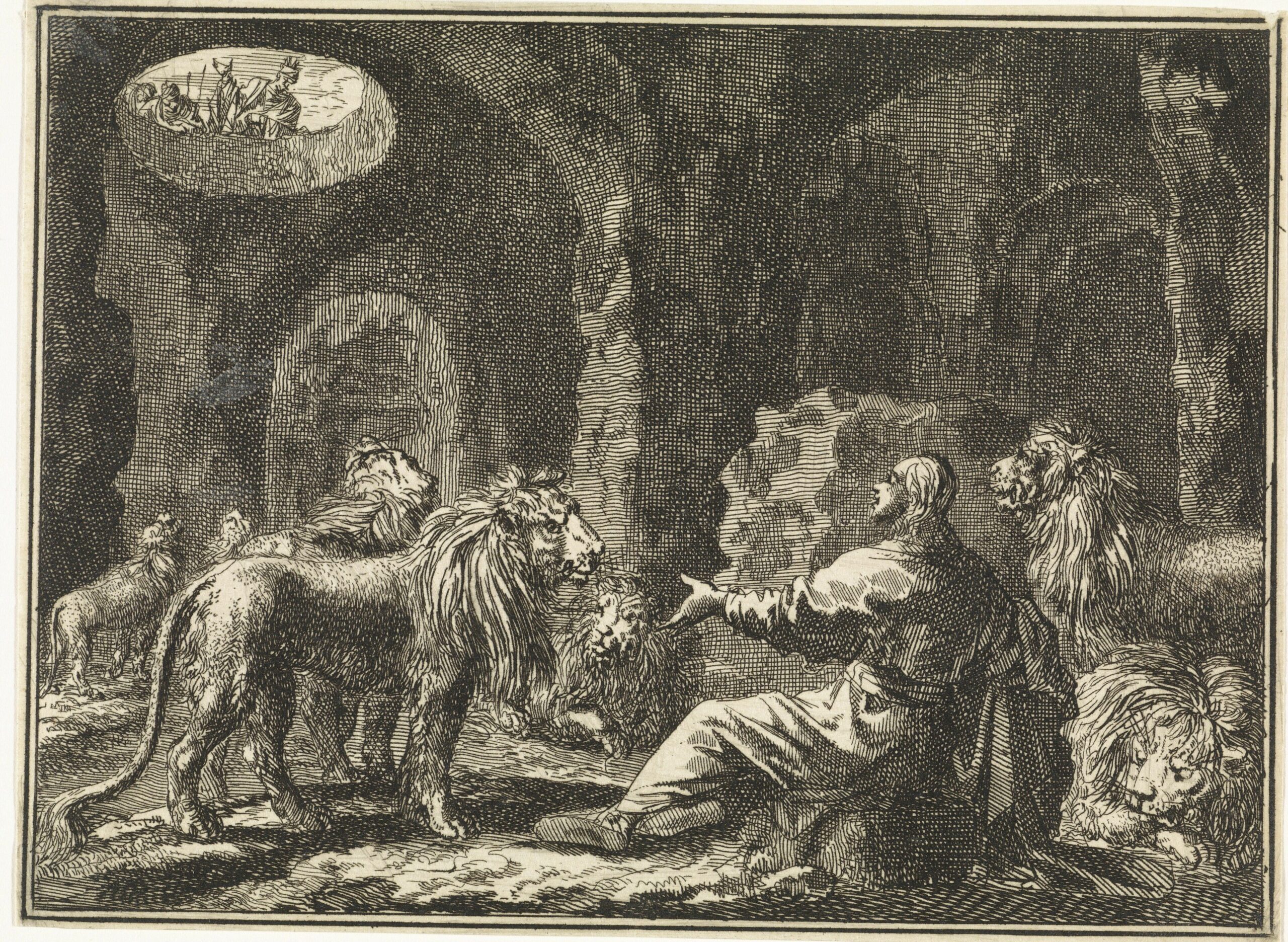
In Daniel Chapter 5, we find the famous story of Belshazzar’s Feast. Belshazzar is presented as the King of Babylon. During a drunken banquet, a disembodied hand appears and writes a cryptic message on the wall, predicting the immediate downfall of the Babylonian Empire.
The text says that very night, Belshazzar was killed.
Daniel 5:31 then makes a highly specific historical claim: “And Darius the Mede took over the kingdom, at the age of sixty-two.” Later in the book, we are told that Daniel prospers during the reign of this Darius, and subsequently during the reign of Cyrus the Persian. Therefore, the biblical sequence of kings ruling over Babylon is:
- Belshazzar (Babylonian)
- Darius the Mede (Median)
- Cyrus the Great (Persian)
The Historical Reality: The Cyrus Cylinder
Thanks to over a century of intensive archaeological work, including the discovery of thousands of cuneiform tablets, the Nabonidus Chronicle, and the famous Cyrus Cylinder, we have a meticulously detailed record of the fall of Babylon in 539 BCE.
The historical reality completely contradicts the biblical sequence.
First, Belshazzar was never actually the sole “King” of Babylon. He was the crown prince and commanded the military while his eccentric father, King Nabonidus, lived in self-imposed exile in Arabia.
More importantly, Babylon did not fall to a Median army, and there was no king named Darius the Mede. In 539 BCE, Babylon fell directly to Cyrus the Great, the founder of the Achaemenid Persian Empire. Cyrus marched into the city, captured Nabonidus, and seamlessly absorbed the Babylonian territories. There was no Median interlude. The historical sequence of power is simply:
- Nabonidus / Belshazzar (Babylonian)
- Cyrus the Great (Persian)
Who Was the Real Darius?
If Darius the Mede did not conquer Babylon, where did the biblical author get the name?
There was, in fact, a very famous, very powerful King Darius in the ancient world: Darius I (Darius the Great). However, he was not a Mede; he was a Persian. And he did not conquer Babylon from the Babylonians; he took control of the Persian Empire around 522 BCE, long after Cyrus the Great had died.
Furthermore, during the reign of Darius the Great, the city of Babylon rebelled against Persian rule. Darius had to send his armies to brutally suppress the revolt and reconquer the city.
The Academic Consensus: Telescoping History
How did the biblical author get the history so incredibly tangled? Why would they insert a phantom Median king between the Babylonians and the Persians, and confuse the timeline of Cyrus and Darius?
The answer lies in when the Book of Daniel was actually written.
While the stories are set in the 6th century BCE (during the Babylonian exile), historical-critical scholars are virtually unanimous that the Book of Daniel in its final form was actually written nearly 400 years later, around 165 BCE. It was authored during the Maccabean Revolt, a time when the Jewish people were being brutally persecuted by the Greek king Antiochus IV Epiphanes.
The author of Daniel was writing apocalyptic resistance literature to encourage the persecuted Jews of the 2nd century BCE. To do this, they used legendary tales of Daniel surviving the empires of the past. But because the author was writing four centuries after the fall of Babylon, their grasp of 6th-century BCE political history was highly compressed and hazy.
In the ancient world, it was common for oral traditions to “telescope”—compressing separate historical events and figures into a single narrative. The author of Daniel likely conflated several historical memories:
- The memory of the Medes helping to destroy the earlier Assyrian Empire.
- The memory of Cyrus the Great conquering Babylon.
- The memory of Darius the Great later putting down a rebellion in Babylon.
The author mashed these events together to create a theological schema of successive, evil empires (Babylonian, Median, Persian, and finally Greek) that God would eventually overthrow.
Theology, Not Textbooks
For centuries, religious scholars engaged in incredible mental gymnastics trying to prove that Darius the Mede was a historical figure—suggesting he was a general, a governor, or an alternative name for Cyrus himself. None of these theories are supported by the archaeological data.
When we accept the historical-critical reality, we do not lose the Book of Daniel; we simply understand its true genre. It was never intended to be a flawless historical timeline of ancient Mesopotamian kings. It is a brilliant, defiant piece of apocalyptic literature, using the hazy memories of ancient empires to assure a terrified, 2nd-century audience that tyrants always fall, and that God ultimately holds the timeline of history.
-
Beyond Abstinence: Defining the Architecture of Purity Culture
For many raised in late-20th-century evangelicalism, “abstinence” and “purity culture” are frequently treated as exact synonyms. However, while abstinence is a private historical ethical choice, purity culture is a modern, highly visible sociological construct. This article examines the architecture of the 1990s movement—from purity pledges to the courtship model—and explains why disentangling the ancient ethic from the modern subculture is the crucial first step in understanding its lasting psychological impact.
-
How Can Modern Churches Build Strong Communities Without Sacrificing Intellectual Honesty?
Can a church remain strong when its members question traditional interpretations of the Bible?Discover how shared values, meaningful relationships, and intellectual honesty can help modern Christian communities thrive without demanding agreement on every question.
-
A Voice from the Dust: How the Discovery of Ugarit Rewrote Biblical Scholarship
The accidental discovery of the ancient city of Ugarit in 1928 transformed biblical scholarship. Its texts provided crucial insights into Biblical Hebrew, uncovered the mythology of ancient Canaan, and revealed how Israelite religion developed within the wider cultural world of the ancient Near East.
-
Did Paul Believe Christians Go to Heaven? Paul’s Cosmos, Christology, and Hope of Resurrection
What did Paul think heaven was, who did he believe Jesus was, and what did he expect to happen after death? Explore Paul’s first-century Jewish apocalyptic worldview, his complex understanding of Jesus, and his expectation of bodily resurrection and the liberation of creation.
-
The Whistleblower in the Dirt: Unearthing the Socio-Economic Reality of the Talents
What’s the Parable of the Talents really about? Squadering your abilities or is there more? Let’s dig a little deeper.