
When reading the Hebrew Bible, it is easy to assume the text is a comprehensive, objective historical record. But for archaeologists and historians, finding hard, extra-biblical evidence to corroborate the specific individuals mentioned in its pages is a complex task.
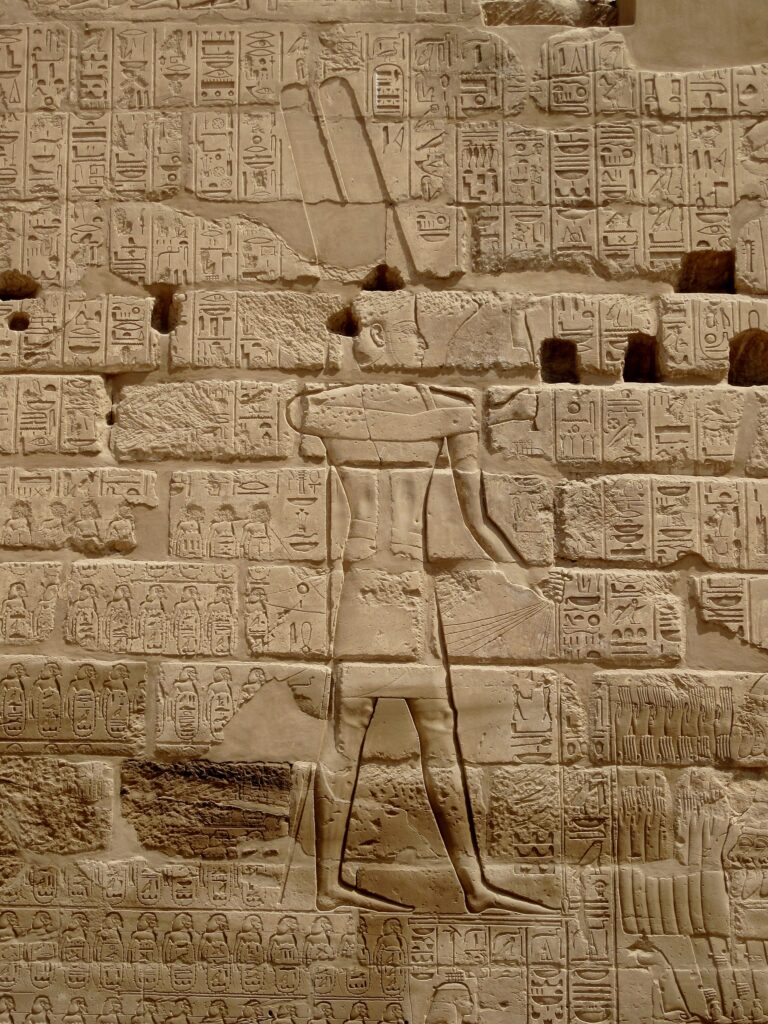
If we ask who the absolute first historical person in the Bible is—someone whose existence is definitively confirmed by outside, contemporary records—the answer is not an Israelite. It is an Egyptian. In 1 Kings 14, the text mentions a Pharaoh Shishak who invaded Judah and looted the Jerusalem Temple. Historians have confidently matched him to Pharaoh Sheshonq I, who left his own massive victory reliefs on the temple walls at Karnak in Egypt, detailing his 10th-century BCE military campaign through the Levant.
But when we narrow the question and ask who the first Israelite figure is to appear in the extra-biblical historical record, the answer is deeply surprising. It is not Abraham, Moses, David, or Solomon. The very first confirmed Israelite is a king who receives a grand total of six dismissive verses in the Book of Kings: King Omri.
Uncovering the historical Omri reveals one of the greatest editorial cover-ups in the Hebrew Bible.
The Biblical Dismissal
In the biblical narrative, King Omri is treated as little more than a footnote (1 Kings 16:23-28). The text casually mentions that he bought a hill, built the city of Samaria, and then dismisses his entire reign with standard theological contempt: “Omri did evil in the eyes of the Lord and sinned more than all those before him.”
He dies, is buried, and the biblical authors eagerly move on to his son, Ahab, and his infamous daughter-in-law, Jezebel.
To a casual reader, Omri is just another forgettable, wicked ruler of the rebellious Northern Kingdom. But to ancient Near Eastern historians, Omri is a geopolitical titan. The archaeological record proves that Omri was arguably the most successful, powerful, and internationally recognized king in the history of ancient Israel.
The Voice from the Rubble: The Mesha Stele
The first major piece of extra-biblical evidence regarding Omri comes from Israel’s neighbors to the east: the Moabites.
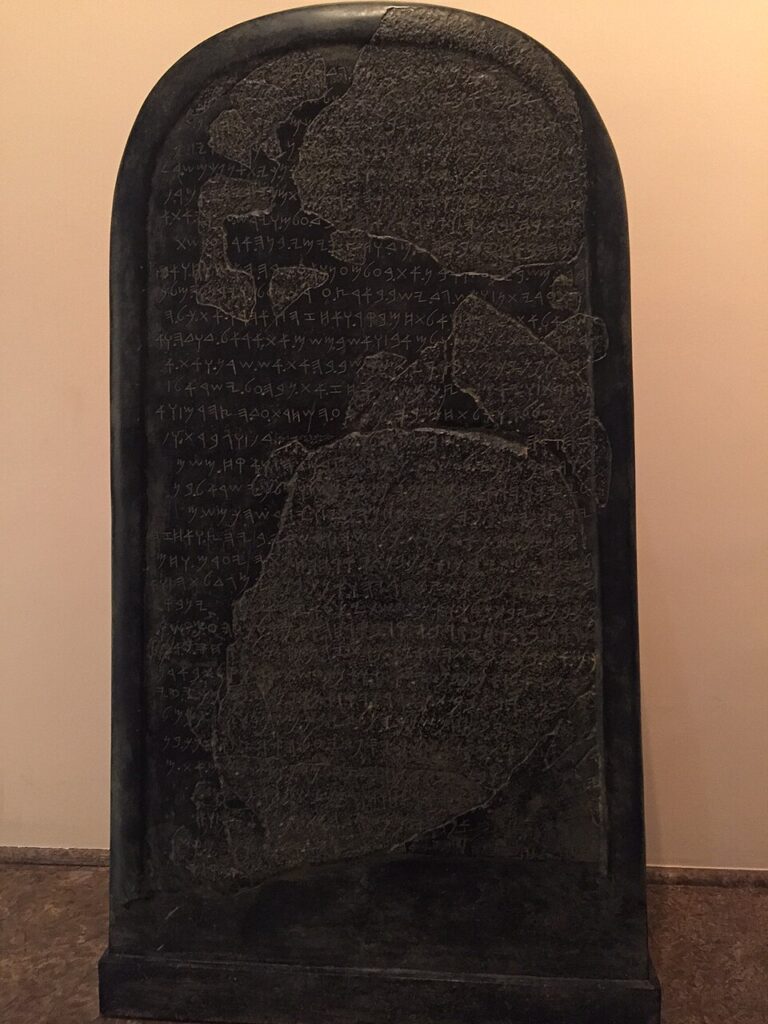
In 1868, archaeologists discovered a massive black basalt monument in modern-day Jordan known as the Mesha Stele (or the Moabite Stone). Carved around 840 BCE by the Moabite King Mesha, the inscription is a boastful victory monument celebrating Moab’s independence from Israelite control.
But in the process of boasting, King Mesha inadvertently confirms the historical terror of the Omride dynasty. The stele reads: “Omri, king of Israel, oppressed Moab for many days… his son succeeded him, and he also said, ‘I will oppress Moab.'”
This is a staggering historical anchor. It proves that Omri was not a minor, localized chieftain. He was a military powerhouse who successfully subjugated neighboring nations, expanded Israel’s borders, and extracted heavy tribute to enrich his new capital.
The House of Omri: The Assyrian Records
The second, and perhaps more impressive, piece of evidence comes from the ultimate superpower of the era: the Neo-Assyrian Empire.
When Assyrian scribes recorded their military campaigns into the Levant, they did not refer to the northern kingdom as “Israel.” Instead, they used the Akkadian term Bit-Humri, which translates to “The House of Omri.”
The Assyrians were so profoundly impressed by Omri’s centralized state, military infrastructure, and massive wealth that they named the entire nation after him. This geopolitical branding stuck for more than a century. In fact, decades after Omri was dead, a completely different Israelite general named Jehu violently overthrew the Omride dynasty. Yet, when the Assyrian King Shalmaneser III depicted Jehu paying tribute on the famous Black Obelisk, the inscription identifies the new king as “Jehu, son of Omri.”
To the international world, Israel simply was the House of Omri.
The Real Legacy of the Builder King
When we combine these foreign inscriptions with the archaeological excavations of Samaria, a picture of a brilliant statesman emerges. Omri took a fractured, unstable northern territory and forged it into a centralized economic powerhouse.
He moved the capital to Samaria, a brilliant strategic location with a clear view of the Mediterranean Sea. This shift signaled his greatest achievement: turning Israel outward. Rather than remaining an isolated highland kingdom, Omri integrated Israel into the lucrative global economy. He laid the groundwork for the diplomatic masterstroke of marrying his son to the Phoenician princess Jezebel, securing an alliance that flooded Samaria with immense wealth, luxury goods, and architectural advancements.
The Pen is Mightier than the Sword
Why would the biblical authors dedicate only six verses to the most internationally successful king in Israelite history?
The answer lies in the editorial bias of the authors. The Books of Kings were compiled centuries later by scribes in the southern kingdom of Judah. These Deuteronomistic scribes had one absolute theological rule: the only legitimate place to worship Yahweh was the Temple in Jerusalem.
Because Omri built a massive, wealthy rival capital in the north and patronized foreign alliances, he was politically and theologically unacceptable to the southern scribes. They didn’t care about his military conquests, his economic genius, or how the Assyrians viewed him. In their eyes, he worshipped at the wrong shrines, making him historically worthless.
The erasure of King Omri is the ultimate cautionary tale against treating the Bible as a modern history textbook. When we tear down the Paper Calf of strict literalism, we discover that ancient history was written by the theological victors. Omri built an empire of stone that impressed the greatest superpowers of the ancient world, but the Judean scribes managed to bury him under just six sentences of theological contempt.
-
Beyond Abstinence: Defining the Architecture of Purity Culture
For many raised in late-20th-century evangelicalism, “abstinence” and “purity culture” are frequently treated as exact synonyms. However, while abstinence is a private historical ethical choice, purity culture is a modern, highly visible sociological construct. This article examines the architecture of the 1990s movement—from purity pledges to the courtship model—and explains why disentangling the ancient ethic from the modern subculture is the crucial first step in understanding its lasting psychological impact.
-
How Can Modern Churches Build Strong Communities Without Sacrificing Intellectual Honesty?
Can a church remain strong when its members question traditional interpretations of the Bible?Discover how shared values, meaningful relationships, and intellectual honesty can help modern Christian communities thrive without demanding agreement on every question.
-
A Voice from the Dust: How the Discovery of Ugarit Rewrote Biblical Scholarship
The accidental discovery of the ancient city of Ugarit in 1928 transformed biblical scholarship. Its texts provided crucial insights into Biblical Hebrew, uncovered the mythology of ancient Canaan, and revealed how Israelite religion developed within the wider cultural world of the ancient Near East.
-
Did Paul Believe Christians Go to Heaven? Paul’s Cosmos, Christology, and Hope of Resurrection
What did Paul think heaven was, who did he believe Jesus was, and what did he expect to happen after death? Explore Paul’s first-century Jewish apocalyptic worldview, his complex understanding of Jesus, and his expectation of bodily resurrection and the liberation of creation.
-
The Whistleblower in the Dirt: Unearthing the Socio-Economic Reality of the Talents
What’s the Parable of the Talents really about? Squadering your abilities or is there more? Let’s dig a little deeper.