
When we read the Hebrew Bible, we are often presented with a neat, sanitized version of ancient history: the Israelites had a pure, monotheistic religion given to them by Moses, but occasionally they would stubbornly “backslide” and worship the idols of their Canaanite neighbors.
But when historians look closely at the text, the seams of this domesticated narrative begin to pull apart. One of the most fascinating examples of this unraveling centers around a mysterious, magical object known as Nehushtan. By tracing the history of this bronze snake, we can uncover a massive historical embarrassment for the biblical writers, and witness firsthand how ancient scribes brilliantly rewrote history to cover it up.
The Magic Snake in the Desert
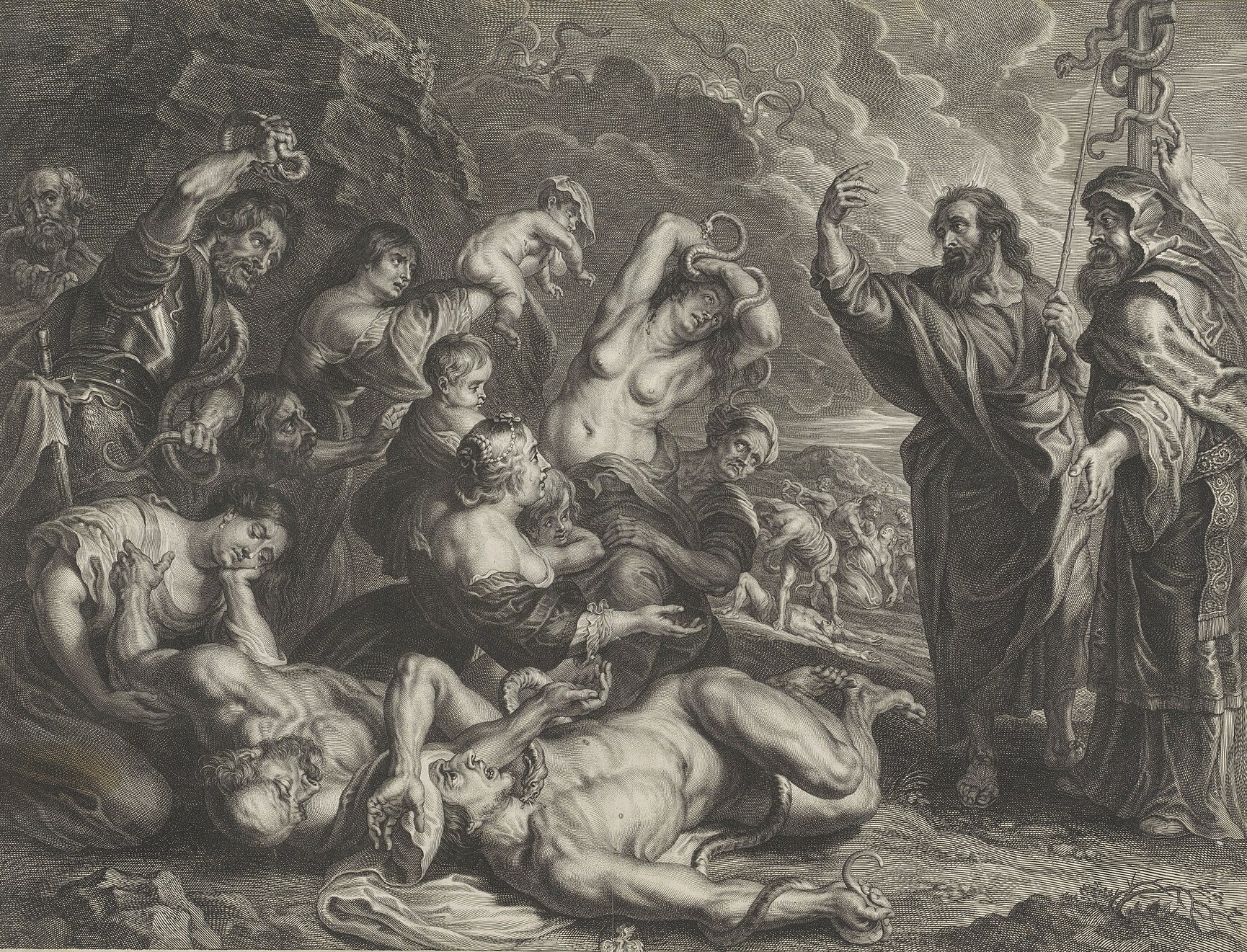
The story begins in the Book of Numbers (Chapter 21). The Israelites are wandering through the desert and, as usual, complaining. As a punishment, God sends “fiery serpents” to bite them. The people repent, and God gives Moses a bizarre set of instructions.
Moses is told to forge a snake out of bronze, mount it on a wooden pole, and hold it high in the air. The text states that if anyone is bitten by a venomous snake, they simply have to look at the bronze serpent on the pole, and they will be miraculously healed.
To a historian of the ancient Near East, this is a textbook example of “sympathetic magic”—the widespread ancient belief that an image of a dangerous thing can be used to control or cure the effects of that thing. In the ancient world, snakes were universally associated with healing and medicine (a motif that survives today in the Rod of Asclepius, the symbol of modern medicine).
The Shocking Discovery in the Temple
If the story ended in the desert, it would simply be a quirky footnote. But the bronze snake reappears centuries later, causing a massive theological headache.
Fast forward to the Book of 2 Kings (Chapter 18). We are now in the late 8th century BCE. King Hezekiah sits on the throne in Jerusalem, initiating a series of aggressive religious reforms to centralize all worship around Yahweh. The biblical text lists the pagan objects Hezekiah destroys: he smashes the sacred stones, cuts down the wooden Goddess poles, and then, shockingly, the text casually mentions:
“He broke into pieces the bronze snake Moses had made, for up to that time the Israelites had been burning incense to it. (It was called Nehushtan.)”
This single verse is a historical bombshell. It reveals that for hundreds of years, right in the courtyards of the Jerusalem Temple, the Israelites had been actively worshipping a bronze snake. They had given it a divine name (Nehushtan) and were offering it incense, treating it exactly like a deity.
The Scribal Embarrassment and the Cover-Up
When later, strictly monotheistic scribes were compiling and editing the biblical texts during and after the Babylonian Exile, they faced a severe historical embarrassment. Everyone knew that their ancestors had worshipped a bronze snake in the very temple built by Solomon.
How could they explain this without admitting that early Israelite religion was deeply polytheistic, and that the Temple of Yahweh was packed with idols?
Many critical biblical scholars believe the scribes solved this problem by writing an etiology—a retroactive origin story designed to explain away a current or past phenomenon.
Historically, the bronze snake in the Temple was almost certainly a Canaanite or Jebusite healing idol that had always been there, likely associated with a regional healing cult. But the biblical writers could not admit that. So, they cleverly tethered the snake to the ultimate founder of their faith: Moses.
By writing the story of the snake in the desert in the Book of Numbers, the scribes effectively domesticated a pagan idol. They flipped the narrative, essentially arguing: “That bronze snake in the Temple wasn’t a pagan god! It was just a legitimate medical tool that Moses built in the desert under God’s command. It’s just that later generations of Israelites stupidly misunderstood what it was and started worshipping it.”
Reading Behind the Text
When we refuse to worship the “Paper Calf” of a flawless, literal text, the Bible becomes infinitely more interesting. The story of Nehushtan is not just a weird fable about a magic snake; it is a masterclass in ancient political and theological spin.
By reading the text critically, we catch the ancient scribes in the act of editing their own history. We see a chaotic, localized folk religion—where people desperately burned incense to a bronze snake to cure their illnesses—slowly and forcefully being rewritten by later theologians into the streamlined monotheism we recognize today. The embarrassment of the scribes has become the historian’s treasure.
-
Beyond Abstinence: Defining the Architecture of Purity Culture
For many raised in late-20th-century evangelicalism, “abstinence” and “purity culture” are frequently treated as exact synonyms. However, while abstinence is a private historical ethical choice, purity culture is a modern, highly visible sociological construct. This article examines the architecture of the 1990s movement—from purity pledges to the courtship model—and explains why disentangling the ancient ethic from the modern subculture is the crucial first step in understanding its lasting psychological impact.
-
How Can Modern Churches Build Strong Communities Without Sacrificing Intellectual Honesty?
Can a church remain strong when its members question traditional interpretations of the Bible?Discover how shared values, meaningful relationships, and intellectual honesty can help modern Christian communities thrive without demanding agreement on every question.
-
A Voice from the Dust: How the Discovery of Ugarit Rewrote Biblical Scholarship
The accidental discovery of the ancient city of Ugarit in 1928 transformed biblical scholarship. Its texts provided crucial insights into Biblical Hebrew, uncovered the mythology of ancient Canaan, and revealed how Israelite religion developed within the wider cultural world of the ancient Near East.
-
Did Paul Believe Christians Go to Heaven? Paul’s Cosmos, Christology, and Hope of Resurrection
What did Paul think heaven was, who did he believe Jesus was, and what did he expect to happen after death? Explore Paul’s first-century Jewish apocalyptic worldview, his complex understanding of Jesus, and his expectation of bodily resurrection and the liberation of creation.
-
The Whistleblower in the Dirt: Unearthing the Socio-Economic Reality of the Talents
What’s the Parable of the Talents really about? Squadering your abilities or is there more? Let’s dig a little deeper.