
The transition of Ishmael from a secondary biblical figure to a central patriarch within Islam represents one of the most significant narrative developments in Late Antiquity. When evaluated through a strict historical-critical lens, this evolution cannot be viewed simply as a newer religion inventing a story or rewriting an older text. Instead, the historical record suggests that Islam emerged within a Late Antique environment already saturated with Abrahamic traditions, inheriting an existing ethnography and reinterpreting it in ways that ultimately relocated the center of Abrahamic authority.
1. Iron Age Origins: A Regional Etiology
The Ishmael narrative first appears in the texts of Iron Age Israel. These narratives originally functioned to explain the relationships between Israel and neighboring desert populations. The Israelites shared linguistic and cultural ties with the nomadic tribes to their east and south.
By placing these neighbors into the patriarchal family tree as the descendants of a secondary line, the biblical text established a theological etiology. It provided an explanatory framework for why these populations inhabited the eastern deserts, while simultaneously validating Israel’s own claim to the primary covenant and the Levantine highlands. There is little evidence to suggest the Genesis authors conceived of “Arabs” as a broad ethnic category; they were addressing specific, localized relationships.
2. The Late Antique Milieu
During the Roman and Byzantine periods, the narrative expanded. Jewish and Christian writers required a biblical framework to categorize the nomadic populations on the fringes of their empires. They utilized the Genesis genealogies, increasingly identifying Arabs with Ishmael and transforming a regional Iron Age etiology into a broader ethnic classification.
The genealogy connecting Arabs to Ishmael appears in Jewish and Christian literature centuries before the emergence of Islam. For example, the 1st-century Jewish historian Flavius Josephus explicitly identified Ishmael as the founder of the Arab nation. Later Christian writers frequently adopted this framework, often utilizing “Ishmaelite” as a polemical label.
Crucially, Late Antiquity was not characterized by a linear transmission of ideas from Judaism to Christianity to Islam. It was a highly fluid environment populated by Rabbinic Jews, Syriac Christians, Byzantine Christians, and local oral traditions. Ideas circulated in multiple directions. Through these extensive trade and cultural contacts, pre-Islamic Arabs became familiar with these Abrahamic genealogies.
3. The Islamic Reinterpretation
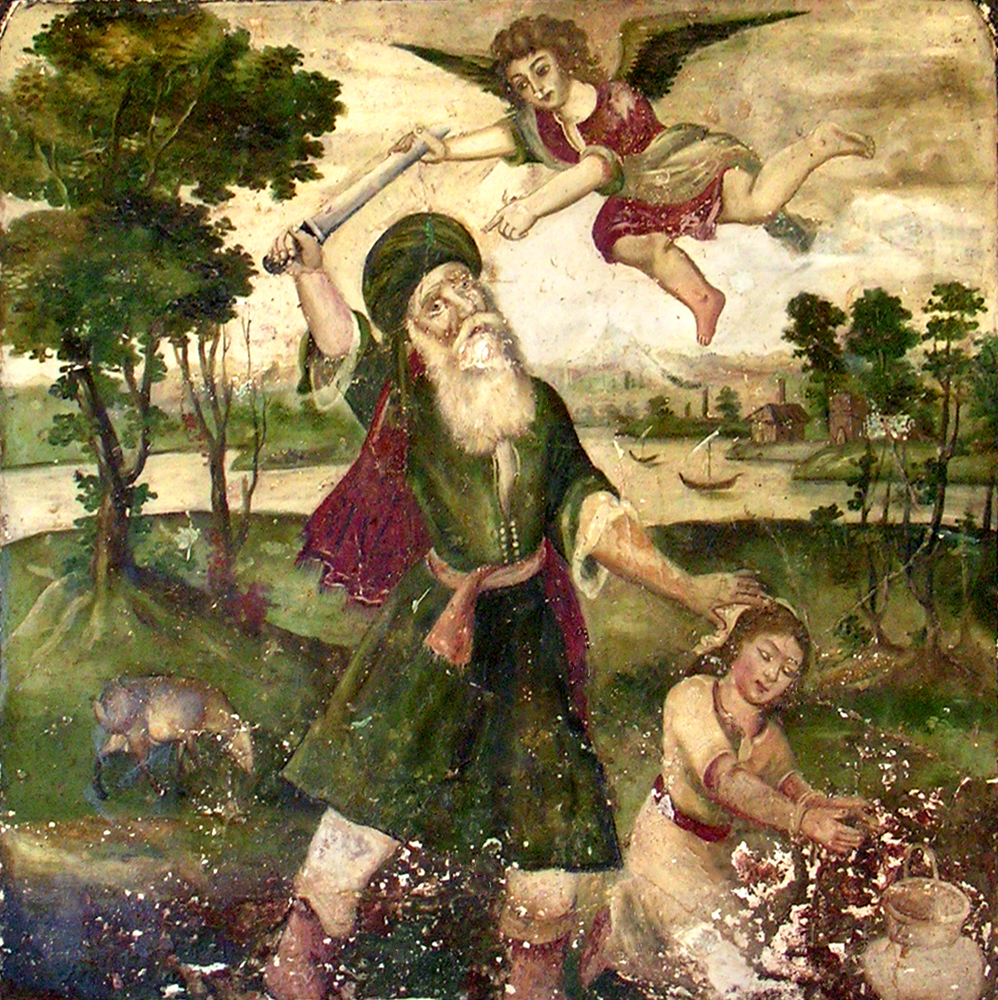
When the Islamic movement emerged in 7th-century Arabia, it developed within this saturated Abrahamic environment. The emerging tradition inherited the existing Arab-Ishmael ethnography but reinterpreted the inherited material.
This reinterpretation had the effect of establishing the new community’s authority within the Abrahamic tradition without relying on Jewish or Christian validation. Instead of accepting the premise that Ishmaelite descent denoted exclusion from the primary covenant, the Islamic tradition elevated Ishmael’s status, presenting him as a central figure in the preservation of Abraham’s original monotheism.
The development of this narrative was gradual. A primary example is the narrative of the commanded sacrifice. The Quran (Surah 37) never explicitly names the son Abraham is commanded to sacrifice. As modern scholarship on early Islamic exegesis has demonstrated, the earliest generations of Muslim scholars disagreed extensively over whether the son was Isaac or Ishmael. The identification of the sacrificial son as Ishmael solidified only as Islamic identity became increasingly distinct from Judaism and Christianity over subsequent centuries.
4. Relocating Abrahamic Authority
The most consequential development in this tradition was the geographic realignment of the narrative.
There is no archaeological or textual evidence that Abraham ever visited Mecca, nor is there any pre-Islamic evidence linking Ishmael to the Kaaba or western Arabia. The connection between Abraham, Ishmael, and the Meccan sanctuary appears for the first time in Islamic tradition.
The development of this narrative had a profound historical outcome: it effectively relocated Abrahamic sacred geography from the Levant to Arabia. By associating an elevated Ishmael with the Kaaba, the resulting tradition shifted the center of Abrahamic authority away from Canaan-centered sacred history toward an Arabian sacred space, establishing the foundational charter of the Islamic community.
Conclusion
When the same evidentiary standards are applied across the texts of Late Antiquity, the historical trajectory becomes clear. There is no pre-Islamic evidence linking Ishmael to the Kaaba. The identification of the sacrificial son as Ishmael developed gradually within Islamic tradition. The Arab-Ishmael genealogy appears in Jewish and Christian sources before it appears in Islamic sources. These observations have led historians to conclude that the Islamic Abraham narrative represents a Late Antique reinterpretation of earlier Abrahamic traditions rather than the preservation of an independent historical memory.
-
Beyond Abstinence: Defining the Architecture of Purity Culture
For many raised in late-20th-century evangelicalism, “abstinence” and “purity culture” are frequently treated as exact synonyms. However, while abstinence is a private historical ethical choice, purity culture is a modern, highly visible sociological construct. This article examines the architecture of the 1990s movement—from purity pledges to the courtship model—and explains why disentangling the ancient ethic from the modern subculture is the crucial first step in understanding its lasting psychological impact.
-
How Can Modern Churches Build Strong Communities Without Sacrificing Intellectual Honesty?
Can a church remain strong when its members question traditional interpretations of the Bible?Discover how shared values, meaningful relationships, and intellectual honesty can help modern Christian communities thrive without demanding agreement on every question.
-
A Voice from the Dust: How the Discovery of Ugarit Rewrote Biblical Scholarship
The accidental discovery of the ancient city of Ugarit in 1928 transformed biblical scholarship. Its texts provided crucial insights into Biblical Hebrew, uncovered the mythology of ancient Canaan, and revealed how Israelite religion developed within the wider cultural world of the ancient Near East.
-
Did Paul Believe Christians Go to Heaven? Paul’s Cosmos, Christology, and Hope of Resurrection
What did Paul think heaven was, who did he believe Jesus was, and what did he expect to happen after death? Explore Paul’s first-century Jewish apocalyptic worldview, his complex understanding of Jesus, and his expectation of bodily resurrection and the liberation of creation.
-
The Whistleblower in the Dirt: Unearthing the Socio-Economic Reality of the Talents
What’s the Parable of the Talents really about? Squadering your abilities or is there more? Let’s dig a little deeper.