
When we read the Hebrew Bible in modern translation, the text flows with a smooth, uniform voice. This polished surface, however, is a literary illusion. The Bible is not a single book written in one sitting; it is a sprawling library compiled over a millennium. Like archaeologists digging through the stratigraphy of an ancient tell, linguists can excavate the text to find the oldest layers of human writing.
When scholars dig to the very bottom of the biblical text, they almost universally point to a single poem: The Song of Deborah, found in Judges 5.
Dating to roughly the 12th century BCE, this violent, triumphant war poem was composed centuries before the reign of King David, the building of the Jerusalem Temple, or the Babylonian Exile. Reading it offers an incredibly rare, unedited glimpse into the raw historical and political reality of early Israel before it was smoothed over by later theologians.
The Linguistic Time Machine
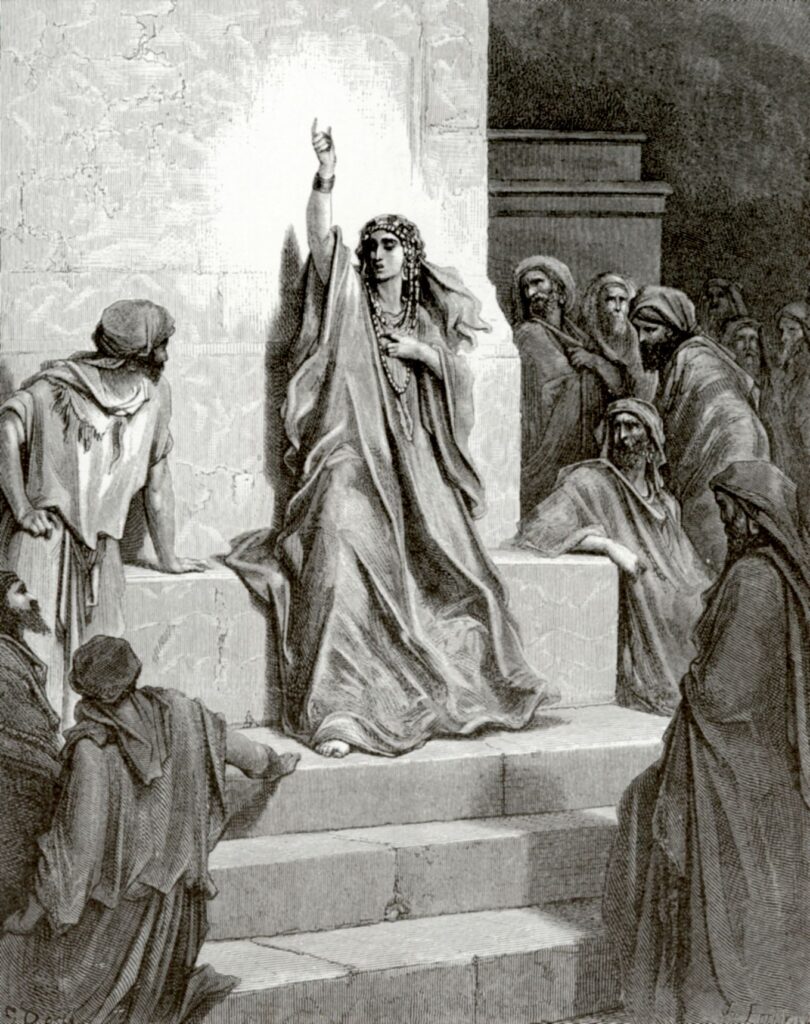
How do scholars know this specific poem is the oldest? The primary evidence is linguistic.
Languages evolve. The English of Shakespeare is different from the English of modern New York, and the English of Beowulf is essentially a foreign language. The same evolutionary process applies to ancient Hebrew.
The Song of Deborah is written in a dialect scholars call “Archaic Biblical Hebrew.” It lacks grammatical features that became standard in later biblical texts. For example, it rarely uses the definite article “ha” (the word for “the”), and it features ancient suffixes and verb forms that parallel ancient Canaanite texts found at Ugarit.
The reason this archaic poem survived without being updated by later scribes is its format: it is poetry. In the ancient world, before widespread literacy, oral history was preserved through rhythm and meter. If a scribe tries to update the vocabulary of a poem, they break the rhythm. Because the poetic meter protected the words, the Song of Deborah survived as a linguistic fossil.
A Warrior God from the Southern Deserts
What does this ancient fossil teach us about the earliest days of Israelite religion? First and foremost, it reveals a very different geographic origin for Yahweh.
In later biblical texts, Yahweh is firmly anchored to the Temple in Jerusalem or associated with the heavens. But in the opening lines of the Song of Deborah, Yahweh is described as a fierce warrior god who marches out of the southern deserts:
“Lord, when you went out from Seir, when you marched from the land of Edom, the earth shook, the heavens poured, the clouds poured down water.”
In the oldest layers of Israelite memory, Yahweh was not yet the universal, abstract creator of the cosmos. He was a terrifying, regional storm deity associated with the rugged, arid mountains of the south. He physically marches north from Edom to intervene in the battles of his people, bringing earthquakes and torrential rain with him.
A Fractured Tribal Alliance
The poem also destroys the later, domesticated image of a perfectly unified, twelve-tribe nation of Israel.
The historical background of the song is a desperate military clash between the Israelites and an oppressive coalition of Canaanite city-states led by a general named Sisera. Deborah, a prophetess and political leader, summons the Israelite tribes to battle.
The poem brutally lists who showed up and who stayed home. The tribes of Ephraim, Zebulun, and Naphtali risk their lives on the battlefield. But the tribes of Reuben, Dan, and Asher completely ignore the call, choosing to stay with their sheep or their ships. Early Israel was not a centralized state; it was a fragile, highly decentralized, and often uncooperative confederacy of highlanders.
Even more strikingly, the tribe of Judah—the tribe that would later produce King David and dominate the entire biblical narrative—is not even mentioned in the poem. In the 12th century BCE, Judah was either too small, too geographically isolated, or not yet considered part of the Israelite coalition.
Mud, Militia, and the Peasant Reality
Finally, the Song of Deborah gives us a stark look at the socioeconomic reality of the Late Bronze and early Iron Age Levant. It was a classic asymmetrical conflict.
The Canaanite elite (commanded by Sisera) possessed iron chariots. In the ancient world, chariots were the equivalent of modern tanks—highly expensive, technologically advanced military machines that dominated the flat valleys. The Israelites, by contrast, were a peasant militia of highland farmers and day laborers. They had no chariots, no standing army, and virtually no heavy armor.
According to the poem, the Israelites won not through superior military tactics, but through a timely flash flood. The storm god Yahweh brings a torrential downpour that causes the Kishon River to overflow its banks. The heavy Canaanite chariots become bogged down in the deep mud, rendering them completely useless and allowing the highland militia to overrun them.
Tearing Down the Domesticated History
The Song of Deborah is a vital text for anyone who wants to look behind the curtain of biblical history. It refuses to play by the rules of later Judean theology.
There is no king, no Jerusalem, no Temple, and no mention of the Exodus or Moses. Instead, we find a fragmented alliance of peasant farmers, a storm god marching from the southern deserts, and a brutal victory celebrated by two powerful female leaders (Deborah the strategist, and Jael the assassin).
By analyzing this ancient linguistic fossil, we can tear down the “Paper Calf” of a neat, sanitized biblical timeline. We are left with something far more authentic: the chaotic, muddy, and desperate origins of a people fighting for their survival in the highlands of the ancient Near East.
-
Beyond Abstinence: Defining the Architecture of Purity Culture
For many raised in late-20th-century evangelicalism, “abstinence” and “purity culture” are frequently treated as exact synonyms. However, while abstinence is a private historical ethical choice, purity culture is a modern, highly visible sociological construct. This article examines the architecture of the 1990s movement—from purity pledges to the courtship model—and explains why disentangling the ancient ethic from the modern subculture is the crucial first step in understanding its lasting psychological impact.
-
How Can Modern Churches Build Strong Communities Without Sacrificing Intellectual Honesty?
Can a church remain strong when its members question traditional interpretations of the Bible?Discover how shared values, meaningful relationships, and intellectual honesty can help modern Christian communities thrive without demanding agreement on every question.
-
A Voice from the Dust: How the Discovery of Ugarit Rewrote Biblical Scholarship
The accidental discovery of the ancient city of Ugarit in 1928 transformed biblical scholarship. Its texts provided crucial insights into Biblical Hebrew, uncovered the mythology of ancient Canaan, and revealed how Israelite religion developed within the wider cultural world of the ancient Near East.
-
Did Paul Believe Christians Go to Heaven? Paul’s Cosmos, Christology, and Hope of Resurrection
What did Paul think heaven was, who did he believe Jesus was, and what did he expect to happen after death? Explore Paul’s first-century Jewish apocalyptic worldview, his complex understanding of Jesus, and his expectation of bodily resurrection and the liberation of creation.
-
The Whistleblower in the Dirt: Unearthing the Socio-Economic Reality of the Talents
What’s the Parable of the Talents really about? Squadering your abilities or is there more? Let’s dig a little deeper.