
Few names in human history carry as much geopolitical, historical, and theological weight as “Israel.” For over three millennia, it has been a tribal marker, a kingdom, a religious identity, and a modern nation-state.
But when we break the name down into its ancient linguistic roots, a fascinating historical puzzle emerges. Like many ancient Near Eastern names, Israel is a “theophoric” name—meaning it contains the name of a deity. The second half of the word, -el, is universally understood. It refers to El, the supreme creator deity in the ancient Canaanite pantheon, which was adopted into early Biblical Hebrew as the generic word for God.
But what about the first half? What does Isra- mean? To answer that, we have to look at the massive gap between what the biblical storytellers wrote and what modern linguists believe the name originally meant.
The Biblical View: The Man Who Fought God
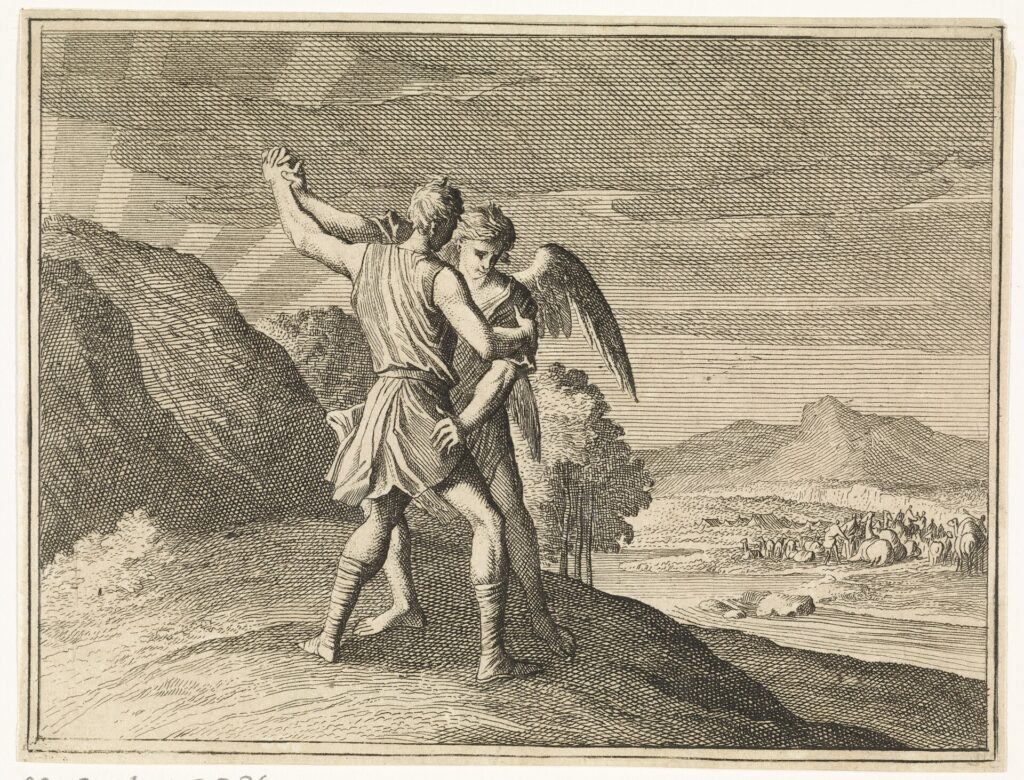
If you ask the Hebrew Bible what “Israel” means, it points you to a single, bizarre, and deeply profound story in Genesis 32.
The patriarch Jacob is traveling back to his homeland, terrified of an impending reunion with his estranged brother, Esau. He sends his family across the Jabbok River and spends the night completely alone in the wilderness. Out of the darkness, a mysterious figure—described variously as a man, an angel, or God himself—appears, and the two engage in a violent, desperate wrestling match that lasts until daybreak.
Even after his hip is dislocated, Jacob refuses to let go of the divine being, demanding a blessing. The being responds by officially changing Jacob’s name: “Your name will no longer be Jacob, but Israel, because you have struggled with God and with humans and have overcome.”
In this biblical narrative, the first half of the name comes from the Hebrew root verb sara, which means “to strive,” “to persist,” or “to wrestle.” The biblical authors are providing a brilliant theological etiology (a retroactive origin story). To the biblical scribes, “Israel” means “He who wrestles with God.” It perfectly defines the relationship between the Hebrew people and Yahweh: a relationship that is not based on blind, silent submission, but on a relentless, questioning, and sometimes combative engagement with the divine.
The Scholarly View: Reversing the Subject
While the story in Genesis 32 is a theological masterpiece, modern linguists and historians point out a major grammatical problem with the biblical translation.
In ancient Semitic languages, when you construct a theophoric name, the deity is almost always the subject of the verb, not the object. God is the one doing the action. For example:
- Dani-el: “God is my judge.”
- Nathan-i-el: “God has given.”
- Ishma-el: “God hears.”
Therefore, grammatically speaking, “Isra-el” should not mean “A man wrestles with God.” It should mean “God strives,” “God rules,” or “May God fight (for us).” Scholars generally agree that “Israel” was an ancient tribal name that existed long before the Book of Genesis was written. Originally, it was likely a militaristic prayer or a battle cry used by nomadic tribes: a plea that El would fight on their behalf. Centuries later, the brilliant biblical scribes took this ancient name and flipped the grammar on its head. By making Jacob the subject of the verb rather than God, they transformed a standard ancient battle-prayer into a profound story of human spiritual struggle.
The Earliest Proof: The Merneptah Stele
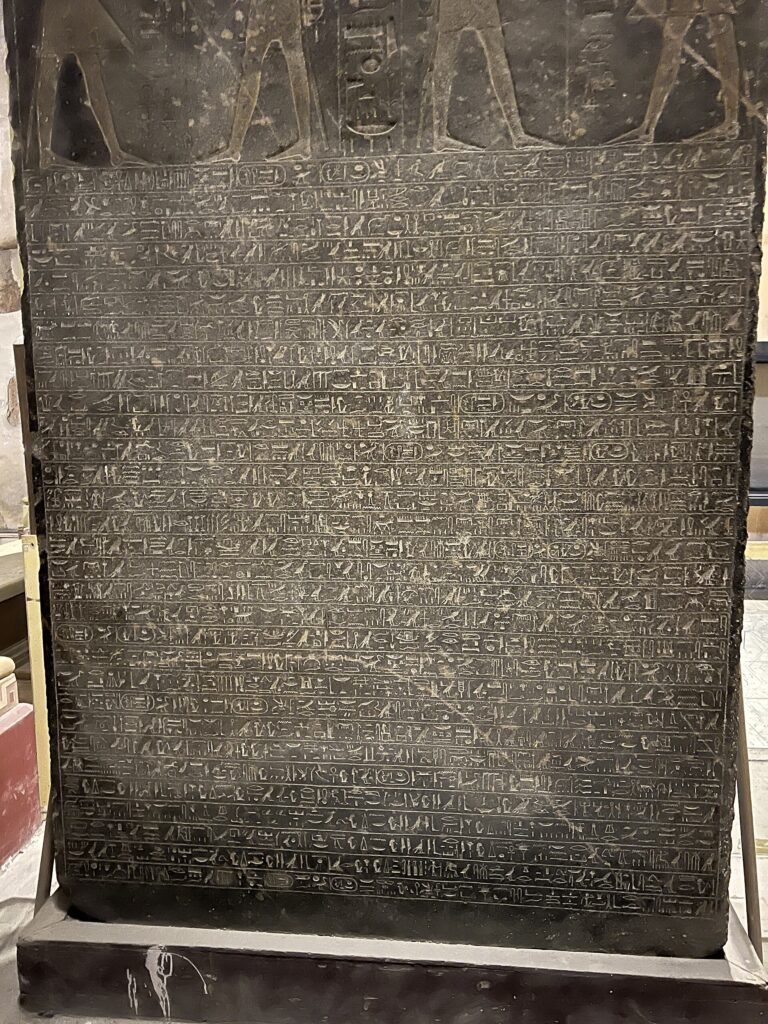
We know that the name Israel was not a late invention of the biblical scribes because it was carved into stone by an enemy empire while the Israelites were still wandering the highlands.
As discussed previously, the earliest extra-biblical mention of the name is found on the Merneptah Stele, an Egyptian victory monument carved around 1208 BCE. Pharaoh Merneptah boasts: “Israel is laid waste, its seed is not.” Crucially, the Egyptian scribes used a specific hieroglyphic “determinative” (a silent symbol that categorized words) next to the word Israel. They used the symbol for a nomadic, foreign people, not a settled kingdom or city-state.
This aligns perfectly with the scholarly consensus. Before there was a monarchy, a temple, or a written Bible, there was a loose confederation of Canaanite highlanders who identified themselves with a powerful theophoric name. They were the people of “Israel”—the tribe that trusted God to fight for them.
A Dual Identity
Ultimately, the historical and biblical meanings of “Israel” do not cancel each other out; they enrich each other.
The archaeological and linguistic evidence tells us that the name began as a rugged, ancient prayer for survival: “May God fight for us.” But the biblical authors elevated that history, ensuring that the people who carried the name would not just be known as warriors, but as a people who intimately, stubbornly, and endlessly wrestle with the divine.
-
Beyond Abstinence: Defining the Architecture of Purity Culture
For many raised in late-20th-century evangelicalism, “abstinence” and “purity culture” are frequently treated as exact synonyms. However, while abstinence is a private historical ethical choice, purity culture is a modern, highly visible sociological construct. This article examines the architecture of the 1990s movement—from purity pledges to the courtship model—and explains why disentangling the ancient ethic from the modern subculture is the crucial first step in understanding its lasting psychological impact.
-
How Can Modern Churches Build Strong Communities Without Sacrificing Intellectual Honesty?
Can a church remain strong when its members question traditional interpretations of the Bible?Discover how shared values, meaningful relationships, and intellectual honesty can help modern Christian communities thrive without demanding agreement on every question.
-
A Voice from the Dust: How the Discovery of Ugarit Rewrote Biblical Scholarship
The accidental discovery of the ancient city of Ugarit in 1928 transformed biblical scholarship. Its texts provided crucial insights into Biblical Hebrew, uncovered the mythology of ancient Canaan, and revealed how Israelite religion developed within the wider cultural world of the ancient Near East.
-
Did Paul Believe Christians Go to Heaven? Paul’s Cosmos, Christology, and Hope of Resurrection
What did Paul think heaven was, who did he believe Jesus was, and what did he expect to happen after death? Explore Paul’s first-century Jewish apocalyptic worldview, his complex understanding of Jesus, and his expectation of bodily resurrection and the liberation of creation.
-
The Whistleblower in the Dirt: Unearthing the Socio-Economic Reality of the Talents
What’s the Parable of the Talents really about? Squadering your abilities or is there more? Let’s dig a little deeper.