
When we picture the historical Jesus, we usually imagine a serene, peaceful rabbi wandering the Galilean countryside, offering quiet spiritual wisdom to fishermen. It is a deeply domesticated, comforting image.
But when we look at the historical and political reality of first-century Judea, that Sunday school picture shatters. Judea was a geopolitical powder keg crawling with heavily armed Roman soldiers, corrupt local aristocrats, and violent revolutionaries. Furthermore, the “peaceful rabbi” image completely fails to explain the climax of Jesus’ life: braiding a whip, flipping over heavy furniture, and violently driving merchants out of the holiest site in Judaism.
To understand the historical Jesus, the disturbance in the Temple, and why the Roman Empire ultimately nailed him to a cross, we have to understand the most radical political faction of his era: the Zealots.
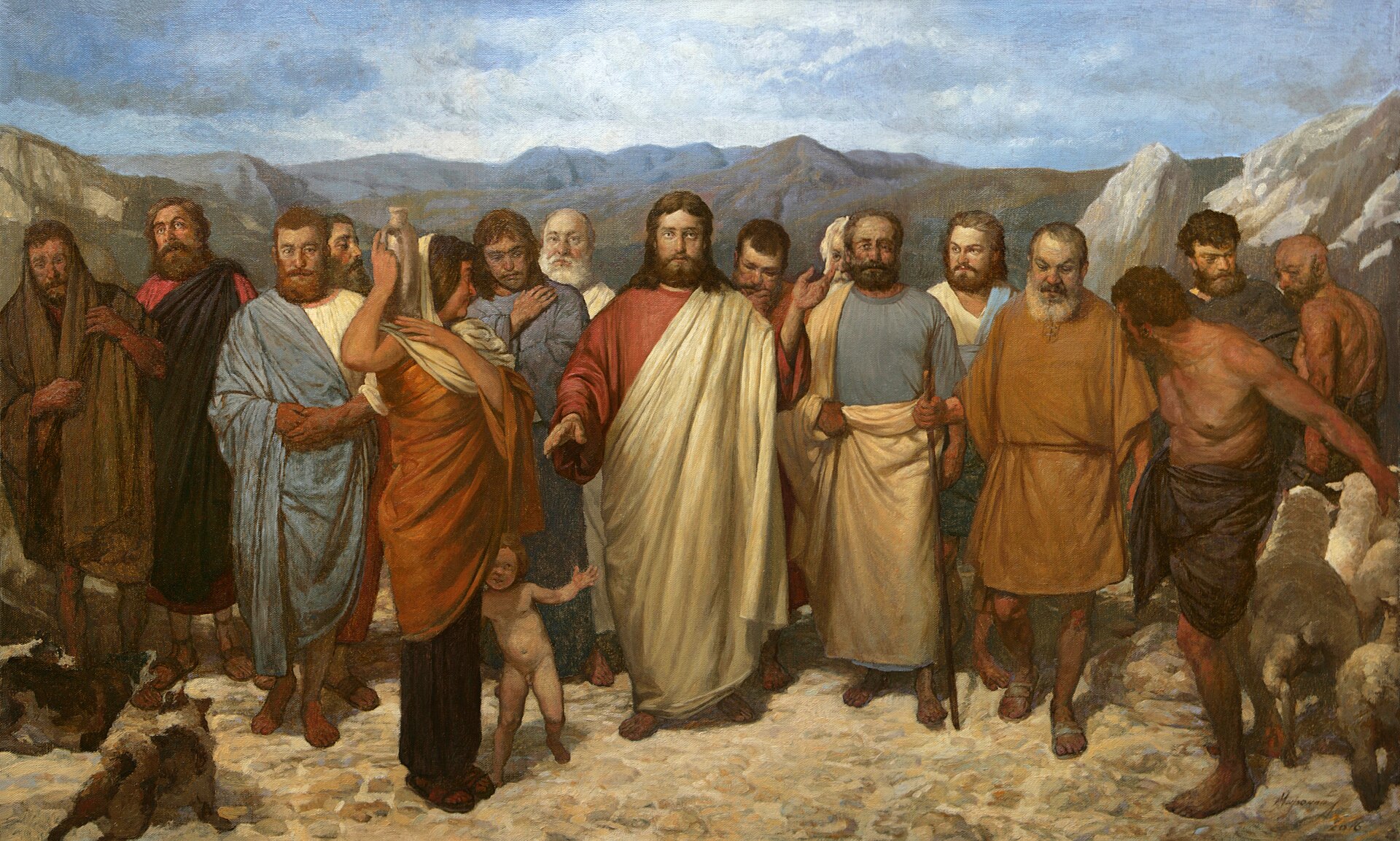
The Dagger-Men: Who Were the Zealots?
According to the first-century Jewish historian Flavius Josephus, the Jewish people were divided into major sects, one of which he called the “Fourth Philosophy”—the Zealots.
Born out of a bloody tax revolt around 6 CE (when Jesus was just a boy), the Zealots were fierce, uncompromising monotheists. They believed that Yahweh was the only legitimate King of Israel. Therefore, paying taxes to a pagan Roman Emperor was not just an economic burden; it was an act of blasphemy. They argued that God would only deliver Israel if the people took up arms and violently expelled the Romans.
As the Roman occupation dragged on, an extreme offshoot of this movement emerged: the Sicarii, or “Dagger-men.” Because they could not defeat the Roman legions in open combat, the Sicarii resorted to ancient urban terrorism. They would hide short, curved daggers (a sica) under their cloaks, mingle in the dense crowds during the great festivals in Jerusalem, and quietly assassinate Roman officials or Jewish high priests who collaborated with Rome.
A Powder Keg in the Inner Circle
Why does this violent movement matter for readers of the New Testament? Because the biblical text explicitly states that Jesus brought this revolutionary element directly into his inner circle.
In the Gospel of Luke, one of the twelve disciples is explicitly named Simon the Zealot. By recruiting Simon, Jesus deliberately invited an anti-Roman militant to his campfire. What makes this truly mind-bending is the presence of another disciple: Matthew, a tax collector. Tax collectors were despised agents of the Roman Empire. In the worldview of a Zealot, a tax collector was a traitor to God who deserved a dagger in the ribs. The geopolitical tension within Jesus’ group must have been electrifying.
Many historical linguists also suspect that the name Judas Iscariot is a Hellenized corruption of the Latin word Sicarius. If Judas was indeed a dagger-man, it dramatically changes his motive for betraying Jesus. He may have followed Jesus believing he was the militant Messiah who would finally lead the violent uprising against Rome. When Jesus refused to take up the sword, a disillusioned Judas may have handed him over out of deep political betrayal.
The Shared Diagnosis: A Den of Robbers
If Jesus surrounded himself with Zealot sympathizers, did he share their violent ideology? The answer is a fascinating historical paradox: Jesus and the Zealots entirely agreed on the socio-economic diagnosis of Judea, but they violently disagreed on the cure.
Both Jesus and the Zealots looked at the high priesthood in Jerusalem and saw a corrupt aristocracy. The Temple elite collaborated with Rome to maintain their power, extracting heavy taxes from the rural peasantry (the ergatai, or day laborers) to enrich themselves.
When Jesus walks into the Temple courtyard and overturns the tables of the money changers, he quotes the prophet Jeremiah, shouting, “You have made it a den of robbers!” We often misunderstand this phrase. A “den of robbers” is not where you get robbed. A den is a safe house where bandits retreat after they have committed their crimes. Jesus was making a devastating economic critique: he was accusing the Temple elite of exploiting the poor peasants all year long, and using the sacred sacrificial system to legitimize and launder their wealth.
Prophetic Street Theater vs. Armed Insurrection
Despite this shared anger, the Temple cleansing was not an act of Zealot terrorism. We know it was not an armed insurrection for one simple logistical reason: the Romans did not immediately slaughter him. Overlooking the Temple courtyards was the Antonia Fortress, packed with Roman soldiers on high alert. If Jesus and his followers had pulled out daggers to seize control, the Roman cohorts would have massacred them in minutes.
Instead, historians categorize Jesus’ action as prophetic street theater. In the tradition of the ancient Hebrew prophets (like Jeremiah smashing a clay pot in public), Jesus was performing an enacted parable. By briefly stopping the sacrifices, he was pantomiming the coming destruction of the Temple, warning that the exploitative system was under divine judgment.
Where the Paths Diverged
Here is where the empathy between Jesus and the Zealots sharply ends. The Zealot solution to Roman oppression was a bloodbath. They wanted to use the weapons of the empire to defeat the empire.
Jesus completely rejected this premise. His message of the “Kingdom of God” was built on the radical idea that if you use swords to seize power, you simply perpetuate the exact same cycle of violence; you merely change the names of the oppressors. This is why Jesus told his followers to love their enemies, to pay their taxes to Caesar (dismissing the Roman coin as earthly trash that belonged to a pagan emperor anyway), and to turn the other cheek. He believed that taking up the sword was a failure to trust in God’s ultimate reordering of society.
The Roman Misunderstanding
Jesus may have drawn a strict theological line between his prophetic street theater and the daggers of the Zealots, but to the Roman Empire, it was a distinction without a difference.
Pontius Pilate did not care about the nuances of Jewish theology. All Pilate saw was a charismatic peasant from Galilee who was drawing massive crowds, stirring up anti-establishment sentiment, and causing physical chaos in the Temple during the most volatile week of the year. To Rome, Jesus was functionally indistinguishable from a Zealot.
When we tear down the “Paper Calf” of a domesticated, purely spiritualized Jesus, we recover the dangerous reality of the first century. Jesus was not crucified for telling people to be kind to one another. He was crucified because he directly challenged a rigged economic system and the brutal power of the state. Rome gave him the exact same punishment they gave to the Zealot insurrectionists: they nailed him to a cross under the political charge of claiming to be the “King of the Jews.”
-
Beyond Abstinence: Defining the Architecture of Purity Culture
For many raised in late-20th-century evangelicalism, “abstinence” and “purity culture” are frequently treated as exact synonyms. However, while abstinence is a private historical ethical choice, purity culture is a modern, highly visible sociological construct. This article examines the architecture of the 1990s movement—from purity pledges to the courtship model—and explains why disentangling the ancient ethic from the modern subculture is the crucial first step in understanding its lasting psychological impact.
-
How Can Modern Churches Build Strong Communities Without Sacrificing Intellectual Honesty?
Can a church remain strong when its members question traditional interpretations of the Bible?Discover how shared values, meaningful relationships, and intellectual honesty can help modern Christian communities thrive without demanding agreement on every question.
-
A Voice from the Dust: How the Discovery of Ugarit Rewrote Biblical Scholarship
The accidental discovery of the ancient city of Ugarit in 1928 transformed biblical scholarship. Its texts provided crucial insights into Biblical Hebrew, uncovered the mythology of ancient Canaan, and revealed how Israelite religion developed within the wider cultural world of the ancient Near East.
-
Did Paul Believe Christians Go to Heaven? Paul’s Cosmos, Christology, and Hope of Resurrection
What did Paul think heaven was, who did he believe Jesus was, and what did he expect to happen after death? Explore Paul’s first-century Jewish apocalyptic worldview, his complex understanding of Jesus, and his expectation of bodily resurrection and the liberation of creation.
-
The Whistleblower in the Dirt: Unearthing the Socio-Economic Reality of the Talents
What’s the Parable of the Talents really about? Squadering your abilities or is there more? Let’s dig a little deeper.