
When modern readers open the first few chapters of Genesis, they often approach the text as an ancient attempt at a science textbook or a literal historical record of the earth’s origins. This modern approach often leads to endless debates about geology, evolution, and carbon dating. However, when historical-critical scholars examine the early chapters of Genesis, they are not looking for paleontology. They are looking at one of the most brilliant pieces of theological and political resistance literature ever written.
To understand Genesis 1 through 11, we must look at the historical context in which these texts were finalized. The overwhelming scholarly consensus is that the final editing of these chapters was completed during or shortly after the Babylonian Exile in the 6th century BCE. The Israelite scribes were living as captives in the heart of the Babylonian Empire, surrounded by towering ziggurats, imperial propaganda, and massive state-sponsored religious myths.
Rather than assimilating into the empire, the Israelite authors took the famous Babylonian myths, dismantled them, and rebuilt them to strip the empire of its theological power. Genesis is a fierce, highly intentional polemic against the worldview of the ancient empires.
Subverting the Cosmos: Genesis 1 vs. the Enuma Elish

In the ancient Near East, the most famous creation story was the Babylonian Enuma Elish. In this myth, the universe is created through a violent, chaotic war among the gods. The storm god Marduk slaughters the sea goddess Tiamat, rips her corpse in half, and uses her body to build the heavens and the earth. In the Babylonian worldview, creation is inherently violent, and the cosmos is built on the blood of a dead god. Furthermore, humans are created as an afterthought out of the blood of a demon, designed specifically to serve as slaves to do the gods’ dirty agricultural work.
The Israelite scribes took this cultural narrative and completely subverted it in Genesis 1. In the biblical account, there is no cosmic war. There are no rival gods. Yahweh does not have to slaughter a sea monster to create the world; He simply speaks, and the chaotic waters calmly obey. The universe is not born out of violence, but out of supreme, effortless order.
Even more radically, the biblical text redefines the nature of humanity. In Genesis, humans are not created as miserable slaves to feed lazy deities. They are created in the Imago Dei—the Image of God. In the ancient world, only the king or the emperor was considered the “image of god.” The Genesis authors democratized this royal title, declaring that every single human being possesses inherent royal dignity and is tasked with stewarding the earth as God’s representative. It is a direct theological assault on the oppressive class structures of Babylon.
Subverting the Flood: Noah vs. Gilgamesh and Atrahasis
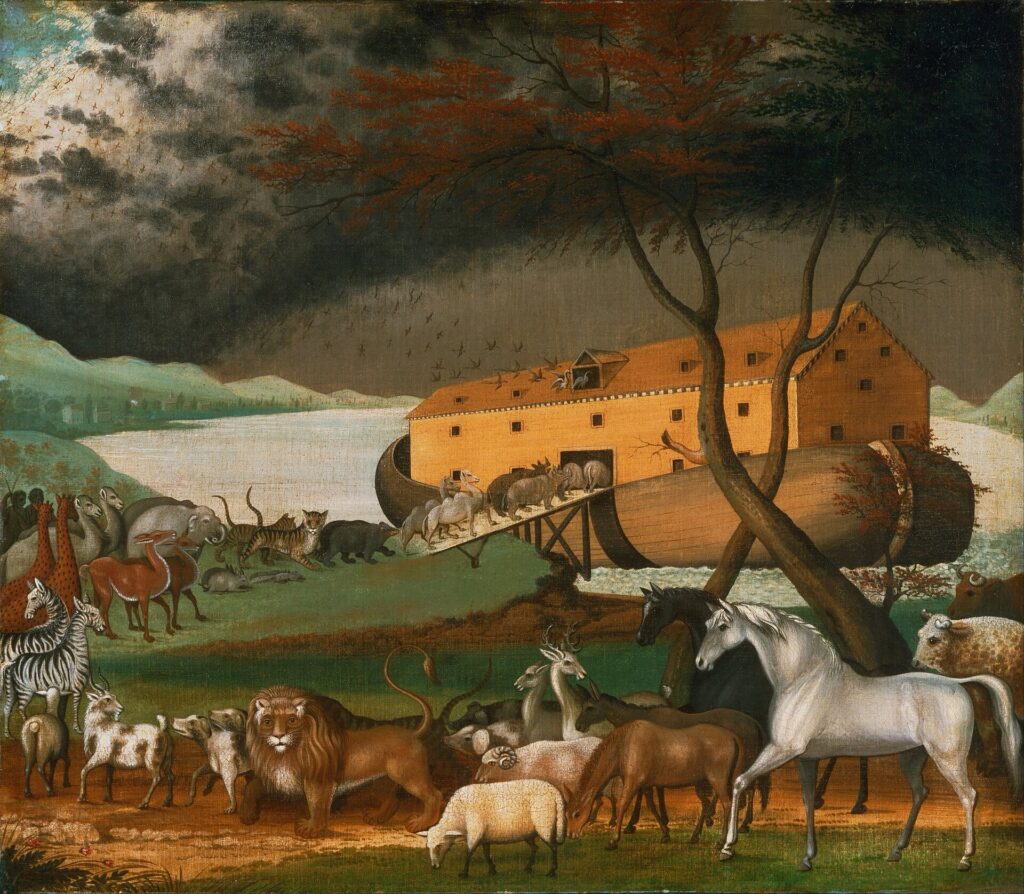
The anti-imperial polemic continues brilliantly into the Flood narrative of Genesis 6 through 9. The Israelites did not invent the concept of a great flood. Stories of a global deluge were deeply embedded in the ancient Near Eastern consciousness, most famously in the Epic of Gilgamesh and the Epic of Atrahasis.
In the Babylonian versions, the gods decide to flood the earth because humans have multiplied too much and are making too much noise. The gods simply cannot sleep. The flood is an act of divine annoyance and terrible population control. However, the Babylonian gods fail to realize that by wiping out humanity, they are destroying their own food supply. As the floodwaters rise, the texts describe the gods cowering like frightened dogs, starving without the sacrifices of their human slaves. When the flood hero (Utnapishtim or Atrahasis) finally survives and offers a sacrifice, the starving gods swarm around the burning meat “like flies.”
The biblical scribes rewrite this myth to reveal a completely different kind of deity. In Genesis, Yahweh does not flood the earth because He is annoyed by noise. He sends the flood because humanity has become consumed by violence, oppression, and moral corruption. God is not annoyed; He is deeply grieved by the lack of justice in the world.
Furthermore, the God of Genesis is sovereign and entirely self-sufficient. He does not starve during the flood, and He does not need Noah’s sacrifices to survive. When Noah emerges and offers a sacrifice, God responds not out of desperate hunger, but out of grace, promising to never again destroy the earth, completely overturning the capricious, selfish nature of the Babylonian pantheon.
Subverting the Ziggurat: The Tower of Babel
The polemic reaches its climax in Genesis 11 with the story of the Tower of Babel. For the Babylonian Empire, the pride of their civilization was the Etemenanki, a massive, towering ziggurat dedicated to Marduk in the heart of Babylon. The Babylonians believed their tower literally reached into the heavens, serving as the gate of the gods.
The Israelite author writes a devastating satire of this imperial monument. In the Genesis narrative, the people of Babel arrogantly attempt to build a tower with its top in the heavens to make a name for themselves. But the biblical text delivers a brilliant, comedic twist: the tower is so puny, and the human attempt at greatness is so insignificant, that God has to “come down” just to see it. What Babylon considered the terrifying pinnacle of human achievement, the biblical author treats as a pathetic, arrogant failure that ends in linguistic confusion and imperial collapse.
The Verdict
When we read the opening chapters of Genesis as a literal, scientific textbook, we miss the profound historical genius of the authors. Genesis 1 through 11 is survival literature. It wasn’t written to tell us how the world came to be. It was written by a captive people who refused to accept the oppressive mythology of their conquerors. By rewriting the stories of creation, the flood, and the tower, the Israelite scribes systematically dismantled the theology of the empire, declaring that the world is ordered by a just, singular God who values human dignity over imperial violence.
-
Beyond Abstinence: Defining the Architecture of Purity Culture
For many raised in late-20th-century evangelicalism, “abstinence” and “purity culture” are frequently treated as exact synonyms. However, while abstinence is a private historical ethical choice, purity culture is a modern, highly visible sociological construct. This article examines the architecture of the 1990s movement—from purity pledges to the courtship model—and explains why disentangling the ancient ethic from the modern subculture is the crucial first step in understanding its lasting psychological impact.
-
How Can Modern Churches Build Strong Communities Without Sacrificing Intellectual Honesty?
Can a church remain strong when its members question traditional interpretations of the Bible?Discover how shared values, meaningful relationships, and intellectual honesty can help modern Christian communities thrive without demanding agreement on every question.
-
A Voice from the Dust: How the Discovery of Ugarit Rewrote Biblical Scholarship
The accidental discovery of the ancient city of Ugarit in 1928 transformed biblical scholarship. Its texts provided crucial insights into Biblical Hebrew, uncovered the mythology of ancient Canaan, and revealed how Israelite religion developed within the wider cultural world of the ancient Near East.
-
Did Paul Believe Christians Go to Heaven? Paul’s Cosmos, Christology, and Hope of Resurrection
What did Paul think heaven was, who did he believe Jesus was, and what did he expect to happen after death? Explore Paul’s first-century Jewish apocalyptic worldview, his complex understanding of Jesus, and his expectation of bodily resurrection and the liberation of creation.
-
The Whistleblower in the Dirt: Unearthing the Socio-Economic Reality of the Talents
What’s the Parable of the Talents really about? Squadering your abilities or is there more? Let’s dig a little deeper.