
The history, archaeology, and political rivalries behind the Hebrew Bible, from the ninth century BCE to the Babylonian exile.
The Hebrew Bible tells the history of Israel and Judah through the actions of kings, the warnings of prophets, and the relationship between a people and their God. Kingdoms rise and fall, rulers make disastrous decisions, foreign armies invade, and Jerusalem eventually lies in ruins. The biblical authors interpret these events through questions of religious loyalty, justice, kingship, and divine judgment.
But what happens when we examine the same period through archaeology, contemporary inscriptions, and the records of neighbouring kingdoms?
A more complicated history emerges. The northern kingdom of Israel was once a prosperous regional power, considerably stronger than Judah. Both kingdoms eventually became entangled in the ambitions of Assyria, Egypt, and Babylonia. Their rulers negotiated alliances, paid tribute, resisted foreign domination, and sometimes made decisions that ended in catastrophe.
Their neighbours were pursuing their own interests. The Philistines, Phoenicians, Moabites, Ammonites, and Edomites had their own kingdoms, gods, trading networks, and political ambitions. They were not simply supporting characters in Israel’s story.
Understanding this wider history helps explain some of the Hebrew Bible’s most striking features: its conflicting portraits of kings, its hostility toward certain neighbouring peoples, its warnings against foreign alliances, and its attempts to explain the destruction of Jerusalem.
This article begins in the ninth century BCE, when Israel and Judah become clearly identifiable as separate kingdoms in the historical record, and ends with the Babylonian conquest in the early sixth century BCE. The aim is not to prove or disprove the Bible, but to distinguish what we can establish historically from how ancient authors remembered and interpreted the past.
Two Kingdoms, Not One
The Hebrew Bible describes Israel and Judah as the two halves of an earlier united monarchy. According to 1 Kings 11–12, David and Solomon ruled a single kingdom that divided after Solomon’s death, when the northern tribes rejected the authority of his son Rehoboam.
Whether this account accurately describes the kingdoms’ origins remains disputed.
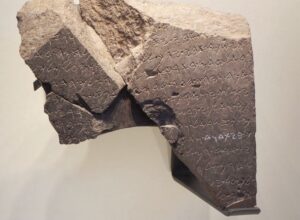
Archaeology has not established the existence of a tenth-century empire ruled from Jerusalem on the scale attributed to David and Solomon in Kings. The ninth-century Tel Dan inscription, however, contains a reference that most scholars understand as the House of David. This supports the existence of a dynasty associated with David, but it tells us little about the size of his kingdom or the achievements attributed to Solomon.
Some researchers argue that David and Solomon ruled a substantial early state whose archaeological remains are difficult to identify or date. Others envision a considerably smaller highland polity, with the biblical account of a wealthy united monarchy reflecting later political ideals. Another possibility is that Israel and Judah developed largely separately rather than emerging from the division of a single centralized kingdom.
The dating of monumental buildings at Megiddo, Hazor, and Gezer remains central to this debate. Structures once attributed to Solomon have sometimes been reassigned to later rulers, particularly the ninth-century Omride dynasty.
Firmer historical ground begins in the ninth century BCE. By then, Israel and Judah were recognizable political entities, although the evidence for Israel is considerably richer.
Israel: The Stronger Kingdom
The northern kingdom occupied the more fertile and economically productive parts of the central and northern highlands. Its territory included important valleys and routes connecting the Mediterranean coast with inland Syria. Its capital, Samaria, became the centre of an increasingly sophisticated state.
The reign of Omri, in the early ninth century BCE, marks a major development. Omri established a dynasty that included his son Ahab and transformed Israel into a significant regional power.
Archaeological remains at Samaria, Jezreel, and Megiddo reveal monumental architecture, fortifications, and substantial royal investment. Although the dating of individual buildings remains debated, the emergence of a powerful northern kingdom during the ninth century is well supported.
Israel also appears in contemporary foreign inscriptions. The Moabite king Mesha refers to Omri and Israelite domination of territory east of the Dead Sea. Assyrian records mention Ahab among the rulers opposing Assyrian expansion at Qarqar in 853 BCE. The Tel Dan inscription refers to conflicts involving Israel and the ruling dynasty of Judah.
These are independent sources produced by Israel’s neighbours and enemies. They establish that the northern kingdom was an important political actor beyond the biblical narrative.
Judah: A Smaller Southern Neighbour
Judah developed in a less favourable environment. Much of its territory consisted of comparatively dry highlands, with fewer major trade routes and a smaller agricultural base.
Jerusalem was its political and religious centre, but it appears to have been considerably smaller than Samaria during much of the ninth century BCE.
How developed Judah was at this stage remains disputed. Some archaeologists see evidence of a functioning kingdom with significant administrative capacity already in the tenth or ninth century. Others argue that Judah became a more centralized and territorially integrated state primarily during the eighth century, particularly under Assyrian influence.
Both interpretations recognize that Judah eventually developed a substantial administration. The disagreement concerns when that process began.
What is clear is that Israel and Judah were not equal partners. For much of their shared history, Israel was the stronger kingdom. This reverses the impression readers can easily gain from the Bible, where Jerusalem and the Davidic dynasty occupy the central place in the narrative.
A Region of Competing Kingdoms
The southern Levant was not divided into two Israelite kingdoms surrounded by anonymous enemies. It contained numerous political communities, each pursuing its own interests.
The Phoenician cities of Tyre and Sidon were important centres of maritime commerce. Their trading networks extended across the Mediterranean, while their merchants maintained connections with inland kingdoms.
The Philistine city-states, including Gaza, Ashkelon, Ashdod, Ekron, and Gath, occupied the southern coastal plain. Their access to agricultural resources and international trade routes made them economically significant.
East of the Dead Sea lay Moab, with its own monarchy and religious traditions centred on the god Chemosh. Farther north, Ammon occupied the region around Rabbath-Ammon, near modern Amman. To the south and southeast, Edom developed political structures connected with agriculture, copper production, and regional trade.
Another important neighbour was Aram-Damascus, the powerful Aramean kingdom centred on Damascus. During the ninth century BCE, it was one of Israel’s principal rivals.
These kingdoms were not permanently divided into friends and enemies. Alliances changed according to circumstances. A ruler might cooperate with a neighbour against a common threat one decade and fight that same neighbour over territory the next.
This political reality is essential for understanding why the Bible sometimes portrays neighbouring peoples as allies, sometimes as enemies, and sometimes as relatives who have betrayed one another.
Omri and Ahab: Prosperity, Diplomacy, and Religion
The Omride dynasty brought Israel into the wider diplomatic, military, and commercial world of the ancient Near East.
In 853 BCE, an Assyrian army under Shalmaneser III confronted a coalition of western rulers at Qarqar, in modern Syria. The Assyrian account names Ahab of Israel among the participants and credits him with a substantial military contingent, including chariots. The figures may be exaggerated, but Israel’s inclusion demonstrates its regional importance.
The biblical portrayal of Ahab is strikingly different. In 1 Kings, he is remembered principally for his religious failures, especially his association with the worship of Baal and the influence of his Phoenician wife, Jezebel.
From the perspective of Assyrian military records, Ahab was an important regional ruler. From the perspective of the biblical authors, his religious policies were unacceptable. Neither account is neutral: the Assyrian king wanted to celebrate his military achievements, while the biblical writers evaluated rulers according to religious standards.
Ahab’s Marriage to Jezebel: A Political Alliance
According to 1 Kings 16:31, Ahab married Jezebel, daughter of Ethbaal, described as king of the Sidonians. The term Sidonians could also be used more broadly for Phoenicians. The later historian Josephus, drawing on Phoenician traditions, identifies Ethbaal as a ruler of Tyre.
We have no contemporary Phoenician inscription independently confirming the marriage. Nevertheless, the relationship fits the political circumstances of the ninth century BCE and is generally considered historically plausible.
Royal marriages were familiar instruments of diplomacy. They could strengthen relationships between ruling families, facilitate trade, and reduce the risk of conflict. The marriage between Ahab and Jezebel was therefore probably part of a wider political alliance.
Israel and Phoenicia had complementary economic interests. Israel controlled fertile agricultural regions and important inland routes, while Tyre possessed maritime connections extending across the Mediterranean. Phoenician cities needed agricultural supplies and access to inland markets; Israel could benefit from imported goods, specialist craftsmanship, and overseas commercial networks.
Grain, olive oil, wine, timber, metalwork, and luxury goods all belonged to the wider exchange economy of the region. The carved ivories discovered at Samaria demonstrate Israel’s participation in an international artistic and commercial culture, although they cannot be attributed directly to Jezebel’s marriage.
It is reasonable to suppose that the alliance strengthened existing economic relationships. We cannot, however, calculate its benefits or demonstrate that the marriage itself caused an increase in trade. No treaty survives specifying commercial concessions between Ahab and Ethbaal.
The relationship was probably advantageous to Phoenicia as well. Tyre’s merchants needed access to inland markets and the routes connecting the coast with Damascus, Transjordan, and Mesopotamia. A friendly Israelite kingdom could provide valuable commercial and political opportunities.
Ahab’s marriage therefore reveals Israel’s importance as a regional power capable of establishing dynastic relationships with wealthy Mediterranean trading cities.
Why Did the Bible Condemn the Alliance?
The biblical narrative emphasizes the religious consequences of the marriage. Jezebel is associated with the worship of Baal, and 1 Kings describes Ahab establishing a temple and altar for Baal in Samaria.
Historically, supporting the religious traditions of a foreign royal wife would not have been unusual. Dynastic marriages could bring priests, religious practices, and cultural influences into a royal court. Such arrangements might serve diplomatic as well as religious purposes.
Israelite and Phoenician religion also belonged to a shared Northwest Semitic cultural world. Deities such as El and Baal were familiar across the region, although their local identities and forms of worship varied. The Baal associated with Jezebel may have been connected with Melqart, the prominent god of Tyre, but the identification remains debated.
The biblical authors, writing from a perspective that demanded exclusive loyalty to YHWH, interpreted these developments as religious corruption. The historical Jezebel may have been a politically influential queen who supported her ancestral traditions, but the extent of her personal responsibility for the actions attributed to her cannot be independently established.
This creates a revealing contrast. Ahab’s marriage may have strengthened Israel’s diplomatic and economic position, while the religious consequences of the same alliance contributed to his negative reputation in the biblical narrative.
The Omrides also established dynastic connections with Judah. The biblical account associates Athaliah, who eventually ruled Judah, with Ahab’s family, although her precise parentage remains debated. If these relationships are historically reliable, they suggest a wider network of royal marriages linking Phoenicia, Israel, and Judah.
The Omrides were therefore not merely local rulers. They participated in international diplomacy, trade, and dynastic politics. The very policies that strengthened their kingdom may have helped make them controversial in later biblical memory.
Moab’s Revolt: Another Side of the Story
The Mesha Stele provides an unusually valuable opportunity to compare biblical history with an account written by one of Israel’s neighbours.
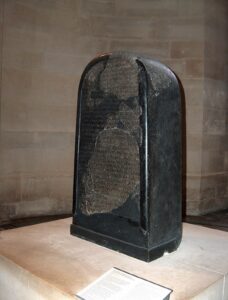
In this ninth-century inscription, King Mesha of Moab describes how Israel, under Omri and his successors, had dominated parts of Moabite territory. Mesha credits his god Chemosh with enabling him to recover territory and restore Moabite independence.
The Bible also preserves a story of Moabite rebellion in 2 Kings 3. It describes a campaign by Israel, Judah, and Edom against Moab, ending with Mesha sacrificing his eldest son on the city wall and the Israelite coalition withdrawing.
The accounts differ in emphasis and detail. Mesha presents the conflict as a victorious liberation from Israelite domination, while the biblical narrative emphasizes the campaign against Moab and its unexpected conclusion.
We cannot simply combine the two into a complete military history. They may describe overlapping stages of a longer conflict, but the chronology remains debated.
What they establish is that Moab was not merely a rebellious dependency in Israel’s story. It was a kingdom whose rulers understood their struggle in terms of national independence and divine support.
The theological resemblance is revealing. Just as biblical authors explained Israel’s military fortunes through YHWH’s actions, Mesha explained Moab’s fortunes through Chemosh. Both peoples interpreted political events within a religious framework.
The Collapse of the Omride Dynasty
During the middle of the ninth century BCE, Israel faced growing pressure from Aram-Damascus.
The Tel Dan Stele, generally attributed to the Aramean king Hazael, celebrates victories over the kings of Israel and Judah. The surviving inscription appears to claim responsibility for the deaths of two kings usually identified as Joram of Israel and Ahaziah of Judah.
The biblical account in 2 Kings 9 attributes their deaths to Jehu, who seized power in Israel.
One possibility is that the Aramean inscription exaggerates Hazael’s achievements, claiming credit for deaths resulting from the wider conflict. Another is that the biblical account reshaped the events to present Jehu as the principal instrument of dynastic change. The precise relationship between Hazael’s campaigns and Jehu’s coup remains disputed.
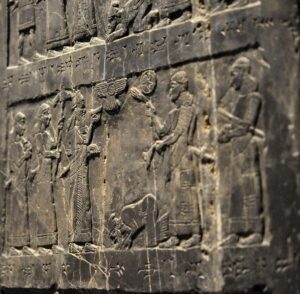
What is clear is that the Omride dynasty ended and Israel’s political position weakened.
Jehu subsequently appears on the Black Obelisk of Shalmaneser III, dated to around 841 BCE. The monument depicts a figure bowing before the Assyrian king and records tribute from Jehu, identified as belonging to the house or land of Omri.
Assyrian officials continued to associate Israel with Omri even after his dynasty had disappeared. This illustrates how important the Omride kingdom had become in the wider political world.
Assyria Transforms the Region
During the eighth century BCE, Assyria became the dominant imperial power in the Levant. Its kings commanded armies capable of prolonged campaigns, major sieges, and the forced movement of large populations.
Assyrian conquest did not necessarily mean the destruction of a kingdom. The empire commonly preferred subordinate rulers who paid tribute and accepted imperial authority. Local kings could remain in office as long as they cooperated.
Rebellion, however, could bring military intervention, territorial annexation, deportation, and the replacement of local rulers.
The consequences differed considerably from one kingdom to another.
Philistia: Prosperity Under Imperial Rule
The Philistine city-states illustrate how cooperation with Assyria could be economically advantageous.
Some cities became important production and trading centres within the imperial system. Ekron, for example, developed substantial olive-oil production facilities, probably benefiting from access to wider Assyrian markets.
Assyria gained agricultural products and revenue, while local elites could benefit from imperial protection and commercial opportunities.
This raises an interesting possibility concerning the Bible’s hostility toward Philistia. Some researchers suggest that Philistine prosperity under Assyrian domination may have intensified Judean resentment, particularly when Judah itself suffered military devastation.
The hypothesis has limits. Hostile traditions concerning Philistines predate Assyrian rule, and biblical texts developed over centuries. Imperial-era rivalry may have reinforced existing attitudes rather than created them.
Nevertheless, the contrast is important: the same empire that devastated one kingdom could provide economic opportunities for another.
The End of the Northern Kingdom
Israel eventually experienced the consequences of resisting Assyria.
During the 730s BCE, Tiglath-pileser III conquered northern Israelite territories and deported inhabitants. The remaining kingdom, centred on Samaria, survived for a few more years.
After another rebellion, Samaria fell in 722/720 BCE. The conquest is associated with Shalmaneser V and Sargon II. Shalmaneser probably initiated or completed the siege, while Sargon claimed the conquest and subsequent reorganization. Their precise roles remain debated.
Israel ceased to exist as an independent kingdom. Its territory became part of the Assyrian provincial system.
But its population did not disappear. Assyrian records describe deportations, while archaeology indicates that many inhabitants remained. New populations were also settled in the region.
Second Kings 17:24 describes settlers arriving from Babylon, Cuthah, Avva, Hamath, and Sepharvaim. This passage reflects a later Judean understanding of Samaria’s population and serves a religious purpose, so it should not be treated as a neutral administrative record.
Independent Assyrian inscriptions provide additional evidence. Sargon II records the resettlement of Arabian groups named Tamudi, Ibadidi, Marsimani, and Hayappa in Samaria.
The resulting province contained surviving Israelites alongside newcomers from different parts of the empire.
This matters for understanding the later Samaritans. Their origins cannot accurately be reduced to a story of foreigners replacing the original Israelites. They developed in a region where substantial Israelite population continuity existed alongside imperial resettlement.
The biblical hostility toward Samaria therefore reflects, in part, later disputes between related communities over religious legitimacy, ancestry, and identity.
Egypt: From Assyria’s Enemy to Its Subject
Egypt was a major participant in Levantine politics, but its position changed dramatically during the eighth and seventh centuries BCE.
During much of this period, Egypt was ruled by the Twenty-Fifth Dynasty, whose kings originated in Kush, in what is now Sudan. These Kushite rulers controlled Egypt and were involved in the politics of the Levant.
Egypt supported or encouraged resistance to Assyrian expansion. From the Assyrian perspective, it was both a rival power and a potential source of assistance for rebellious western kingdoms.
In 701 BCE, Egyptian and Kushite forces confronted the Assyrians in the southern Levant during the campaign that devastated Hezekiah’s Judah.
A generation later, Assyria invaded Egypt itself.
In 671 BCE, Esarhaddon captured Memphis and defeated the Kushite ruler Taharqa. Assyria established control over much of Lower Egypt through subordinate local rulers, although Kushite resistance continued.
Further campaigns followed under Ashurbanipal. In 663 BCE, Assyrian forces reached and sacked Thebes, one of Egypt’s most important religious and political centres.
Assyrian control was neither permanent nor equally effective throughout Egypt. The empire relied heavily on local rulers and faced recurring resistance.
During the middle of the seventh century BCE, Psamtik I, originally a ruler of Sais in the Nile Delta, gradually consolidated his authority and restored Egyptian independence. The precise chronology of Assyria’s loss of effective control remains debated.
By the later seventh century, Egypt was again acting as an independent regional power.
This becomes crucial when Assyria begins to collapse. Egypt had once resisted Assyria and subsequently been conquered by it. Yet it would soon intervene militarily to preserve the remnants of the same empire.
The explanation was geopolitical. A weakened Assyria could serve as a buffer between Egypt and the expanding power of Babylon. Egypt had little reason to welcome a new and potentially stronger empire on its northeastern frontier.
Former enemies could become allies when their political interests changed.
Judah Survives Assyria—but at a Cost
The fall of Israel transformed Judah’s position. Judah was now a smaller kingdom living beside territories directly controlled by Assyria.
Its rulers faced a difficult choice: cooperate with Assyria or risk the fate of Samaria.
Under King Hezekiah, Judah eventually chose resistance.
Hezekiah’s Revolt
In 701 BCE, Sennacherib launched a major campaign in the southern Levant. Hezekiah had apparently joined a wider movement of resistance to Assyrian authority, encouraged in part by expectations of Egyptian and Kushite assistance.
The Assyrian response was devastating.
Sennacherib’s inscriptions describe the capture of numerous fortified Judean cities and the deportation of a very large population. The reported figure of 200,150 deportees should not be accepted uncritically as an exact count.
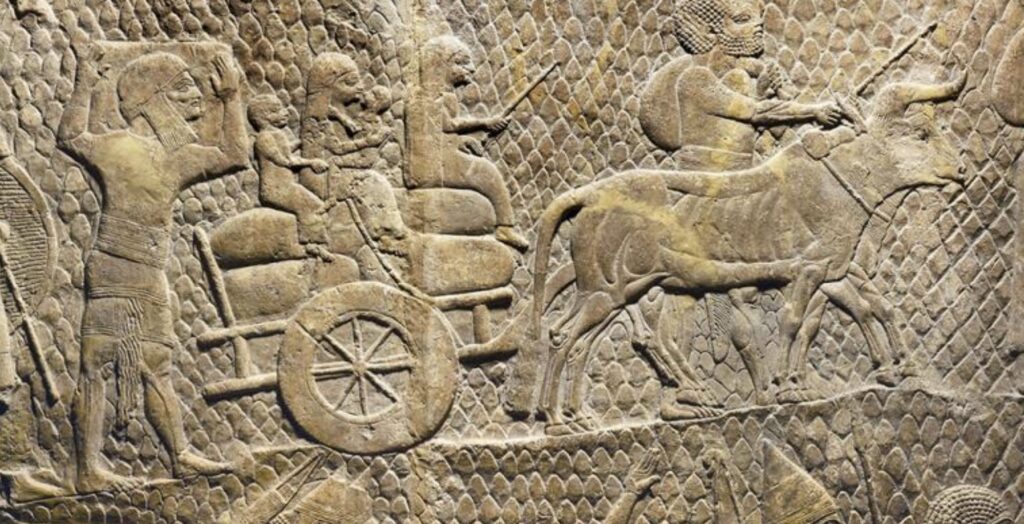
The conquest of Lachish, one of Judah’s most important fortified cities, is depicted in reliefs from Sennacherib’s palace at Nineveh. Archaeological excavations at Lachish have uncovered destruction remains consistent with the Assyrian campaign.
Jerusalem, however, was not conquered.
Sennacherib claimed to have confined Hezekiah in Jerusalem like a bird in a cage and recorded receiving substantial tribute. He did not claim to have captured the city.
The biblical account in 2 Kings 18–19 explains Jerusalem’s survival through divine intervention. Historians have proposed several alternatives, including logistical difficulties, disease, political developments elsewhere, Egyptian military pressure, or a negotiated settlement. None can be established conclusively as the sole reason for the Assyrian withdrawal.
What we know is that Hezekiah remained king, Jerusalem survived, and Judah continued under Assyrian domination.
Why Judah’s Neighbours Fared Better
Assyrian records also illuminate the behaviour of Judah’s neighbours.
During Sennacherib’s campaign, rulers of Ammon, Moab, and Edom are named among those who submitted and paid tribute. Unlike Hezekiah, they did not suffer the same documented devastation in 701 BCE.
Their cooperation was politically understandable. Small kingdoms had limited means of resisting an empire capable of destroying fortified cities and deporting populations.
From a Judean perspective, however, the contrast could have been painful. Judah suffered enormous destruction while neighbouring kingdoms preserved their rulers and much of their economic life.
We cannot demonstrate that this experience directly produced particular biblical passages attacking Moab, Ammon, or Edom. Their rivalry with Israel and Judah was much older.
Nevertheless, imperial politics created circumstances in which neighbouring peoples could be remembered as collaborators, beneficiaries of Judah’s suffering, or enemies who failed to provide assistance.
Judah Grows Under Assyrian Domination
Despite the destruction of 701 BCE, the late eighth and seventh centuries witnessed important developments within Judah.
Jerusalem grew, administrative systems became more sophisticated, and the kingdom became increasingly integrated into regional economic networks.
The causes remain debated. One influential hypothesis connects Jerusalem’s growth with refugees from the northern kingdom after Assyrian conquest. Others emphasize internal development, rural migration, state-directed economic activity, and Judah’s integration into the Assyrian economy.
Archaeological evidence does not allow us to calculate confidently how much growth resulted from northern refugees.
What is clear is that Judah developed substantial administrative capabilities.
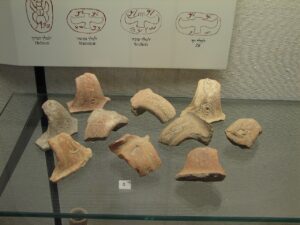
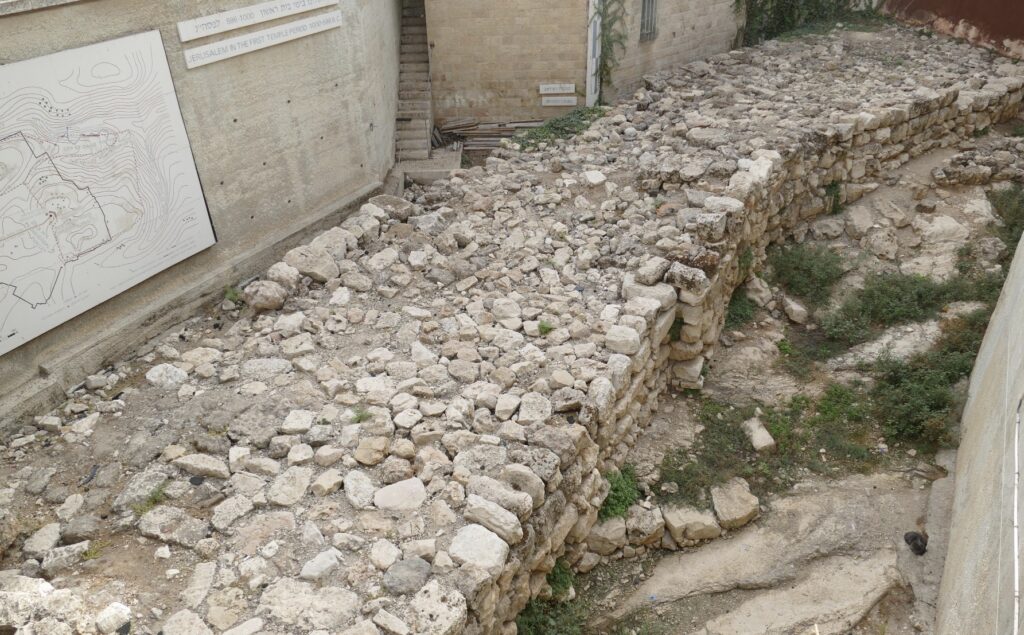
Standardized storage jars bearing lmlk seal impressions suggest a royal system for collecting or distributing agricultural produce. Jerusalem’s Broad Wall, fortifications at Lachish, and the Siloam Tunnel illustrate the kingdom’s capacity to organize major construction projects.
The Siloam inscription describes the meeting of two teams excavating a water tunnel beneath Jerusalem, offering an unusually direct glimpse of the engineering achievements of the period.
Religious Change in Judah
Judah’s religious history was also more complicated than later biblical prescriptions might suggest.
The Hebrew Bible often presents exclusive worship of YHWH as the ancient ideal, repeatedly violated by kings and ordinary people.
Archaeological evidence indicates greater religious diversity.
Inscriptions from Kuntillet Ajrud and Khirbet el-Qom contain references to YHWH and his asherah. The meaning of asherah remains debated: it may refer to a goddess, a cultic object, or a symbol associated with divine protection.
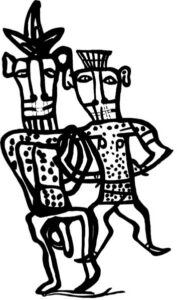
Female pillar figurines, regional sanctuaries, and cultic installations at sites such as Arad likewise suggest that religious practices varied across Judah.
These discoveries do not establish what every Judean believed. They do, however, challenge the assumption that the population consistently practised the exclusive worship of YHWH prescribed in some biblical texts.
Many historians understand the movement toward exclusive Yahwism and eventually explicit monotheism as a gradual development rather than a fully formed belief system present from the beginning.
This matters when reading biblical accounts of religious reform. Their authors were not merely describing events; they were evaluating the past according to religious ideals that developed over time.
Josiah and the Collapse of Assyria
By the late seventh century BCE, Assyria’s power was weakening. Its empire faced internal conflict and growing military pressure from Babylonia and Media.
In 612 BCE, Nineveh fell to a coalition of Babylonian and Median forces. But the Assyrian state did not immediately disappear. Surviving forces continued to resist, particularly in northern Mesopotamia.
The weakening of Assyrian authority created opportunities for smaller kingdoms, including Judah, while Egypt moved to establish influence over former Assyrian territories.
King Josiah occupies an exceptionally favourable position in the biblical account.
Second Kings 22–23 describes his religious reforms, including the centralization of worship in Jerusalem and the removal of competing cultic practices. Many scholars connect these reforms with an early form of Deuteronomic law and with the development of the literary traditions that eventually shaped Deuteronomy through Kings.
The extent of Josiah’s actual reforms remains disputed. Some researchers accept that he undertook a significant program of religious centralization. Others argue that the biblical account reflects later ideals and exaggerates the scale or effectiveness of his actions.
The weakening of Assyria may also have allowed Josiah to extend his influence northward into former Israelite territory. The biblical account describes his activities at Bethel, formerly an important northern sanctuary.
Some scholars see this as evidence of genuine political expansion. Others question whether Judah possessed the resources to control large northern territories and suggest that later writers projected territorial ambitions back onto Josiah’s reign.
There is no independent contemporary record establishing the full extent of Josiah’s authority.
A further uncertainty concerns Egypt. One reconstruction sees Josiah enjoying considerable independence as Assyria withdrew. Another suggests that Egypt had already begun exercising influence over parts of the southern Levant under Psamtik I, before Josiah’s death.
Judah was operating in a rapidly changing political environment. And then Egypt intervened.
Why Did Egypt Kill Josiah?
In 609 BCE, Pharaoh Necho II marched north through the Levant to support the remaining Assyrian forces against Babylon and its allies.
Egypt’s decision becomes understandable when we consider its earlier history. Although Assyria had once conquered Egypt, the emergence of Babylon now presented a greater strategic threat. A weakened Assyria could serve as a useful buffer between Egypt and Babylon.
Josiah encountered Necho at Megiddo and was killed. The circumstances remain uncertain.
Second Kings 23:29–30 says that Josiah went to meet Necho and that the pharaoh killed him. It does not explicitly describe a battle.
Second Chronicles 35:20–24, written later, provides a more elaborate account in which Josiah attempts to stop the Egyptian army and is fatally wounded by archers.

Several reconstructions are possible. Josiah may have attempted to block the Egyptian army because he feared renewed Assyrian influence or favoured Babylon. Alternatively, he may have been summoned to acknowledge Egyptian authority and executed because Necho considered him unreliable. A military confrontation may also have occurred, with its circumstances subsequently reshaped by the biblical authors.
The evidence does not allow us to choose confidently between these explanations.
The consequences are clearer. After Josiah’s death, the people of Judah installed his son Jehoahaz as king. Necho removed him after three months, imposed tribute, and placed another son of Josiah, Eliakim—renamed Jehoiakim—on the throne.
Judah had passed into the Egyptian sphere of influence.
Josiah’s death also presented a theological problem. Kings portrays him as an exceptionally faithful ruler, yet he died violently at the hands of a foreign pharaoh. Chronicles offers a more explicit explanation: Josiah failed to heed a divine warning delivered through Necho.
For the historian, Josiah’s death belongs to the struggle between Egypt, Assyria, and Babylon. For the biblical authors, it also raised questions about obedience, divine justice, and the fate of a righteous king.
Babylon Replaces Assyria
The disappearance of Assyrian power did not immediately bring peace to the Levant. Instead, Egypt and Babylon competed to control the territories that Assyria had previously dominated.
In 605 BCE, the Babylonian crown prince Nebuchadnezzar defeated Egyptian forces at Carchemish, on the Euphrates. This marked a decisive shift in the regional balance of power.
Babylon became the dominant military power in Syria and the southern Levant. Smaller kingdoms now had to decide whether to submit to Babylon or continue looking toward Egypt.
Judah initially submitted.
According to 2 Kings 24:1, Jehoiakim served Nebuchadnezzar for three years before rebelling.
The political context helps explain his decision. In 601 BCE, Nebuchadnezzar campaigned against Egypt. Both armies suffered serious losses, and the Babylonians withdrew to recover.
To Jehoiakim, this may have suggested that Babylon was not invincible. Egypt might still be capable of challenging Babylonian domination.
Jehoiakim apparently gambled on that possibility. It proved disastrous.
The First Conquest of Jerusalem: 597 BCE
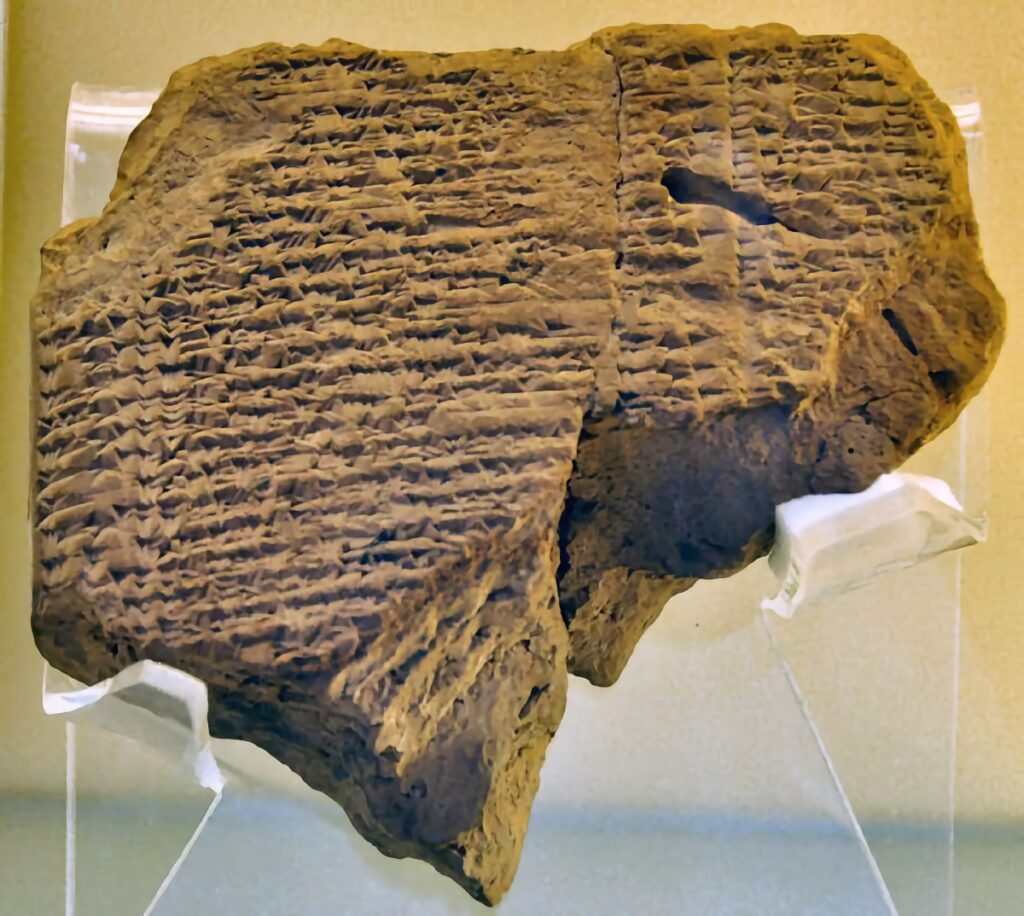
The Babylonian Chronicle independently records Nebuchadnezzar’s capture of Jerusalem in March 597 BCE.
By this time, Jehoiakim had died and his son Jehoiachin had become king.
Nebuchadnezzar captured the city, removed Jehoiachin, installed another ruler, and took substantial tribute. The new king was Mattaniah, Jehoiachin’s uncle, whom Nebuchadnezzar renamed Zedekiah.
Members of the royal family, officials, soldiers, and skilled workers were deported to Babylonia.
But Jerusalem was not destroyed.
This distinction is crucial. Nebuchadnezzar did not initially eliminate Judah as a functioning kingdom. He preferred to install a ruler who would remain loyal and continue paying tribute.
The Babylonians had inherited from the Assyrians a system in which subordinate kingdoms could survive as long as they recognized imperial authority.
Zedekiah was given the opportunity to rule under those conditions.
Judah’s Neighbours Face the Same Dilemma
The years following 597 BCE are especially revealing because Judah was not alone in considering resistance.
Edom, Moab, Ammon, Tyre, and Sidon all faced Babylonian domination. Their rulers had to calculate whether paying tribute was preferable to rebellion and whether Egypt could provide meaningful military support.
Jeremiah 27:3 describes representatives of these five kingdoms visiting Zedekiah in Jerusalem, probably around 594/593 BCE.
The passage is often interpreted as evidence of discussions about an anti-Babylonian coalition. This is plausible, but we have no surviving treaty confirming that the kingdoms formed a military alliance or promised to defend one another.
Nevertheless, the meeting suggests that Judah’s rulers were participating in wider regional diplomatic discussions.
The central question was the same for every kingdom: would Babylon remain dominant, or could Egypt recover its former position?
Moab and Ammon: Shifting Loyalties
Moab and Ammon had previously been tributary kingdoms under Assyria.
According to 2 Kings 24:2, raiding forces from both kingdoms participated in attacks against Judah during Jehoiakim’s rebellion. This suggests that they may initially have supported Babylonian interests, although we do not know whether their actions were directed by Babylon or undertaken independently.
Their later participation in the diplomatic discussions described in Jeremiah 27 suggests that their positions could change.
The historical evidence becomes increasingly fragmentary after this point.
The first-century historian Josephus reports that Nebuchadnezzar campaigned against Moab and Ammon around 582 BCE, several years after Jerusalem’s destruction.
Some historians accept that such a campaign may have taken place and contributed to the disappearance of the two kingdoms as independent political entities. Others emphasize that Josephus wrote centuries later and may have relied on biblical traditions rather than independent Babylonian records.
Archaeology indicates disruption and political change in parts of Transjordan, but it does not establish a single, comprehensive destruction of Moab and Ammon at a securely dated moment.
There is also an important complication. Jeremiah 40:11–12 reports that Judean refugees had fled to Moab, Ammon, and Edom during the Babylonian conquest.
This is difficult to reconcile with a simple picture of three uniformly hostile nations collaborating against Judah. Relations between neighbouring populations were more complex than later national accusations might suggest.
Ammon and the Assassination of Gedaliah
After Jerusalem’s destruction, Babylon appointed Gedaliah as governor over the remaining Judean population.
According to Jeremiah 40–41, Gedaliah was assassinated by Ishmael, a member of the Judean royal family. The narrative accuses Baalis, king of Ammon, of supporting the assassination.
The accusation is not independently confirmed, but a ruler named Baʿalyashaʿ, generally identified with the biblical Baalis, is known from an Ammonite seal impression.
If the account preserves a genuine political event, Ammon may have been involved in attempts to destabilize Babylonian administration in Judah.
The motives remain uncertain. The episode could reflect political rivalry, opposition to Babylon, or conflict between competing Judean factions.
It would therefore be misleading to describe Ammon simply as Babylon’s loyal ally.
Edom: When a Brother Becomes an Enemy
Edom’s relationship with Judah deserves particular attention because it illustrates how political conflict could acquire a powerful moral meaning.
The two peoples occupied neighbouring territories and shared cultural and linguistic features. The Hebrew Bible expresses their relationship through the story of Jacob and Esau, portrayed as twin brothers.
Their relationship is marked by rivalry, deception, separation, and eventual reconciliation. This ancestry is not independent evidence that the two nations descended from historical twin brothers. It is a literary expression of their perceived kinship.
Deuteronomy 23:7 makes that relationship explicit by instructing Israelites not to despise Edomites because they are brothers.
Yet other biblical texts express extraordinary hostility toward Edom.
What Happened During Jerusalem’s Destruction?
Obadiah accuses Edom of standing aside during Jerusalem’s catastrophe, celebrating Judah’s suffering, plundering its possessions, and intercepting fugitives.
Psalm 137:7 remembers the Edomites as encouraging Jerusalem’s destruction. Ezekiel 35 likewise condemns Edom for its hostility toward Judah.
These passages suggest that Judean authors remembered Edom’s conduct during the Babylonian conquest as a particularly serious betrayal.
But what actually happened?
One interpretation is that Edom cooperated with Babylon or assisted in attacks against Judah. Another is that Edom did not participate directly in the siege but exploited Judah’s collapse by expanding into weakened southern territories.
A third interpretation places greater emphasis on later Judean memory. In this reconstruction, territorial losses and the presence of Edomite populations in southern Judah helped produce or intensify accusations of betrayal.
Archaeological evidence indicates Edomite cultural presence in the southern region, including material from sites such as Horvat Qitmit and En Hazeva. The Arad ostraca also contain warnings concerning Edom.
However, the relationship between these discoveries, military conflict, migration, and the later development of Idumea remains debated.
Research has also challenged older assumptions that Edom’s own homeland was abandoned after the Babylonian period. Some settlements show continuity, suggesting a more complicated regional history than a straightforward movement of an entire people westward.
We therefore cannot confidently state that Edomite soldiers helped Nebuchadnezzar destroy Jerusalem.
Why Betrayal Mattered
The language of Obadiah is revealing even if its precise historical accusations cannot be verified.
Edom was condemned not merely for acting as an enemy, but for acting against a brother.
The perceived kinship intensified the accusation. A foreign enemy might be expected to exploit a defeated kingdom. A brother who did the same could be accused of violating a special obligation.
This may help explain why hostility toward Edom became so prominent in some exilic and post-exilic biblical literature.
The political reality of Judah’s defeat was transformed into a story about family betrayal, an interpretation that could remain powerful long after the original events.
Tyre and Sidon: Different Outcomes Under Babylon
The Phoenician cities faced Babylonian domination under different circumstances.
Tyre and Sidon were wealthy commercial centres connected with Mediterranean trade. Their economic importance made them valuable to empires, while their coastal locations offered advantages unavailable to inland kingdoms.
Tyre, in particular, presented a difficult military problem because its principal urban centre occupied an offshore island.
Jerusalem could be surrounded by an army operating on land. Capturing or blockading Tyre required a different approach.
Nebuchadnezzar and the Siege of Tyre
The Bible describes Babylonian military operations against Tyre in Ezekiel 26–29.
Later historical traditions speak of a thirteen-year siege, commonly dated to approximately 585–572 BCE.
But the evidence is less secure than that familiar figure suggests. A reassessment of the manuscript tradition behind Josephus’ account has shown that the duration was transmitted inconsistently, with three years and ten months appearing in important manuscript witnesses.
The archaeological and documentary evidence does not establish a continuous thirteen-year siege. Some researchers therefore propose shorter sieges, intermittent blockades, raids, or repeated military pressure rather than one uninterrupted operation.
Tyre ultimately came under Babylonian domination, but it was not destroyed in the manner of Jerusalem.
Sidon’s experience is less clearly documented. It had already suffered severe destruction and deportation under the Assyrian king Esarhaddon in 677 BCE, but later recovered. There is no secure evidence for a Babylonian destruction of Sidon comparable to Jerusalem’s.
Both cities continued into the Persian period.
Their survival illustrates an important feature of imperial rule: submission could preserve local political and economic structures, while resistance did not always produce the same outcome. Geography, economic value, military circumstances, and negotiations all mattered.
Zedekiah’s Rebellion and Jerusalem’s Destruction
Despite the experience of 597 BCE, Zedekiah eventually rebelled against Babylon.
The exact circumstances of his decision remain uncertain. Egypt was still a potential source of support, and the biblical texts describe intense disagreement within Judah over whether resistance was wise.
Jeremiah argued that submission to Babylon offered the best chance of survival. Other voices apparently encouraged resistance and predicted that Babylonian domination would soon end.
The biblical presentation of these debates is shaped by later knowledge of the outcome, but it likely preserves genuine political divisions within Judah.
Zedekiah chose rebellion. Nebuchadnezzar responded with another military campaign.
The Babylonian army besieged Jerusalem, while other fortified cities in Judah were attacked. The Lachish ostraca, letters written on pottery fragments near the end of the kingdom, provide a glimpse of military communication during this period.
One letter refers to the observation of signal fires and the inability to see the signals of Azekah. The precise circumstances remain debated, but the correspondence reflects the pressures faced by Judah’s remaining fortified positions.
According to Jeremiah 37, an Egyptian army advanced toward Judah, prompting a temporary Babylonian withdrawal from Jerusalem. If this account preserves a historical event, it suggests that Egyptian assistance was more than a diplomatic promise.
But it was insufficient.
The Babylonians resumed their operations, and Jerusalem eventually fell in 587/586 BCE. The exact year remains debated because of chronological difficulties in the surviving sources.
The Temple was destroyed, royal and administrative buildings were burned, and sections of the population were deported.
Zedekiah was captured. According to the biblical account, his sons were executed before him, he was blinded, and he was taken to Babylon.
The Davidic monarchy ceased to rule Judah.
Why Was Jerusalem Destroyed This Time?
The contrast with 597 BCE is important.
After the first rebellion, Nebuchadnezzar preserved Jerusalem and installed another king. After the second, he abolished the monarchy and destroyed the principal institutions of the kingdom.
The destruction can be understood as an attempt to eliminate political structures that had repeatedly supported rebellion.
Judah also occupied a strategically important position near Egypt, Babylon’s principal rival in the region. Allowing repeated revolts could threaten Babylonian authority over the wider Levant.
The decision to destroy Jerusalem was therefore part of imperial policy, not an inexplicable act of hostility toward one particular city.
At the same time, it should not be presented as an unavoidable or morally justified consequence of rebellion. Babylon was an imperial power imposing tribute and political subordination by force. Judah’s rulers made decisions under coercive circumstances, with incomplete information about the intentions and capabilities of Egypt and Babylon.
Explaining Jerusalem’s destruction historically is not the same as assigning moral responsibility for the catastrophe.
The Babylonian Exile: Deportation and Survival
The deportation of Judeans was part of a much wider imperial practice.
For centuries, Assyrian kings had moved conquered populations across their territories. The Babylonians continued to use deportation, although the surviving evidence does not establish that they employed exactly the same procedures or on the same scale.
Removing kings, military leaders, officials, and skilled workers could weaken the ability of conquered regions to rebel. Resettling people elsewhere could provide labour, agricultural production, specialized skills, and services for the imperial economy.
How Did the Deportees Reach Babylon?
We do not possess a contemporary itinerary describing the journey of the Judean deportees.
The most plausible routes followed established roads north through the Levant and Syria before turning southeast toward Babylonia, potentially using the Euphrates corridor.
Such journeys required substantial organization. Thousands of people could not carry months of food and water across the region without access to supplies.
Assyrian administrative correspondence demonstrates that imperial officials arranged provisions for deportees and that these arrangements could create serious difficulties. One letter discusses the problem of feeding thousands of captives when insufficient grain was available.
The Babylonian documentation is less explicit about the transportation of Judean deportees, so we should not assume that every Assyrian procedure was followed unchanged.
Nevertheless, the logistical challenge is clear. Mass deportation depended on military supervision, administrative coordination, established routes, and access to food and water.
Life in Babylonia
The Judean exile is unusually well documented compared with the experiences of many other deported populations.
Babylonian administrative tablets record food rations distributed to Jehoiachin, the deported Judean king, and members of his household. These documents independently establish his presence in Babylonia.
Other tablets, especially those associated with Al-Yahudu and surrounding settlements, document Judean families living in rural Babylonia. They record agricultural obligations, financial transactions, personal names, and family relationships.
These communities were not simply prison camps. Some deportees lived in households, worked agricultural land, raised children, and participated in economic transactions.
Yet their position was not equivalent to modern freedom. They had been forcibly removed from their homeland and were subject to obligations imposed by the Babylonian state.
Their circumstances varied. A deported king receiving palace rations lived very differently from an agricultural worker in a rural settlement.
Not Every Judean Was Deported
Jerusalem’s destruction did not mean that Judah became completely uninhabited.
Some people remained, particularly in rural areas. The Babylonians established an administration under Gedaliah, based at Mizpah.
Archaeological evidence indicates that settlement patterns varied across the former kingdom. Jerusalem and parts of the south suffered severe disruption, while some areas north of Jerusalem experienced greater continuity.
Other Judeans fled to neighbouring territories or Egypt.
The Babylonian exile was therefore not a single event experienced identically by an entire population. It involved several deportations, people who remained in Judah, refugees who moved elsewhere, and communities that gradually established themselves in Babylonia.
The biblical image of a nation carried away into exile expresses a profound collective experience, but it should not be interpreted as a literal description of every Judean’s fate.
Why Does the Bible Portray Judah’s Neighbours So Negatively?
The history we have reconstructed helps explain an important feature of the Hebrew Bible: its frequent hostility toward Philistines, Moabites, Ammonites, and Edomites.
There is no single explanation. Some traditions reflect genuine political conflicts. Others preserve older stories about territorial disputes, competing religious practices, and relationships between neighbouring communities. Still others were shaped by the experience of Assyrian and Babylonian domination.
The crucial point is that the biblical writers were not observing these events from a neutral position. They belonged to communities with their own political experiences, religious commitments, and memories of suffering.
Philistia: Rivalry and Unequal Prosperity
Philistine cities could benefit economically from cooperation with Assyria, even while Judah suffered military devastation.
Some researchers suggest that such inequalities may have contributed to hostile Judean attitudes toward Philistia.
This cannot explain every negative Philistine tradition, but it illustrates how imperial economic policies could reshape relationships between neighbouring peoples.
Moab and Ammon: Enemies Who Were Also Relatives
The Bible presents Moab and Ammon as descendants of Lot, Abraham’s nephew. Their ancestry is therefore connected with Israel’s, although Genesis 19 gives both peoples a deliberately humiliating origin through incestuous relationships.
Such stories are not reliable accounts of the biological origins of nations. They are better understood as traditions expressing attitudes toward neighbouring peoples.
Hostility is also reflected in Deuteronomy 23, which excludes Ammonites and Moabites from the assembly of YHWH on the grounds of their conduct toward Israel.
Yet the Bible preserves other perspectives. The book of Ruth presents a Moabite woman as an exemplary figure whose loyalty and generosity ultimately place her within the ancestry of King David.
One tradition emphasizes exclusion and hostility; another makes a Moabite woman central to Israel’s royal ancestry.
The texts do not speak with one voice.
Edom: The Bitterness of Betrayal
Edom’s case is particularly revealing.
Its biblical relationship with Israel is expressed through the brotherhood of Esau and Jacob. The accusation that Edom exploited Jerusalem’s destruction therefore carried special emotional force.
Obadiah’s condemnation is not merely a complaint about an enemy’s military behaviour. It is an accusation that a brother abandoned another brother in his moment of greatest need.
Whether Edom actually participated in the Babylonian siege remains uncertain. But the accusation tells us how some Judean authors remembered their relationship with Edom after the catastrophe.
Territorial losses, the presence of Edomite populations in southern Judah, and the humiliation of defeat could all have contributed to this hostile memory.
National Accusations Are Not Neutral History
Ancient texts frequently speak about entire peoples as if they possessed a single character or acted with a single intention.
But a king’s diplomatic decisions did not necessarily represent the attitudes of every inhabitant of his kingdom.
Some Edomites may have fought against Judah while others sheltered Judean refugees. Moabite or Ammonite rulers might cooperate with Babylon at one moment and consider rebellion at another.
We should therefore distinguish between the actions of rulers, the behaviour of local populations, and the later literary portrayal of an entire nation.
This is especially important when interpreting biblical passages that condemn neighbouring peoples collectively.
How Jerusalem’s Destruction Changed the Biblical Story
The Babylonian conquest did more than destroy a kingdom. It created an intellectual and religious crisis.
For generations, Jerusalem had been the centre of Judah’s monarchy and its most important sanctuary of YHWH. The Davidic dynasty had provided political continuity, while the Temple represented divine presence and protection.
Now the monarchy was gone, the Temple lay in ruins, and part of the population lived in a foreign empire.
How could this have happened?
The biblical authors offered different answers.
Some interpreted the catastrophe as punishment for Judah’s failure to worship YHWH exclusively. Others emphasized social injustice, corrupt leadership, or misplaced confidence in foreign alliances.
The Deuteronomistic presentation of Israel and Judah’s history, especially in Kings, interprets the destruction as the culmination of a long pattern of religious disobedience.
Other writings express grief, anger, confusion, or demands for justice against the nations that benefited from Judah’s suffering. Psalm 137 remembers the humiliation of exile and hostility toward Babylon and Edom. Lamentations gives voice to the suffering of a devastated Jerusalem.
These writings are not detached historical reports. They are attempts to understand a catastrophe that transformed the lives and identities of their communities.
History and Theology Ask Different Questions
A historical reconstruction can explain why Babylon attacked Jerusalem. Judah rebelled against an empire determined to maintain control over the Levant and prevent Egyptian influence from returning.
The biblical writers often asked a different question: why had YHWH allowed Jerusalem to fall?
Their answers were theological. They interpreted political events in terms of divine judgment, covenant obligations, and the failures of kings and people.
These explanations should not be confused. We can study the political causes of Jerusalem’s destruction without treating the biblical claim of divine punishment as an independently established historical fact.
At the same time, the theological explanations are historically important. They reveal how Judean communities interpreted their defeat, reassessed their traditions, and developed ideas that would profoundly influence later Judaism and Christianity.
Reading the Bible as a Historical Source
The Hebrew Bible contains different perspectives on the same history.
Ahab was an important regional ruler whose military power is independently attested, yet the biblical authors largely condemn him for his religious policies.
Hezekiah is portrayed as a faithful king, although his rebellion brought devastating Assyrian attacks on Judah.
Josiah receives exceptional praise, yet he died at the hands of an Egyptian pharaoh.
Zedekiah is condemned for failing to heed prophetic warnings, but historically he was also a small kingdom’s ruler caught between competing empires.
These differences do not mean that the biblical authors were uninterested in history. They mean that they were interested in more than recording events.
They selected, organized, and interpreted the past to address questions about kingship, religious loyalty, justice, national identity, and divine authority.
The same applies to their portrayal of neighbouring peoples. Moab, Ammon, Edom, and Philistia were real societies with their own histories. But in biblical literature they could also become symbols of hostility, betrayal, foreign influence, or the dangers of political dependence.
Understanding these literary functions does not require us to dismiss the texts. It allows us to read them more carefully.
What Archaeology Can—and Cannot—Tell Us
Modern historical research has transformed our understanding of Israel and Judah.
We can place the kingdoms within the wider political history of the ancient Near East. We know that Israel was a significant regional power under the Omrides. We can identify its rulers in foreign inscriptions and trace aspects of its military and diplomatic relationships.
We know that Judah developed more slowly and became increasingly integrated into the Assyrian imperial system.
We can examine the destruction of Lachish, read Sennacherib’s claims about Hezekiah, and compare the Babylonian account of Jerusalem’s capture in 597 BCE with the biblical narrative.
We can even identify individual Judeans living in Babylonia after the deportations.
Yet important uncertainties remain. We cannot confidently reconstruct the origins of the two kingdoms from the biblical story of a divided monarchy. We cannot measure the economic benefits of Ahab’s marriage to Jezebel, even though its diplomatic logic is compelling. We do not know precisely why Josiah was killed. We cannot establish every detail of Judah’s diplomatic negotiations with its neighbours, prove that Edomite troops participated in Jerusalem’s destruction, or reconstruct the experiences of most people deported to Babylonia.
Archaeology does not eliminate uncertainty. It helps us identify where our knowledge is strong, where several explanations remain possible, and where the evidence simply does not allow a firm conclusion.
That is a strength rather than a weakness of historical research.
Conclusion: Reading the Hebrew Bible in Its Own World
The history of Israel and Judah between the ninth and sixth centuries BCE is not primarily a story of two isolated kingdoms struggling with their neighbours. It is the history of small states living within an increasingly interconnected world dominated by powerful empires.
Israel initially emerged as the stronger kingdom, with impressive administrative and military capabilities. Its rulers established international alliances, participated in regional warfare, and maintained commercial relationships with wealthy Phoenician cities.
Judah developed more gradually, eventually becoming a substantial state in its own right.
Assyria transformed the region through conquest, tribute, provincial administration, and deportation. Some kingdoms were destroyed, while others prospered by cooperating with imperial power.
Egypt was repeatedly involved in these struggles. It resisted Assyrian expansion, experienced Assyrian conquest, recovered its independence, and eventually supported the remnants of Assyria in an attempt to prevent Babylonian domination.
When Assyria collapsed, Egypt and Babylon competed to control its former territories. Judah’s rulers repeatedly tried to navigate this struggle, sometimes through submission and sometimes through rebellion.
The final rebellion ended with Jerusalem’s destruction and the deportation of part of its population.
Throughout these events, neighbouring kingdoms pursued their own interests. Their relationships with Judah shifted according to changing circumstances. Some cooperated with the empires, others resisted, and some provided refuge to Judeans while others may have exploited Judah’s weakness.
The Hebrew Bible preserves memories of these relationships, but those memories were shaped by the experiences and concerns of the communities that transmitted them.
This helps explain why the Bible sometimes portrays the same neighbouring people as relatives, enemies, allies, or traitors. It also helps explain why different biblical authors could interpret the same king or event in strikingly different ways.
The Hebrew Bible becomes more understandable when we recognize that its authors were interpreting history, not simply recording it.
They lived in a world of imperial domination, political uncertainty, economic inequality, religious change, and competing national identities. They inherited stories about their ancestors, remembered the successes and failures of their kings, and tried to make sense of the destruction of their political and religious institutions.
Some of their explanations were theological. Others reflected political rivalries or collective memories of suffering.
Modern archaeology and historical scholarship allow us to place those explanations alongside evidence produced by the peoples who shared their world.
That does not make the Bible irrelevant as a historical source. On the contrary, it makes careful reading more important.
The Bible tells us a great deal about how ancient Israelites and Judeans understood their past. Archaeology and contemporary inscriptions help us investigate what happened beyond those interpretations.
To understand the Hebrew Bible, we need both: the stories its authors told and the history in which those stories were formed.
-
Ancient Israel and Judah: History Behind the Hebrew Bible
Why did Israel disappear while Judah survived? Why did Egypt support its former Assyrian conquerors? And why does the Bible portray some of Judah’s neighbours as enemies and traitors? Archaeology and ancient inscriptions reveal a fascinating history of political alliances, imperial ambitions, and national catastrophe—and help explain how that history shaped the Hebrew Bible.
-
Reconsidering ‘Adam’ in Hosea 6:7: A Historical-Critical Analysis
The translation of kəʾādām in Hosea 6:7 represents a classic textual knot where a single ambiguous term can reorient a passage’s entire historical setting. By evaluating the locative anchor šām (“there”), historical-critical scholars find compelling reasons to read the phrase as a reference to a local Jordan Valley town rather than the primeval first man.
-
Part 5: The Modern Era and the Individualized Psalm
Analyze the profound shift in 20th-century worship music from objective, communal liturgy to highly personalized expressions of psychological faith. Understand how contemporary arrangements utilize the introspective poetry of texts like Psalm 139.
-
Part 4: The Anglo-American Diaspora and “Lining Out”
Follow the migration of metrical psalmody across the Atlantic into rugged frontier communities lacking organs and printed text. Investigate the resilient, highly communal vocal practices of Common Meter, “lining out,” and American Shape-Note singing.
-
Part 3: The Calvinist Reformation and Metrical Psalmody
Examine the 16th-century musical revolution that dismantled complex Latin polyphony to democratize congregational singing. Learn how the Genevan Psalter fundamentally reshaped ancient Hebrew poetry into metered European melodies.
Leave a Reply
You must be logged in to post a comment.