
When we look at the radical ideas that reshaped how the modern world reads the Bible—treating it not as a flawless, divinely dictated monolith, but as a deeply human, layered library of ancient literature—we often assume these breakthroughs were engineered by secular outsiders trying to dismantle religion from afar. But historical reality tells a completely different, far more ironic story.
The pioneers of historical-critical biblical scholarship and textual criticism were almost entirely insiders. Specifically, they were “pastor’s kids.” In 18th- and 19th-century Europe, the Protestant country rectory (known in Germany as the Pfarrhaus) was the ultimate incubator for high culture, intense linguistic training, and radical academic thought. The sons of these rectories—the Pfarrersöhne—grew up running through church hallways, mastering biblical Hebrew and Greek before they were teenagers, and learning the inner workings of the family business.
When these brilliant, language-obsessed young men arrived at universities, they tipped over a series of intellectual domino bricks. Each scholar built directly on the radical breakthrough of the pastor’s son before him, permanently changing the landscape of Western thought.
Here is the chronological history of the Pfarrersöhne who built modern biblical science, structured like a tumbling row of dominoes.
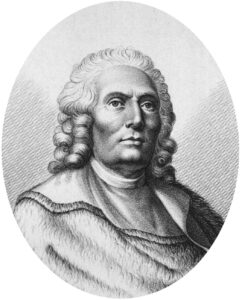
Domino 1: Jean Astruc (1684–1766) – The Syphilis Doctor and the Hidden Sources
The very first domino was tipped over by a French pastor’s son named Jean Astruc. Although he grew up in the rectory of a Protestant minister, Astruc pursued a career in medicine, eventually becoming a prominent medical professor and the royal physician to King Louis XV.
This background leads to one of the most amusing ironies in the history of science: in 1736, Astruc published De morbis venereis—the era’s first great, definitive medical treatise on syphilis and venereal diseases—proudly under his own name. Yet, when he turned his analytical eye to the Bible in 1753, he published his findings completely anonymously. In the repressive theological climate of the French Ancien Régime, it was apparently far safer for a royal physician to publicly discuss the gruesome mechanics of STDs than to publicly question the singular authorship of the Torah.
Using his clinical eye for diagnostic symptoms, Astruc noticed a bizarre linguistic pattern in the Book of Genesis: the text constantly toggled back and forth between two entirely different Hebrew names for God—Elohim and Yahweh—often telling the exact same story twice in parallel tracks (such as the two creation accounts or overlapping elements of the flood).
Astruc hypothesized that Moses had compiled Genesis by stitching together two distinct, independent older memoirs. While Astruc was actually trying to defend Moses against skeptics, his anonymous book accidentally handed the academic world its most powerful cutting tool: Source Criticism. By using divine names to separate interwoven texts, the syphilis doctor set the entire chain reaction in motion.
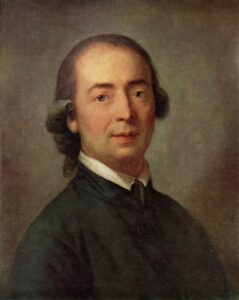
Domino 2: Johann Gottfried von Herder (1744–1803) – The Oral Folk Spirit
Once Astruc proved that the Bible was made of different literary strands, the next domino fell in Germany. Johann Gottfried von Herder, the son of a deeply religious schoolteacher and later an influential theologian and pastor himself, looked at these textual strands and breathed emotional life into them.
Herder was a giant of Romantic philosophy. In his groundbreaking 1782 work, The Spirit of Hebrew Poetry, he argued that the Bible should not be read as a collection of cold, systematic legal doctrines dropped out of heaven. Instead, he insisted it must be read as national literature, born out of the raw, artistic, and poetic spirit of an ancient people.
Herder shifted the academic gaze from rigid dogmatism to the beauty of human expression, arguing that long before these stories were ever inked onto expensive parchment, they lived for centuries as vibrant oral folk poetry sung and spoken around ancient campfires.
Domino 3: Wilhelm de Wette (1780–1849) – Finding the Historical Anchor
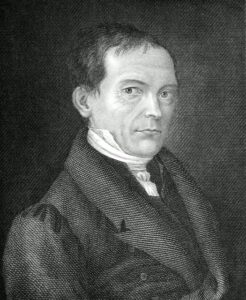
With the Bible now understood as a human, evolving text, the third domino fell when another German pastor’s son arrived on the scene. Wilhelm de Wette realized that if the Bible was written by human authors at different times, scholars needed a reliable way to figure out when those authors actually lived.
In 1805, de Wette solved this chronological riddle by cracking the code of the Book of Deuteronomy. He noticed that Deuteronomy’s laws fiercely demanded that all worship must be centralized in one single location (Jerusalem), while outlawing the traditional rural shrines. De Wette matched this internal law with the external history found in 2 Kings, where King Josiah launches a massive, sudden religious purge in 621 BCE after a mysterious “Book of the Law” is conveniently found in the Temple.
De Wette argued that Deuteronomy was not written by Moses; it was written in 621 BCE as political-religious propaganda to justify Josiah’s centralized power grab. By tying Deuteronomy to a specific date in history, de Wette gave biblical science its very first absolute historical anchor point.
Domino 4: Julius Wellhausen (1844–1918) – The Master of the Written Puzzle
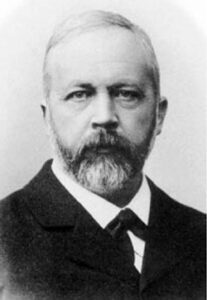
The momentum of these falling dominoes culminated in the late 1870s with the ultimate titan of biblical criticism: Julius Wellhausen, the son of a Lutheran pastor in Hamelin. Wellhausen took Astruc’s source divisions, Herder’s literary insights, and de Wette’s historical anchor, and synthesized them into one elegant, monumental framework: the Documentary Hypothesis.
Wellhausen demonstrated that the Torah was compiled from four distinct, chronological written documents, famously known as J (Yahwist), E (Elohist), D (Deuteronomist), and P (Priestly).
Wellhausen’s true genius was flipping the traditional timeline on its head. He proved that the highly complex ritual, priestly laws of “P” were not the beginning of Israel’s religion, but were actually written at the very end—compiled after the Babylonian Exile to rebuild a shattered society. The Graf-Wellhausen Hypothesis became the foundational paradigm of modern Old Testament studies, treating the text as an indispensable archaeological map of evolving human theology.
Domino 5: Hermann Gunkel (1862–1932) – Hearing the Echoes of the Past
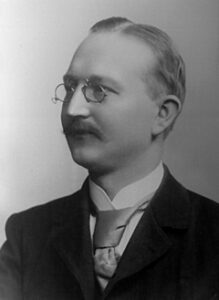
The final major domino in this classical chain was Hermann Gunkel, the son and grandson of Lutheran pastors from Hanover. Gunkel looked at Wellhausen’s brilliant written puzzle and realized that the analysis had stopped too soon. Wellhausen had mastered the written sources, but Gunkel wanted to look beneath the parchment to find the spoken words that Herder had romanticized a century earlier.
Pioneering the methodology of Form Criticism, Gunkel utilized the folklore breakthroughs of the Brothers Grimm to analyze biblical genres. He recognized that ancient stories, hymns, and laws follow rigid structural patterns depending on where they were used in society.
Gunkel ruggedly argued that every piece of biblical literature had a specific “Setting in Life” (Sitz im Leben)—such as a funeral dirge, a wedding song, a royal coronation, or a tribal campfire legend. By mapping these genres, Gunkel allowed historians to peer past the final scribes and reconstruct the real, lived experiences of ancient communities.
The Legacy of the Rectory
When we look back at this extraordinary sequence of intellectual dominoes, the pattern is unmistakable. From Astruc’s initial discovery of the divine names to Gunkel’s mapping of oral settings, the development of modern biblical science was an inside job.
These Pfarrersöhne did not set out to destroy the texts they grew up with. Instead, armed with the formidable linguistic tools, extensive libraries, and intimate institutional familiarity provided by their pastor fathers, they did something far more radical. They humanized the sacred page, transforming the Bible from a static dogmatic textbook into a living, breathing testament to human history, survival, and literary genius.
-
Beyond Abstinence: Defining the Architecture of Purity Culture
For many raised in late-20th-century evangelicalism, “abstinence” and “purity culture” are frequently treated as exact synonyms. However, while abstinence is a private historical ethical choice, purity culture is a modern, highly visible sociological construct. This article examines the architecture of the 1990s movement—from purity pledges to the courtship model—and explains why disentangling the ancient ethic from the modern subculture is the crucial first step in understanding its lasting psychological impact.
-
How Can Modern Churches Build Strong Communities Without Sacrificing Intellectual Honesty?
Can a church remain strong when its members question traditional interpretations of the Bible?Discover how shared values, meaningful relationships, and intellectual honesty can help modern Christian communities thrive without demanding agreement on every question.
-
A Voice from the Dust: How the Discovery of Ugarit Rewrote Biblical Scholarship
The accidental discovery of the ancient city of Ugarit in 1928 transformed biblical scholarship. Its texts provided crucial insights into Biblical Hebrew, uncovered the mythology of ancient Canaan, and revealed how Israelite religion developed within the wider cultural world of the ancient Near East.
-
Did Paul Believe Christians Go to Heaven? Paul’s Cosmos, Christology, and Hope of Resurrection
What did Paul think heaven was, who did he believe Jesus was, and what did he expect to happen after death? Explore Paul’s first-century Jewish apocalyptic worldview, his complex understanding of Jesus, and his expectation of bodily resurrection and the liberation of creation.
-
The Whistleblower in the Dirt: Unearthing the Socio-Economic Reality of the Talents
What’s the Parable of the Talents really about? Squadering your abilities or is there more? Let’s dig a little deeper.