
If the Book of Joshua is a story of miraculous military triumph, the Book of Judges is the gritty, chaotic, and deeply violent sequel. It is often described as the “Wild West” of the Hebrew Bible—an era with no central government, rampant tribal warfare, and morality that completely falls off a cliff.
When historical-critical scholars look at the Book of Judges, they do not see a straightforward, chronological history textbook. Instead, they see a brilliant piece of theological editing that took ancient, local folk tales and stitched them together to make a profound national point.
Here is what scholars say about the history, the myth, and the math behind the Book of Judges.
The Math: 12 Tribes, 12 Judges
You noticed the math, and scholars absolutely agree with you: it is not a coincidence.
The Book of Judges features exactly twelve judges. They are generally divided into two categories based on how much text is dedicated to them:
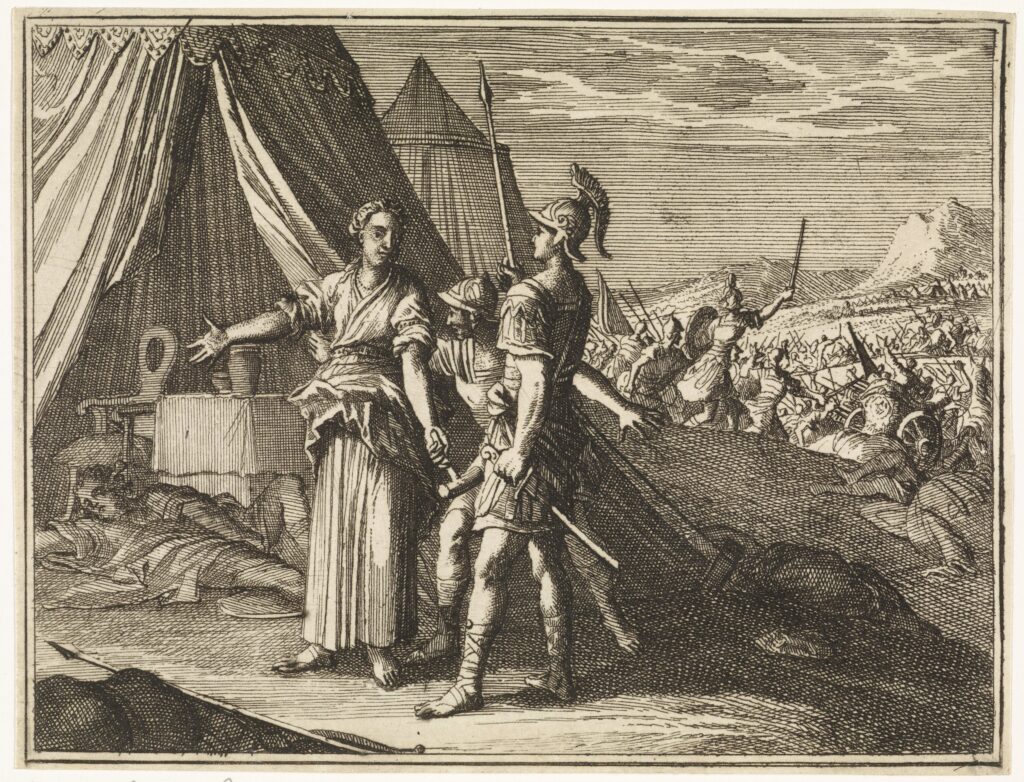
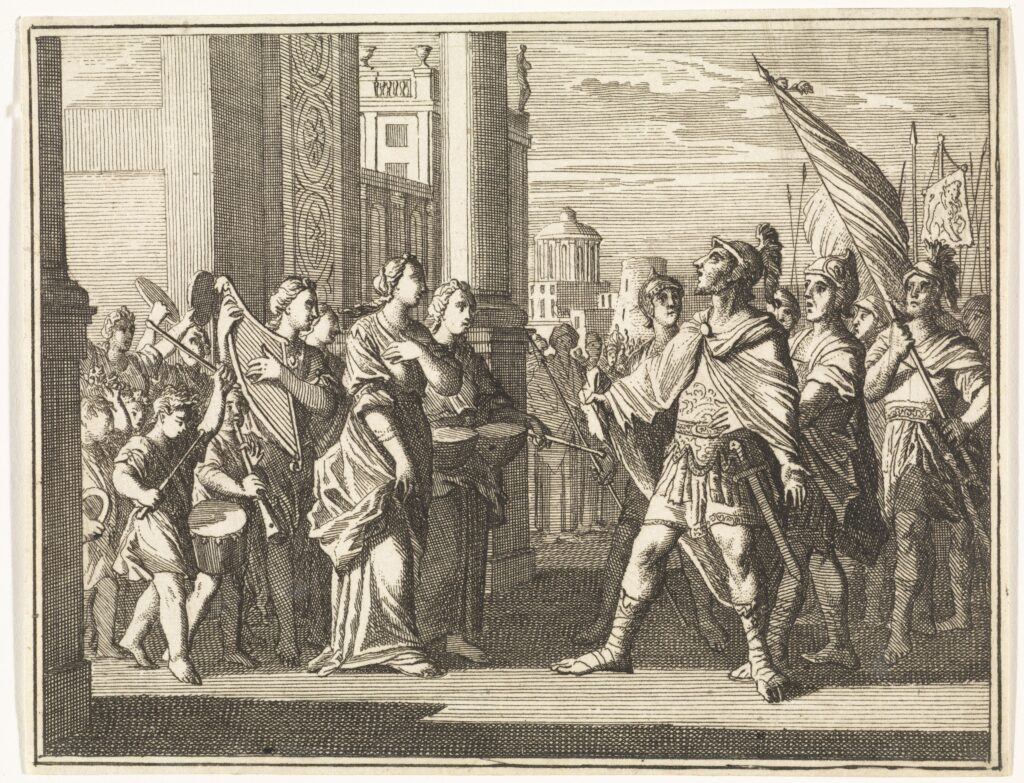
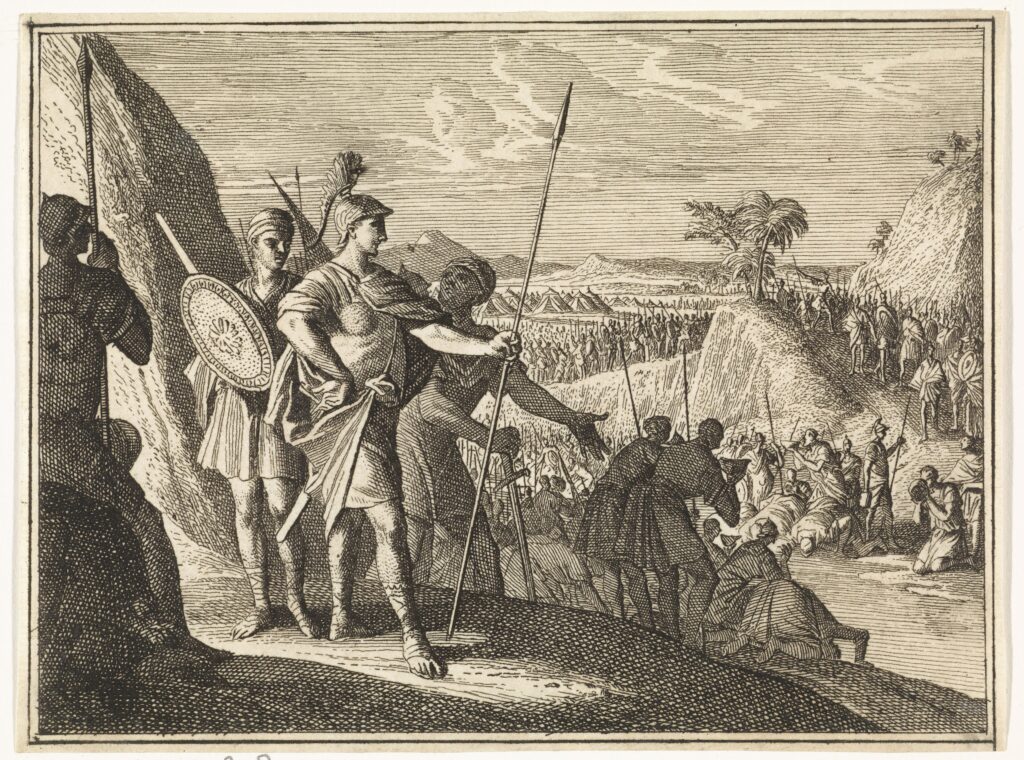
- Six “Major” Judges: Othniel, Ehud, Deborah, Gideon, Jephthah, and Samson.
- Six “Minor” Judges: Shamgar, Tola, Jair, Ibzan, Elon, and Abdon.
In ancient Near Eastern literature, numbers are highly symbolic. The number twelve represents the totality of the nation (the twelve tribes of Israel). By deliberately selecting and structuring the book to feature exactly twelve judges, the ancient editors were making a theological statement: This is a story about the entire nation, and the entire nation was complicit in the chaos. Historically speaking, these twelve individuals did not rule one after the other in a neat chronological line over a united nation. The text itself reveals that they were local, tribal warlords. For example, Samson only fought the Philistines in the southwest, while Jephthah only fought the Ammonites in the east. They were regional chieftains whose reigns likely overlapped, but the biblical editor placed them in a linear sequence to create a unified national history.
History or Myth? The “Folk Memory”
So, did these people actually exist? Are the stories history or myth?
The scholarly consensus is that the Book of Judges is based on ancient folk memory.
Before Israel had a king, a capital city, or a written history, they were a loose confederation of highland tribes. When a local tribe faced a severe crisis, a charismatic leader (a “judge” or shofet, which meant military deliverer more than a courtroom magistrate) would rise up, win a battle, and become a local legend.
For centuries, these stories were passed down orally around campfires. Like all oral traditions, the stories grew over time.
- Did a left-handed assassin named Ehud actually kill a Moabite king? Very likely; it bears the marks of a genuine historical memory.
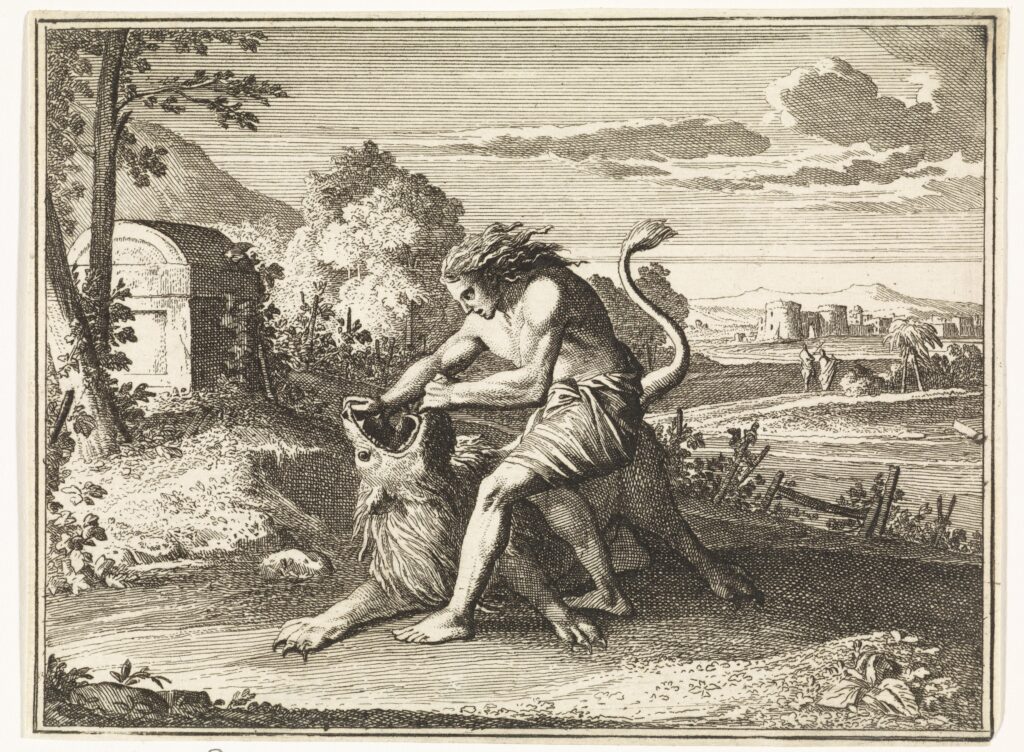
- Did Samson actually kill a thousand men with the jawbone of a donkey and tie torches to the tails of three hundred foxes? Scholars view this as legendary embellishment—a localized, Hercules-like mythological figure whose exaggerated exploits were woven into the biblical text.
Therefore, Judges is a blend. It contains a historical kernel (the memory of a decentralized, tribal period filled with localized conflicts) wrapped in legendary, heroic storytelling.
The Downward Spiral: The Deuteronomistic Edit
The most fascinating part of Judges is not the stories themselves, but the “frame” that holds them together.
As we’ve discussed before, the Book of Judges is part of the Deuteronomistic History—the massive historical work compiled during or after the Babylonian Exile to explain why Israel was destroyed. The editors took these ancient campfire stories and placed them into a rigid, repetitive theological cycle:
- Sin: The Israelites forget Yahweh and worship Canaanite gods.
- Oppression: God allows a foreign enemy to oppress them.
- Repentance: The people cry out to God for help.
- Deliverance: God raises up a Judge to rescue them.
- Peace: The land has peace until the Judge dies, and the cycle repeats.
But the Book of Judges is not just a circle; it is a downward spiral.
As you read through the book, the judges get progressively worse. Othniel (the first) is a perfect, flawless hero. Gideon (in the middle) starts well but ends up building a golden idol and slaughtering his fellow Israelites. Jephthah is a gang leader who makes a rash vow that ends in the human sacrifice of his own daughter. Samson (the last major judge) is a violent, womanizing narcissist who breaks every religious vow he ever took and never actually delivers his people.
The Ultimate Point of the Book
By the end of the Book of Judges, the cycle completely breaks down. There are no more judges. The final chapters descend into horrifying stories of civil war, mass kidnapping, and systemic violence.
The book ends with one of the darkest, most chilling refrains in the entire Bible:
“In those days Israel had no king; everyone did as they saw fit.” (Judges 21:25)
The scholars conclude that the Book of Judges is ultimately a piece of ancient political propaganda. By taking these heroic folk memories and showing how the tribal system devolved into absolute moral and societal anarchy, the editors were setting the stage for the next phase of history. They were arguing that a loose tribal confederation was a failed experiment. To survive, Israel needed centralized worship, the rule of law, and a righteous king.
-
Beyond Abstinence: Defining the Architecture of Purity Culture
For many raised in late-20th-century evangelicalism, “abstinence” and “purity culture” are frequently treated as exact synonyms. However, while abstinence is a private historical ethical choice, purity culture is a modern, highly visible sociological construct. This article examines the architecture of the 1990s movement—from purity pledges to the courtship model—and explains why disentangling the ancient ethic from the modern subculture is the crucial first step in understanding its lasting psychological impact.
-
How Can Modern Churches Build Strong Communities Without Sacrificing Intellectual Honesty?
Can a church remain strong when its members question traditional interpretations of the Bible?Discover how shared values, meaningful relationships, and intellectual honesty can help modern Christian communities thrive without demanding agreement on every question.
-
A Voice from the Dust: How the Discovery of Ugarit Rewrote Biblical Scholarship
The accidental discovery of the ancient city of Ugarit in 1928 transformed biblical scholarship. Its texts provided crucial insights into Biblical Hebrew, uncovered the mythology of ancient Canaan, and revealed how Israelite religion developed within the wider cultural world of the ancient Near East.
-
Did Paul Believe Christians Go to Heaven? Paul’s Cosmos, Christology, and Hope of Resurrection
What did Paul think heaven was, who did he believe Jesus was, and what did he expect to happen after death? Explore Paul’s first-century Jewish apocalyptic worldview, his complex understanding of Jesus, and his expectation of bodily resurrection and the liberation of creation.
-
The Whistleblower in the Dirt: Unearthing the Socio-Economic Reality of the Talents
What’s the Parable of the Talents really about? Squadering your abilities or is there more? Let’s dig a little deeper.