
As soon as the name Paul is mentioned, many readers tune out. While the Gospels are full of miracles and action, Paul’s letters often read like theological policy documents. Yet, we cannot understand the history of Christianity without him. To truly understand Paul, however, we must look past centuries of theological projections and return to the first-century historical context in which he wrote.
The Apocalyptic Prophet and the Architect of a World Religion
As historians, we can say little with absolute certainty about the deepest, inner motivations of the historical Jesus. What we do know is that he acted as an apocalyptic prophet with sharp criticism of the socio-economic conditions of his time. He fiercely opposed the harsh reality in which the vulnerable lower class and day laborers were exploited by large landowners and crushed by a devastating tax system. He was convinced that God would intervene in the short term to establish a new, righteous kingdom in which the existing power structures would be reversed. Some historians suspect that Jesus also envisioned a central role for himself in this.
In rural Galilee, he could proclaim this critical message relatively undisturbed. However, when he traveled to Jerusalem during the explosive Passover festival, the tolerance ended. The immense Temple complex was not only the religious heart but also the economic nerve center, intertwined with the wealth of the local aristocracy and the Roman tax system. When Jesus directed his criticism straight at this institution, he struck at the foundations of the established power. From a Roman perspective, Jesus appears to have been viewed as a potential threat to public order, after which he was dealt with via crucifixion—the standard Roman punishment for political sedition.
Normally, such a brutal execution means the end of a messianic movement. The fact that this story was not forgotten is largely thanks to Paul. He translated this Jewish message into the language and conceptual frameworks of the broader Greco-Roman world and traveled tirelessly to establish networks of house churches among non-Jews. Paul played a decisive role in spreading the Jesus movement beyond Judea and Galilee, making it a lasting factor in the ancient world.
Remaining Jewish in a Pluralistic Era
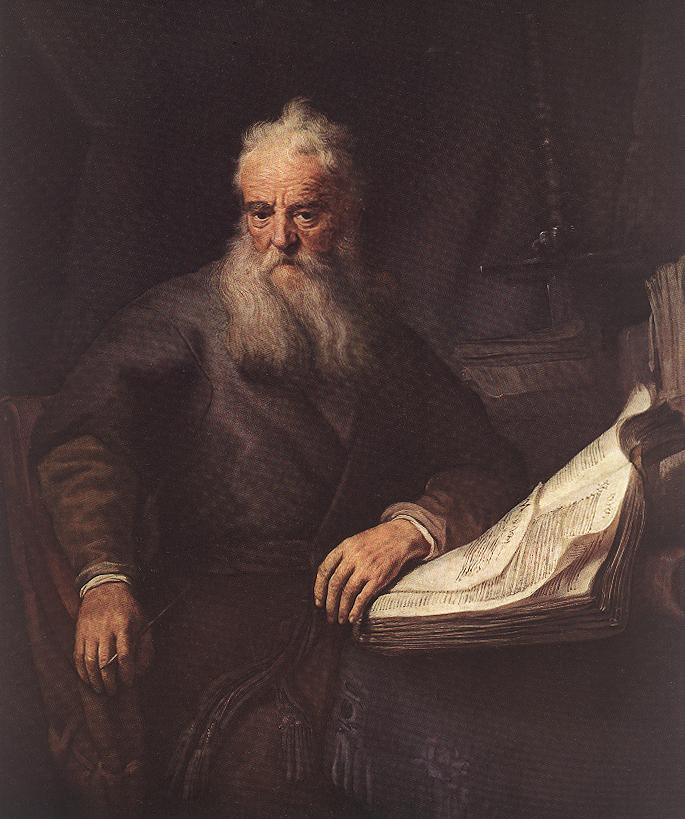
Because of this immense scaling up, it was long thought that Paul consciously broke with Judaism to found an abstract, universal new religion. However, many contemporary scholars point out that this is historically incorrect. Paul continued to consider himself a Jew until his death.
Judaism in the Second Temple period was highly pluralistic. The landscape consisted of Pharisees, Sadducees, Essenes, Zealots, and strongly Hellenized Jews. Yet, despite fierce debates, there was a common foundation: a radical monotheism, election through the covenant, and the central role of the Hebrew Scriptures. Paul never abandoned this foundation. Consequently, many historians do not view his encounter with Jesus on the road to Damascus as a conversion to a new religion, but rather as a profound reinterpretation of his existing Jewish beliefs.
Within Judaism, and certainly among the Pharisees, there was a strong apocalyptic expectation that God would intervene and raise the dead. For Paul, the resurrection of Jesus was the ultimate proof that this Jewish end-time had broken into the present. This also explains his mission. Within the Jewish prophetic tradition, there was an expectation that at the end of times, the Gentiles (the nations) would come to worship the God of Israel. Paul saw it as his calling to realize this. The fact that he told non-Jews they did not need to be circumcised was not a rejection of Judaism, but the fulfillment of its theology: the nations had to worship God as nations. If they became Jewish proselytes, there would be no more Gentiles, and God’s promise would have failed.
How Martin Luther Colored Our Theological Lens
That we have so long viewed Paul as the founder of an anti-Jewish religion is partly because our theological theories are often colored by our own lived experiences. For centuries, Paul has been read through the lens of Martin Luther and the sixteenth-century Reformation.
Luther waged a theological battle with the late medieval church, which placed a strong emphasis on good works and penance. When Luther read Paul’s letters, he read them against the backdrop of his own existential quest. The first-century discussions were thus inevitably interpreted through the conflicts of the sixteenth century. Luther saw Paul as the pioneer of pure grace opposing a Jewish system of cold, religious performance.
The New Perspective and E.P. Sanders
In modern theology, this image has been fundamentally revised by the “New Perspective on Paul.” The catalyst for this academic paradigm shift was provided in 1977 by theologian E.P. Sanders with his groundbreaking study Paul and Palestinian Judaism.
Through a thorough analysis of ancient sources, Sanders demonstrated that early Judaism was not a religion of works-righteousness at all. He introduced the term covenantal nomism. The Jewish understanding was that the covenant itself was a gift of God’s grace; the law was not meant as a way to enter the covenant, but was the proper way for the people to stay in it. Sanders laid the foundation for the re-evaluation of Paul, after which scholars like James D.G. Dunn and N.T. Wright further developed these insights.
As a result, the understanding of Paul’s theology shifted. His central question was not just the traditional Protestant question of how an individual is saved, but equally the collective question of who belongs to God’s covenant people. When Paul fiercely criticizes the “works of the law,” he does not mean a system of earning salvation, but rather the Jewish boundary markers, such as circumcision and dietary laws. These identity markers distinguished Jews from surrounding nations. Paul’s struggle was about the fact that the Gentiles did not have to adopt these specific laws to become full members of the community.
Reading Someone Else’s Mail Through a First-Century Lens
To properly understand Paul, a crucial reading rule is necessary: the letters were not written to us, but preserved for us. We are literally reading someone else’s mail. Paul did not write timeless systematic theology, but occasional letters to solve acute local problems.
When modern readers study his quotes from the Old Testament, the reaction is often one of surprise. It seems as if Paul pulls texts completely out of context. This happens because we read with modern, historical-critical glasses, whereas Paul was a first-century theologian. Within various Jewish movements, interpretative methods such as midrash and pesher existed, where ancient texts were read as directly relevant to the present. Scripture was a living, prophetic document. Moreover, Paul read backward: he started with the apocalyptic conclusion surrounding Jesus and then reread the Scriptures to see where God had hidden this mystery. Paul acknowledged that his interpretations were not shared by everyone and defended them by stating that only through the work of the Spirit could the hidden, true intention of God be extracted from the ancient texts.
Tensions, Acts, and the Misunderstanding of James
Anyone reading the letters must also realize that there is a theological dynamic at play, and sometimes even false senders. Within historical scholarship, there is a broad consensus that of the thirteen letters bearing Paul’s name, only seven were actually written by him. Letters like 1 and 2 Timothy are pseudepigrapha: later texts written by followers to adapt his theology to new generations.
The Epistle of James is also likely a later pseudepigraph. At a superficial glance, James seems to launch a frontal attack on Paul by stating that faith without works is dead. Yet, the historical Paul and James were likely on the same side. When Paul opposed “works,” he was referring to Jewish boundary markers. When James hammers on “works,” he is talking about charity and helping the poor. James was reacting to a misunderstood variant of Paul’s theology that circulated later: people who thought grace was a free pass for antisocial behavior. The real Paul himself emphasized that the only thing that counts is faith expressing itself through love.
These kinds of theological conflicts existed from the very beginning. While the book of Acts, written by the author of Luke, places a strong emphasis on unity and harmony in the early church, Paul shows a rawer reality in his letter to the Galatians. He presents himself as independent and openly criticized the leaders in Jerusalem. The debates about who you could eat with and the meaning of the Jewish law for Gentiles were real, showing that the early Jesus movement was fully in the midst of theological development.
-
Beyond Abstinence: Defining the Architecture of Purity Culture
For many raised in late-20th-century evangelicalism, “abstinence” and “purity culture” are frequently treated as exact synonyms. However, while abstinence is a private historical ethical choice, purity culture is a modern, highly visible sociological construct. This article examines the architecture of the 1990s movement—from purity pledges to the courtship model—and explains why disentangling the ancient ethic from the modern subculture is the crucial first step in understanding its lasting psychological impact.
-
How Can Modern Churches Build Strong Communities Without Sacrificing Intellectual Honesty?
Can a church remain strong when its members question traditional interpretations of the Bible?Discover how shared values, meaningful relationships, and intellectual honesty can help modern Christian communities thrive without demanding agreement on every question.
-
A Voice from the Dust: How the Discovery of Ugarit Rewrote Biblical Scholarship
The accidental discovery of the ancient city of Ugarit in 1928 transformed biblical scholarship. Its texts provided crucial insights into Biblical Hebrew, uncovered the mythology of ancient Canaan, and revealed how Israelite religion developed within the wider cultural world of the ancient Near East.
-
Did Paul Believe Christians Go to Heaven? Paul’s Cosmos, Christology, and Hope of Resurrection
What did Paul think heaven was, who did he believe Jesus was, and what did he expect to happen after death? Explore Paul’s first-century Jewish apocalyptic worldview, his complex understanding of Jesus, and his expectation of bodily resurrection and the liberation of creation.
-
The Whistleblower in the Dirt: Unearthing the Socio-Economic Reality of the Talents
What’s the Parable of the Talents really about? Squadering your abilities or is there more? Let’s dig a little deeper.