
Building on our recent analysis of the crushing socio-economic realities behind the plea for “daily bread” in the Lord’s Prayer, it is equally important to understand the physical reality of that food. The modern Western palate is accustomed to bread that is light, heavily refined, and highly processed. Consequently, when reading ancient texts that speak of breaking daily bread, the mental image often defaults to a soft, uniform loaf. However, scientific consensus derived from ethno-archaeology, paleobotany, and the excavation of first-century Galilean and Judean sites paints a drastically different picture. For the agrarian peasant class and the day laborers of the period, bread was a dense, gritty, and deeply practical food source forged through immense daily labor.
The Grain: The Socio-Economics of Barley
While fine emmer or durum wheat was available and preferred by the urban elite and the aristocratic priesthood, it was largely cost-prohibitive for the lower socio-economic strata. The staple crop for the peasantry was barley. Hardier, more drought-resistant, and yielding a faster harvest in the Levantine climate, barley was the economic baseline of the agrarian diet.
In the Greco-Roman world, barley was generally considered an inferior grain, frequently designated as fodder for livestock or rations for soldiers undergoing punishment. The flour it produces contains less gluten than wheat, meaning it does not trap gas efficiently during fermentation. As a result, first-century barley loaves were invariably heavy, flat, and dense.
The Milling Process and the Inevitable Grit
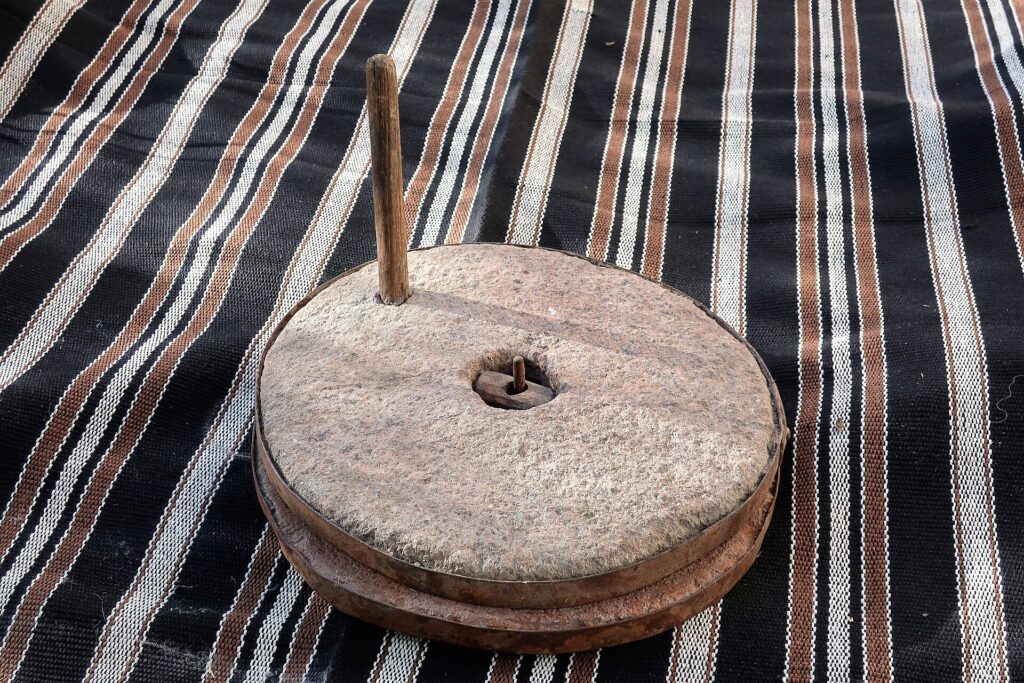
The transformation of raw grain into edible flour was a grueling daily chore, almost universally performed by women before dawn. Households utilized heavy basalt rotary querns—two circular volcanic stones where the upper stone was turned by a wooden handle to grind the grain against the stationary lower stone.
Because these basalt querns were highly abrasive, microscopic shards of volcanic stone and airborne sand constantly chipped off and mixed into the flour. This was an inescapable reality of ancient milling. Osteological analyses of first-century skulls recovered from Levantine burial sites consistently demonstrate extreme dental attrition. By the time a peasant reached their mid-thirties, their teeth were often worn entirely flat, with the dentin exposed, as a direct consequence of chewing this grit-laden daily bread.
Fermentation: The Ancient Sourdough
If the bread was to be leavened, it relied on a natural fermentation process. Commercial yeast did not exist. Instead, bakers utilized a small lump of dough saved from the previous day’s baking, known in Hebrew as se’or. This starter, harboring wild, naturally occurring lactobacilli and yeast from the local environment, was dissolved in water and kneaded into the fresh flour.
This method produced a distinctively sour flavor profile, characteristic of modern sourdoughs but likely much more pungent due to the unrefined nature of the whole-grain barley flour. The dough was then left in wooden kneading troughs to rise, though the low gluten content of the barley meant the “rise” was minimal.
The Tannur and the Tabun: Baking at High Heat
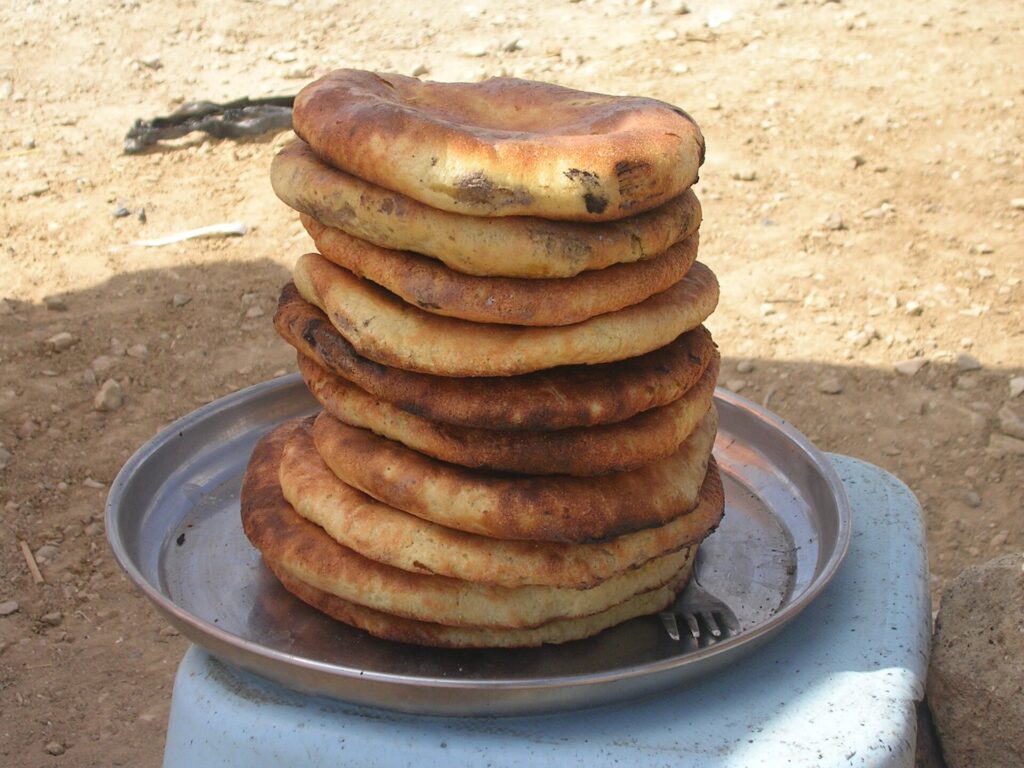
Baking was not done in the enclosed, multi-level ovens familiar to later European history. First-century Levantine homes relied on localized clay hearths, primarily the tannur or the tabun.
The tannur was a conical clay cylinder. A fire was built at the bottom—often fueled by dried animal dung, olive press dregs, or scrub brush, as quality firewood was scarce and expensive. Once the interior walls reached an extreme temperature, the baker would take flat, wet discs of dough and slap them directly against the glowing-hot interior clay walls. The bread would bubble, blister, and bake within minutes, functioning similarly to modern tandoori baking.
The resulting flatbread was round, relatively thin, and pliable when fresh. It was characterized by charred, blistered spots from the direct contact with the clay, and a slightly smoky flavor imparted by the dung or brushwood fuel.
The Sensory Experience
What did the daily bread of the first-century Levantine peasant actually taste like? It was a robust, highly textured experience. The crust was blistered and chewy, while the interior was dense and heavy due to the barley. The flavor was highly earthy and distinctly sour from the wild yeast starter, carrying faint, smoky undertones from the oven fire. Crucially, every bite required careful chewing due to the omnipresent basalt grit.
Because it lacked modern preservatives and was baked with whole grains, this bread staled remarkably fast. It was meant to be eaten on the day it was baked. It functioned not just as a source of calories (often up to 70% of the peasant diet), but as a utensil—pliable enough to tear by hand and scoop up lentil stews, olive oil, or seasonal vegetables. Understanding its texture, taste, and the intense labor required to produce it grounds our understanding of the ancient texts in the harsh, material reality of the people who originally heard them.
-
Beyond Abstinence: Defining the Architecture of Purity Culture
For many raised in late-20th-century evangelicalism, “abstinence” and “purity culture” are frequently treated as exact synonyms. However, while abstinence is a private historical ethical choice, purity culture is a modern, highly visible sociological construct. This article examines the architecture of the 1990s movement—from purity pledges to the courtship model—and explains why disentangling the ancient ethic from the modern subculture is the crucial first step in understanding its lasting psychological impact.
-
How Can Modern Churches Build Strong Communities Without Sacrificing Intellectual Honesty?
Can a church remain strong when its members question traditional interpretations of the Bible?Discover how shared values, meaningful relationships, and intellectual honesty can help modern Christian communities thrive without demanding agreement on every question.
-
A Voice from the Dust: How the Discovery of Ugarit Rewrote Biblical Scholarship
The accidental discovery of the ancient city of Ugarit in 1928 transformed biblical scholarship. Its texts provided crucial insights into Biblical Hebrew, uncovered the mythology of ancient Canaan, and revealed how Israelite religion developed within the wider cultural world of the ancient Near East.
-
Did Paul Believe Christians Go to Heaven? Paul’s Cosmos, Christology, and Hope of Resurrection
What did Paul think heaven was, who did he believe Jesus was, and what did he expect to happen after death? Explore Paul’s first-century Jewish apocalyptic worldview, his complex understanding of Jesus, and his expectation of bodily resurrection and the liberation of creation.
-
The Whistleblower in the Dirt: Unearthing the Socio-Economic Reality of the Talents
What’s the Parable of the Talents really about? Squadering your abilities or is there more? Let’s dig a little deeper.