
For much of the 20th century, the dominant historical-critical consensus regarding the Gospel of John was one of strict independence. Scholars largely believed that the author of John relied entirely on a separate, unique oral tradition and had no direct knowledge of the Synoptic Gospels (Matthew, Mark, and Luke).
However, in recent decades, this academic paradigm has shifted significantly. Today, a growing number of New Testament scholars argue that the author of John was not operating in a vacuum. The current prevailing theory suggests that John was almost certainly aware of the Gospel of Mark, likely aware of the Gospel of Luke, and probably unaware of the Gospel of Matthew.
Here is a breakdown of the evidence scholars use to determine which texts the Johannine author knew, and why he chose to write such a radically different narrative.
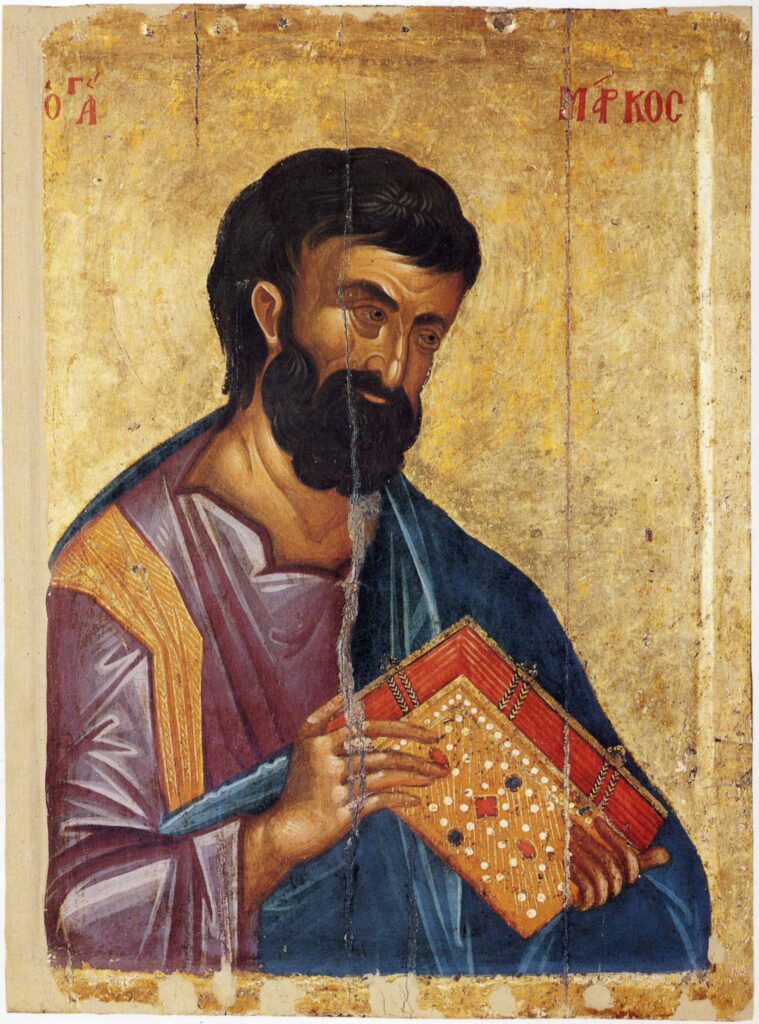
The Strongest Case: The Gospel of Mark
If the author of John knew any previous written gospel, scholars agree it was Mark. The Gospel of Mark was the earliest canonical gospel written (around 70 CE), and it served as the foundational narrative framework for early Christianity.
The argument that John knew Mark rests on several key pieces of textual and literary evidence:
- Assumed Knowledge: John frequently narrates events in a way that assumes the audience already knows the Markan storyline. For example, John never explicitly describes the baptism of Jesus by John the Baptist; he merely alludes to it as a past event. Similarly, John introduces characters like Mary of Bethany by referencing her future act of anointing Jesus (John 11:2) before the event actually happens in the narrative, implying the readers already know the story from Mark’s tradition.
- Verbal Overlap: While John uses very different vocabulary than the Synoptics, there are moments of striking verbal agreement. In the story of the feeding of the 5,000, and particularly in the anointing at Bethany, John uses the exact same rare Greek phrasing as Mark (such as valuing the perfume at precisely “three hundred denarii”).
- Chronological Corrections: Some scholars suggest John deliberately rewrote Mark to correct or reinterpret his chronology. For instance, Mark places the cleansing of the temple at the very end of Jesus’s ministry, acting as the catalyst for his crucifixion. John moves this exact event to the very beginning of chapter two. Rather than a geographical error, scholars view this as a deliberate theological edit by an author who knew the original framework but chose to alter it.
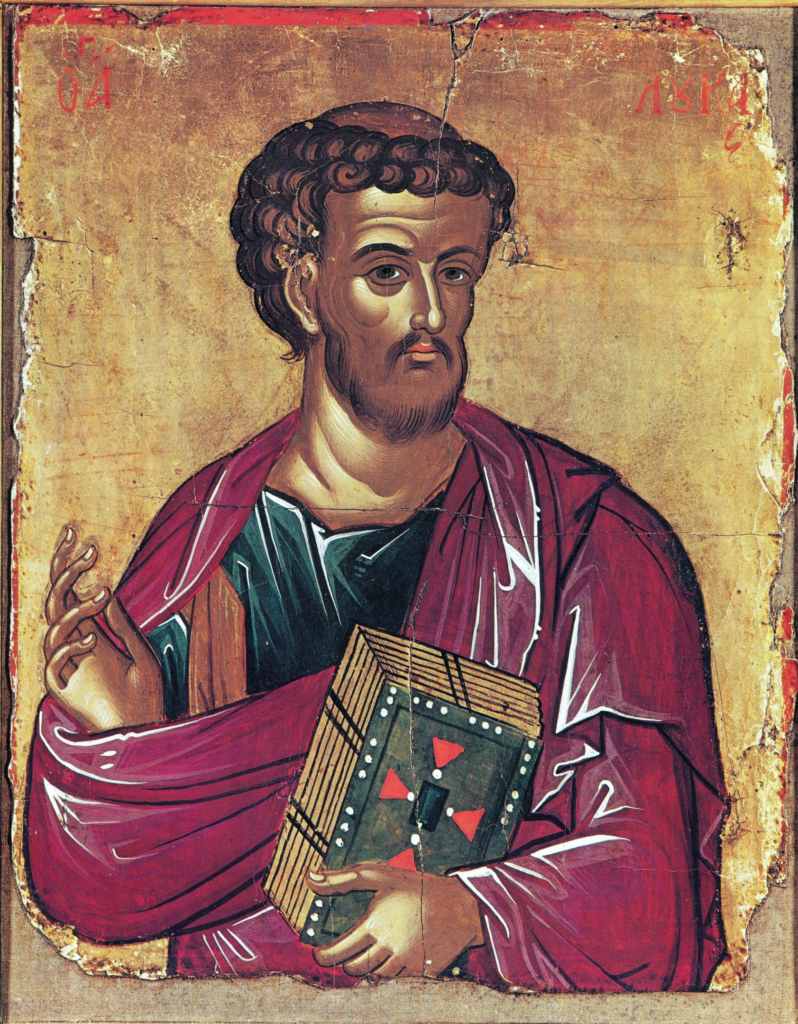
The Moderate Case: The Gospel of Luke
The relationship between John and Luke is highly debated, but there is compelling evidence to suggest John had access to either the Gospel of Lukan or the specific oral traditions Luke utilized.
While John and Mark share a basic chronological skeleton, John shares unique narrative details specifically with Luke that are entirely absent from Mark and Matthew:
- Lazarus, Mary, and Martha: Both Luke and John feature the sisters Mary and Martha. While Luke presents them in a brief domestic dispute over hospitality, John expands their role massively in the raising of their brother, Lazarus (a name that only appears elsewhere in the New Testament in one of Luke’s parables).
- Passion Narrative Details: During the arrest of Jesus, all the Synoptics mention a bystander cutting off the ear of the high priest’s servant. Only Luke and John specify that it was the right ear. Furthermore, during the trial sequences, only Luke and John mention the involvement of the high priest Annas.
- The Empty Tomb: Both Luke and John feature a narrative where Peter runs to the empty tomb to verify the claims of the women, a detail missing from Mark and Matthew.
The Weakest Case: The Gospel of Matthew
Among historical-critical scholars, it is generally agreed that the author of John did not know the Gospel of Matthew.
Matthew is the most Jewish of the Synoptic Gospels, deeply concerned with demonstrating how Jesus fulfills specific Old Testament laws and prophecies. If John had access to Matthew, it is highly unusual that he would completely ignore Matthew’s rich infancy narrative, the Sermon on the Mount, and Matthew’s specific theological vocabulary. Where John and Matthew do overlap, they are almost always sharing material that is already present in Mark.
Why Write a Fourth Gospel?
If the author of John knew Mark and Luke, why did he write a gospel that looks and sounds so completely different? Why omit the institution of the Eucharist, the exorcisms, and the parables?
Scholars suggest that John’s purpose was not to provide another biographical summary or to simply add a few missing historical details. By the time John was finalized (likely between 90 and 110 CE), the Synoptic Gospels were already circulating.
John was written as a highly advanced theological meditation upon those existing traditions. The author of John takes the brief, fast-paced actions found in Mark and expands them into massive, philosophical discourses. For example, Mark simply records that Jesus fed 5,000 people. John takes that same miracle and attaches it to a lengthy, complex theological sermon about Jesus being the “Bread of Life.”
Ultimately, John did not need to repeat the Synoptic Gospels because he expected his readers to already know them. His gospel was designed to be the theological capstone—a text that looked past the historical actions of Jesus to explain his cosmic, divine identity.
-
Beyond Abstinence: Defining the Architecture of Purity Culture
For many raised in late-20th-century evangelicalism, “abstinence” and “purity culture” are frequently treated as exact synonyms. However, while abstinence is a private historical ethical choice, purity culture is a modern, highly visible sociological construct. This article examines the architecture of the 1990s movement—from purity pledges to the courtship model—and explains why disentangling the ancient ethic from the modern subculture is the crucial first step in understanding its lasting psychological impact.
-
How Can Modern Churches Build Strong Communities Without Sacrificing Intellectual Honesty?
Can a church remain strong when its members question traditional interpretations of the Bible?Discover how shared values, meaningful relationships, and intellectual honesty can help modern Christian communities thrive without demanding agreement on every question.
-
A Voice from the Dust: How the Discovery of Ugarit Rewrote Biblical Scholarship
The accidental discovery of the ancient city of Ugarit in 1928 transformed biblical scholarship. Its texts provided crucial insights into Biblical Hebrew, uncovered the mythology of ancient Canaan, and revealed how Israelite religion developed within the wider cultural world of the ancient Near East.
-
Did Paul Believe Christians Go to Heaven? Paul’s Cosmos, Christology, and Hope of Resurrection
What did Paul think heaven was, who did he believe Jesus was, and what did he expect to happen after death? Explore Paul’s first-century Jewish apocalyptic worldview, his complex understanding of Jesus, and his expectation of bodily resurrection and the liberation of creation.
-
The Whistleblower in the Dirt: Unearthing the Socio-Economic Reality of the Talents
What’s the Parable of the Talents really about? Squadering your abilities or is there more? Let’s dig a little deeper.