
Christianity does not become intellectually stronger by pretending that its difficult questions have easy answers. It becomes stronger when Christians are willing to distinguish what they know, what they believe, what they hope, and what they do not know.
When religious traditions face difficult historical, scientific, or moral questions, the temptation is rarely to sit in the discomfort of uncertainty. The temptation is to manufacture certainty for the sake of control and pastoral comfort. To understand the danger of this impulse, we need to look at one of the most sophisticated critiques of religious authority ever written.
Ivan’s Fictional Poem
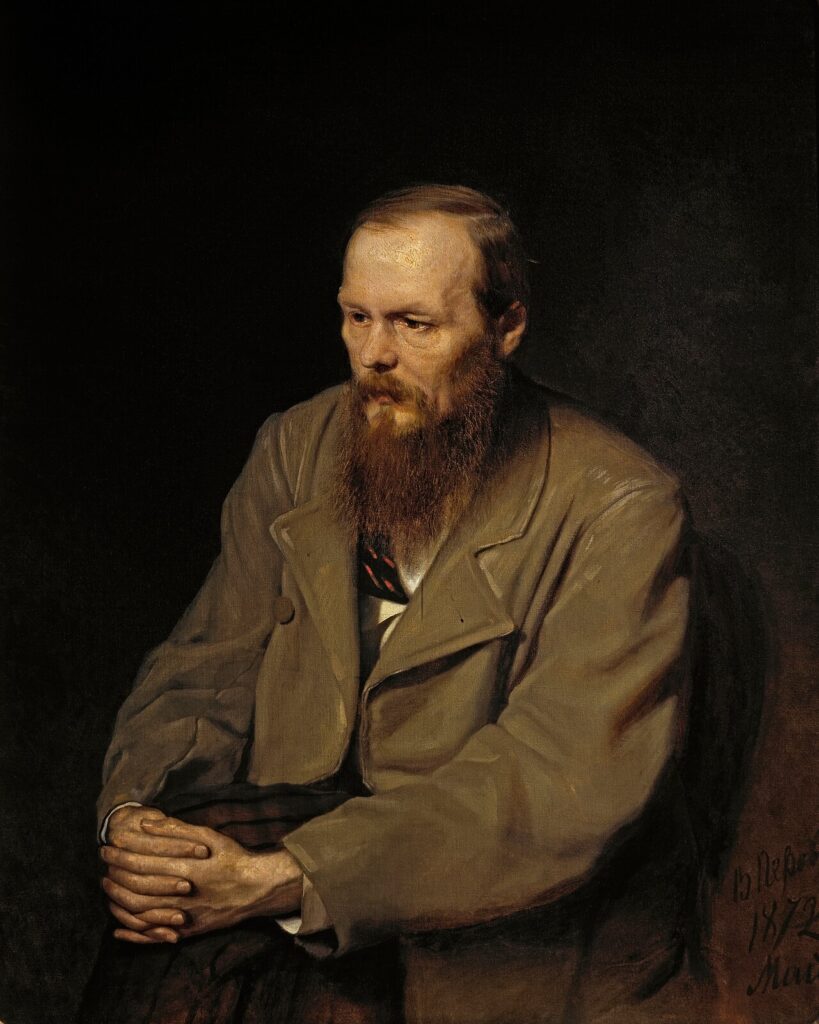
In Fyodor Dostoevsky’s The Brothers Karamazov, the reader encounters “The Grand Inquisitor.” It is crucial to note that this is not simply Dostoevsky stating his own views; it is a fictional poem composed by the intellectual skeptic Ivan Karamazov, narrated to his devout brother Alyosha.
In Ivan’s story, Christ returns to Earth during the Spanish Inquisition. He is immediately arrested by the aging Grand Inquisitor, who visits Him in His cell to explain why His return must be rejected. The Inquisitor’s argument is far more sophisticated than a simple desire for power. He genuinely believes he is mercifully relieving humanity of the unbearable burden of freedom. Human beings, the Inquisitor argues, claim to want freedom, but what they actually desire is certainty, security, and someone else to make the difficult moral decisions for them.
Bread, Miracle, and Authority
The Inquisitor builds his case around Christ’s three temptations in the wilderness. He accuses Jesus of rejecting the three mechanisms through which humanity could be made willing to surrender its freedom: bread (economic security), miraculous certainty, and authority (political power).
The Inquisitor’s great accusation is not simply, “You gave people freedom.” It is: “You gave people freedom when you could have given them certainty.” To the Inquisitor, the Church has corrected Christ’s mistake by giving humanity what Christ refused to give it: miracle, mystery, and authority—the certainty, security, and submission that make freedom unnecessary.
The Most Dangerous Religious Temptation
While Ivan’s story places the Grand Inquisitor within the historical Catholic Church, its critique reaches beyond Catholicism. The temptation to become the Inquisitor exists within every Christian tradition. What happens when Christians themselves decide that people cannot handle freedom or uncertainty?
The modern equivalents of the Inquisitor’s strategy are common. They appear when apologetics turns uncertainty into certainty, or when arguments are presented as mathematical proofs. They occur when inconvenient historical evidence is ignored, when apparent contradictions or tensions in the biblical texts are harmonized at any cost, or when sincere questions are treated as spiritual rebellion. In these moments, Christians choose the Inquisitor’s path: protecting faith by controlling the questions people are allowed to ask.
What Intellectual Honesty Actually Means
Intellectual humility does not mean believing nothing; it means refusing to claim more than we have good reason to claim. Christians need not deliberately cultivate doubt, nor assume that every religious claim is equally uncertain. Rather, confidence should be proportionate to the strength of the evidence. There are things Christians can reasonably regard as highly certain, things that are matters of interpretation, things that are matters of faith, and things about which Christianity simply does not know.
Crucially, intellectual honesty has a cost. It means allowing evidence to challenge one’s own conclusions. If a historical claim is false, Christians should be willing to abandon it. If a biblical interpretation no longer withstands serious scrutiny, it should be revised. If an apologetic argument fails, it should not be rescued by rhetorical tricks. And if a question has no convincing answer, Christians should be able to say so.
A Biblical Tradition of Wrestling
This kind of honesty is not a modern concession to secularism; it is deeply embedded within the biblical tradition. The Bible itself contains remarkably different voices wrestling with God. The Book of Job is particularly revealing. Job’s friends offer confident theological explanations for his suffering, but the narrative ultimately exposes the inadequacy of their certainty. Their mistake is not that they take God seriously; it is that they claim to know too much.
Elsewhere, Ecclesiastes questions the meaningfulness of human achievement. The Psalms are filled with anger, accusation, and feelings of divine abandonment. The prophet Habakkuk demands to know why God tolerates injustice. Biblical faith frequently involves argument with God rather than merely passive submission to religious answers. The freedom to question is woven into the text.
The Kiss
At the end of the Inquisitor’s brilliant, devastating monologue, Christ does not say a word. He simply approaches the old man and kisses him gently on the lips.
The kiss is deliberately enigmatic. It does not defeat the Inquisitor with a better syllogism. It does not solve the problem of evil or establish the truth of Christian doctrine. Instead, it dramatizes a different possibility: that the Christian response to human freedom cannot simply be reduced to control. The Inquisitor has constructed an extraordinarily sophisticated intellectual case for managing humanity, and Christ answers not with an argument, but with an act of vulnerable love.
A Christianity That Can Survive Questions
The Grand Inquisitor ultimately presents Christianity with an uncomfortable choice. We can offer people certainty at any cost, protecting faith by controlling the narrative. Or we can accept the vulnerability that comes with freedom: the freedom to question, to investigate, to doubt, to change our minds, and even to admit that we do not know.
The second path is harder. It offers no intellectual insurance policy. An intellectually honest Christianity does not need to be protected from difficult questions; it should welcome them. It does not need to turn historical complexity into apologetic slogans or doubt into sin.
The Inquisitor protects people from uncertainty. Intellectual honesty refuses to. The Inquisitor believes that human beings must be protected from the burden of freedom. Christ refuses. Perhaps that refusal remains one of Christianity’s greatest challenges: not to make faith easier by making it more certain than the evidence allows, but to have the courage to believe without pretending to know what we do not know.
-
Beyond Abstinence: Defining the Architecture of Purity Culture
For many raised in late-20th-century evangelicalism, “abstinence” and “purity culture” are frequently treated as exact synonyms. However, while abstinence is a private historical ethical choice, purity culture is a modern, highly visible sociological construct. This article examines the architecture of the 1990s movement—from purity pledges to the courtship model—and explains why disentangling the ancient ethic from the modern subculture is the crucial first step in understanding its lasting psychological impact.
-
How Can Modern Churches Build Strong Communities Without Sacrificing Intellectual Honesty?
Can a church remain strong when its members question traditional interpretations of the Bible?Discover how shared values, meaningful relationships, and intellectual honesty can help modern Christian communities thrive without demanding agreement on every question.
-
A Voice from the Dust: How the Discovery of Ugarit Rewrote Biblical Scholarship
The accidental discovery of the ancient city of Ugarit in 1928 transformed biblical scholarship. Its texts provided crucial insights into Biblical Hebrew, uncovered the mythology of ancient Canaan, and revealed how Israelite religion developed within the wider cultural world of the ancient Near East.
-
Did Paul Believe Christians Go to Heaven? Paul’s Cosmos, Christology, and Hope of Resurrection
What did Paul think heaven was, who did he believe Jesus was, and what did he expect to happen after death? Explore Paul’s first-century Jewish apocalyptic worldview, his complex understanding of Jesus, and his expectation of bodily resurrection and the liberation of creation.
-
The Whistleblower in the Dirt: Unearthing the Socio-Economic Reality of the Talents
What’s the Parable of the Talents really about? Squadering your abilities or is there more? Let’s dig a little deeper.