
The discovery of the Dead Sea Scrolls in the mid-twentieth century is widely regarded as one of the most significant archaeological finds in history. However, the subsequent decades were marred by academic hoarding and institutional delays. It was not until the intervention of Emanuel Tov, a leading authority on the textual criticism of the Hebrew and Greek Bibles, that the complete corpus was finally made available to the academic community and the public.
Tov’s administrative reforms did more than just publish ancient fragments; they catalyzed a profound paradigm shift in biblical scholarship, establishing a scientific consensus around the historical transmission of the Hebrew Bible.
The Dead Sea Scrolls Publication Crisis (1955–1989)
The initial publication rights for the tens of thousands of fragments discovered in Cave 4 at Qumran were assigned in the 1950s to an exclusive team of eight scholars under Jordanian auspices. This team operated under a strict rule of secrecy: no outside scholar was permitted to view the original manuscripts or photographs until the assigned team member officially published them.
This exclusionary model quickly created a severe bottleneck. The sheer volume of the material—over 500 heavily fragmented manuscripts—vastly exceeded the capacity of eight individuals. As decades passed, original members retired, passed away, or failed to complete their assignments, yet they refused to relinquish their exclusive publication rights. Between 1955 and 1989, the team produced only seven volumes. By the late 1980s, under the leadership of Harvard scholar John Strugnell, the project had slowed to a virtual halt.
Emanuel Tov: Breaking the Monopoly and Rescuing the Scrolls
In 1990, the Israel Antiquities Authority appointed Emanuel Tov as Editor-in-Chief of the Dead Sea Scrolls Publication Project. Tasked with rescuing an initiative that had become a renowned academic scandal, Tov fundamentally restructured the methodology and logistics of the project.
Tov’s first and most critical decision was to dismantle the academic monopoly. He expanded the editorial team from a closed group of eight to an international, interdenominational network of over one hundred scholars. He replaced the indefinite timelines of the past with strict project management, assigning specific fragments to scholars with firm, enforceable deadlines. Furthermore, the project embraced technological advancements, utilizing computer-aided reconstructions and comprehensive concordances to accelerate the deciphering of fragmented texts.
The results of this overhaul were unprecedented. Whereas the previous thirty-four years had yielded only seven volumes, Tov’s team published thirty-three volumes in the Discoveries in the Judaean Desert series over the subsequent nineteen years. By his retirement in 2009, every legible fragment had been made accessible to the global scholarly community.
The Greatest Discovery: A Paradigm Shift in Biblical Textual Criticism
From the perspective of textual criticism, the most significant discovery to emerge from the scrolls was not a singular artifact, but rather the hard, physical evidence of textual plurality.
Prior to the discovery at Qumran, the oldest complete Hebrew Bibles dated to the Middle Ages (circa 1000 CE) and reflected a highly standardized text known as the Masoretic Text. The Dead Sea Scrolls pushed the manuscript evidence back a full millennium, demonstrating that during the late Second Temple period, the biblical text was fluid and diverse. This plurality is evident in several key areas:
Validating the Septuagint Translation
For centuries, scholars debated why the Septuagint—the ancient Greek translation of the Hebrew Bible—differed so significantly from the standard Hebrew Masoretic Text. Many theorized that the Greek translators had engaged in loose paraphrasing or theological alteration. However, excavations at Qumran yielded Hebrew manuscripts (such as 4QSamuelᵃ) that aligned perfectly with the Greek Septuagint against the Masoretic Text. This provided empirical evidence that the Septuagint was a highly literal translation of a distinct Hebrew text tradition that circulated in antiquity.
The Literary Evolution of the Book of Jeremiah
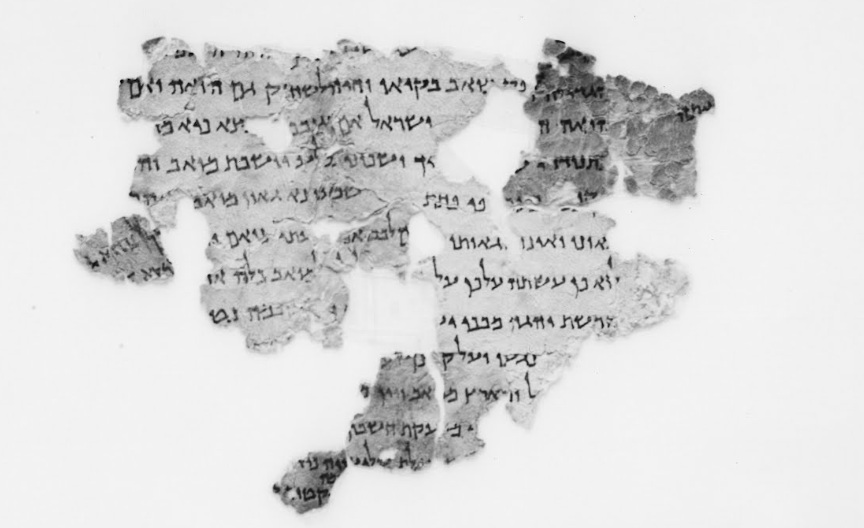
The scrolls provided unprecedented evidence that certain biblical books were still undergoing active literary editing in the centuries before the Common Era. The Book of Jeremiah serves as a primary example. The scrolls revealed two distinct versions of Jeremiah circulating simultaneously at Qumran: an earlier, shorter version (aligning with the Septuagint), and a later, expanded version roughly one-sixth larger (which became the standard Masoretic Text). This physical evidence captured the editorial process of the Hebrew Bible in motion, showing how later redactors systematically expanded and updated texts over time.
The Coexistence of Multiple Text Types at Qumran
The Qumran community did not enforce a single, unified biblical text. Their library contained a variety of textual traditions living side-by-side, including proto-Masoretic texts, pre-Samaritan texts featuring early harmonizations, and independent texts that do not align with any known tradition.
The Scientific Consensus on the Hebrew Bible’s Origins
The academic consensus that has emerged from the work of Emanuel Tov and his colleagues is clear: there was no single “original” or “authorized” text of the Hebrew Bible in the late Second Temple period.
Instead, the evidence points to a diverse, living literary tradition. Textual criticism now recognizes that the pursuit of a singular “original” autograph is scientifically flawed. The discipline is now equally focused on understanding the different literary editions that existed in antiquity and documenting how scribes and redactors actively participated in shaping the texts that would eventually form the biblical canon.
-
Beyond Abstinence: Defining the Architecture of Purity Culture
For many raised in late-20th-century evangelicalism, “abstinence” and “purity culture” are frequently treated as exact synonyms. However, while abstinence is a private historical ethical choice, purity culture is a modern, highly visible sociological construct. This article examines the architecture of the 1990s movement—from purity pledges to the courtship model—and explains why disentangling the ancient ethic from the modern subculture is the crucial first step in understanding its lasting psychological impact.
-
How Can Modern Churches Build Strong Communities Without Sacrificing Intellectual Honesty?
Can a church remain strong when its members question traditional interpretations of the Bible?Discover how shared values, meaningful relationships, and intellectual honesty can help modern Christian communities thrive without demanding agreement on every question.
-
A Voice from the Dust: How the Discovery of Ugarit Rewrote Biblical Scholarship
The accidental discovery of the ancient city of Ugarit in 1928 transformed biblical scholarship. Its texts provided crucial insights into Biblical Hebrew, uncovered the mythology of ancient Canaan, and revealed how Israelite religion developed within the wider cultural world of the ancient Near East.
-
Did Paul Believe Christians Go to Heaven? Paul’s Cosmos, Christology, and Hope of Resurrection
What did Paul think heaven was, who did he believe Jesus was, and what did he expect to happen after death? Explore Paul’s first-century Jewish apocalyptic worldview, his complex understanding of Jesus, and his expectation of bodily resurrection and the liberation of creation.
-
The Whistleblower in the Dirt: Unearthing the Socio-Economic Reality of the Talents
What’s the Parable of the Talents really about? Squadering your abilities or is there more? Let’s dig a little deeper.