
When archaeologists first unearthed the Amarna Letters in the late 19th century, the biblical scholarship world was sent into a frenzy. These 14th-century BCE clay tablets, discovered in Egypt, contained frantic pleas from Canaanite vassal kings to the Egyptian Pharaoh. The local rulers were begging for military support against a disruptive, marauding group of people ravaging the countryside.
The texts called these troublemakers the Habiru (or ‘Apiru).
To many early historians and theologians, the phonetic similarity was too perfect to ignore. Were the Habiru actually the biblical Hebrews? Was this the Egyptian administrative record of Joshua’s conquest of Canaan?
More than a century of rigorous historical, linguistic, and archaeological research has since dismantled that simplistic narrative. The truth about the ‘Apiru is far more complex, fascinating, and sociologically profound than a direct one-to-one ethnic match. To understand the ‘Apiru is to unlock the gritty, historical reality of the ancient Near East and uncover the humble, marginalized origins of the people who would eventually write the Hebrew Bible.
What Were the ‘Apiru? A Social Class, Not an Ethnicity
There is a broad consensus among modern historians and Assyriologists: the term ‘Apiru does not designate an ethnic group, a tribe, or a language. Instead, it describes a specific sociological category.
In the highly stratified, deeply hierarchical societies of the Bronze Age Near East, you belonged to your city-state, your king, and your land. The ‘Apiru were the people who fell out of this system. Scholars like Eva von Dassow have demonstrated that the term was a fluid social designation for individuals who were uprooted from their original political and social frameworks.
People did not call themselves ‘Apiru; they were labeled ‘Apiru by the established authorities. You could become an ‘Apiru if you fled your city to escape crushing debt, famine, heavy taxation, or military conscription. Stripped of their legal status and severed from their ancestral lands, these refugees and outcasts fled to the geographical margins—the wilderness, the highlands, or the borders between warring city-states.
The ‘Apiru Cycle: From Outcast to Warlord
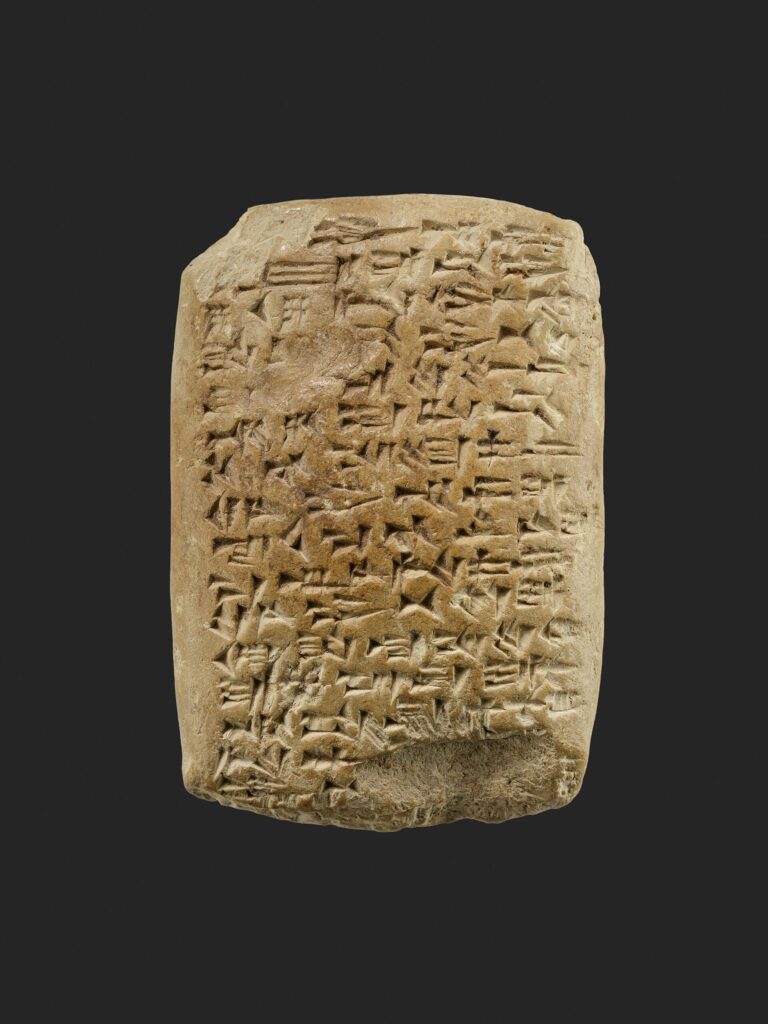
Once displaced, these individuals had to survive. They often banded together under the leadership of a charismatic local warlord or strongman, creating what scholars refer to as the “‘Apiru cycle.”
Operating outside the bounds of ordered civilization, ‘Apiru bands lived as semi-nomads, bandits, or mercenaries. Their historical footprints are scattered across centuries of ancient Near Eastern texts:
- The Mari Archives (18th Century BCE): In these early texts from Syria, being an ‘Apiru was almost an officially recognized refugee status. They frequently served as hired fighters, shifting their loyalties from one rival king to another.
- Nuzi and Tikunani (15th and 16th Centuries BCE): Records from these Hurrian cities show ‘Apiru individuals—both men and women of various ethnic backgrounds—entering into indentured servitude contracts with wealthy landowners simply to avoid starvation, or serving as state militia.
- The Amarna Letters (14th Century BCE): This is where the ‘Apiru are most infamous. In Canaan, ambitious local warlords, such as King Labayu of Shechem, were accused of collaborating with ‘Apiru groups to destabilize rivals and conquer territory. In these Egyptian diplomatic texts, the term is highly derogatory, used as a label for rebels, raiders, or destabilizing outsiders.
Ultimately, the ‘Apiru cycle usually ended in one of two ways: the band was wiped out by a standing army, or they grew powerful enough to conquer a territory and integrate back into the established political order, ceasing to be ‘Apiru.
The Great Debate: Are the ‘Apiru the Hebrews?
If the ‘Apiru were a multi-ethnic social class of outcasts across the ancient Near East, what is their connection to the biblical Hebrews (‘Ivri)?
Initially, epigraphers and linguists were deeply divided. The late Anson Rainey, a giant in the field of historical geography, vociferously denied any linguistic connection between the Akkadian cuneiform term Habiru (or West Semitic ‘Apiru) and the biblical word ‘Ivri. Rainey argued the phonetic shifts did not align perfectly.
However, many modern scholars have forged a compelling synthesis. Historian Daniel Fleming has pointed out that both terms likely derive from a shared West Semitic root meaning “to depart” or “to cross over.” In this light, both the ‘Apiru and the early Hebrews were “the departed ones”—people who had left their established communities.
The prominent Israeli historian Nadav Na’aman has mapped out how a social designation likely evolved into an ethnic identity. In the oldest layers of the Hebrew Bible, the term “Hebrew” is rarely used by the Israelites to describe themselves. Instead, it is almost exclusively used by foreigners (like Egyptians or Philistines) as a derogatory slur, or it is used to describe Israelites who are in a state of servitude, exile, or marginalization.
The scholarly consensus suggests that the early Israelites were historically part of the broader ‘Apiru phenomenon. The term “Hebrew” began as a social marker in the Levant for marginalized, displaced people. Over centuries, as these highlanders settled down and formed a distinct nation-state (Israel), the old sociological slur gradually transformed into an ethnic identifier.
Biblical ‘Apiru: Echoes in the Hebrew Bible
While the specific word ‘Apiru does not appear in the Bible, the sociological phenomenon is stamped all over the text. Several of ancient Israel’s greatest early heroes closely mirror the sociological pattern associated with the ‘Apiru cycle.
Jephthah the Outcast
In the Book of Judges (Chapter 11), Jephthah is driven out of his home by his half-brothers because he is the son of a prostitute. Stripped of his inheritance, he flees to the land of Tob, where he gathers a band of “worthless fellows” (outcasts) around him. He lives as a bandit leader until the elders of his homeland, desperate for military help against the Ammonites, beg him to return as their commander. This is a striking example of the ‘Apiru cycle.
King David the Mercenary
One of the clearest biblical parallels to the ‘Apiru pattern is the rise of King David. Before he was a king, David was a fugitive fleeing the wrath of King Saul. First Samuel 22 records that David fled to the Cave of Adullam, where “everyone who was in distress, and everyone who was in debt, and everyone who was discontented gathered to him; and he became commander over them.”
David’s band of 400 marginalized men roamed the wilderness, demanding protection provisions from wealthy landowners (like Nabal in 1 Samuel 25) and eventually selling their services as armed retainers to the Philistine King of Gath. David operated much like the ‘Apiru bands that troubled the Canaanite kings in the Amarna Letters. Only when he consolidated power and conquered Jerusalem did his ‘Apiru status effectively end.
Synthesizing the Origins of Israel
Modern archaeological theory, championed by scholars like William Dever and Israel Finkelstein, aligns with this sociological data. Decades of excavations have shown that the sudden explosion of small, unfortified settlements in the central highlands of Canaan around 1200 BCE was likely not the result of a massive foreign invasion.
Instead, as the Late Bronze Age economy collapsed and the Egyptian empire withdrew its grip on Canaan, the oppressive city-state system broke down. Thousands of disenfranchised Canaanite peasants, debtors, pastoral nomads (like the Shasu), and ‘Apiru bands fled to the empty highlands to start over.
Free from the heavy taxation and elite control of the valley cities, this mixed multitude of marginalized people forged a comparatively egalitarian highland society. Over time, bound together by the emerging centrality of Yahweh worship and a shared cultural memory of liberation from systemic oppression (which later crystallized into the Exodus narrative), these highland populations—among them groups resembling the broader ‘Apiru phenomenon—eventually became early Israel.
Conclusion: From Slur to Sacred Identity
The story of the ‘Apiru offers a different historical lens through which to read the Hebrew Bible. It reveals that the foundations of ancient Israel were likely not built by aristocratic conquerors or elite empires. The ancestors of the biblical authors were the marginalized of the ancient world: debtors, migrants, refugees, and displaced mercenaries.
As this marginalized group transitioned into an established kingdom, their scribes and theologians engaged in a process of cultural and theological redefinition. They took a historical memory of social marginalization—being wandering, landless ‘Apiru—and recontextualized it. In the hands of later biblical writers, “crossing over” was no longer just about fleeing debt or conscription; it became the story of Abraham crossing the Euphrates in response to a divine calling. A term with origins in social displacement was transformed into a testament of divine election, securing its place in world history.
-
Beyond Abstinence: Defining the Architecture of Purity Culture
For many raised in late-20th-century evangelicalism, “abstinence” and “purity culture” are frequently treated as exact synonyms. However, while abstinence is a private historical ethical choice, purity culture is a modern, highly visible sociological construct. This article examines the architecture of the 1990s movement—from purity pledges to the courtship model—and explains why disentangling the ancient ethic from the modern subculture is the crucial first step in understanding its lasting psychological impact.
-
How Can Modern Churches Build Strong Communities Without Sacrificing Intellectual Honesty?
Can a church remain strong when its members question traditional interpretations of the Bible?Discover how shared values, meaningful relationships, and intellectual honesty can help modern Christian communities thrive without demanding agreement on every question.
-
A Voice from the Dust: How the Discovery of Ugarit Rewrote Biblical Scholarship
The accidental discovery of the ancient city of Ugarit in 1928 transformed biblical scholarship. Its texts provided crucial insights into Biblical Hebrew, uncovered the mythology of ancient Canaan, and revealed how Israelite religion developed within the wider cultural world of the ancient Near East.
-
Did Paul Believe Christians Go to Heaven? Paul’s Cosmos, Christology, and Hope of Resurrection
What did Paul think heaven was, who did he believe Jesus was, and what did he expect to happen after death? Explore Paul’s first-century Jewish apocalyptic worldview, his complex understanding of Jesus, and his expectation of bodily resurrection and the liberation of creation.
-
The Whistleblower in the Dirt: Unearthing the Socio-Economic Reality of the Talents
What’s the Parable of the Talents really about? Squadering your abilities or is there more? Let’s dig a little deeper.