
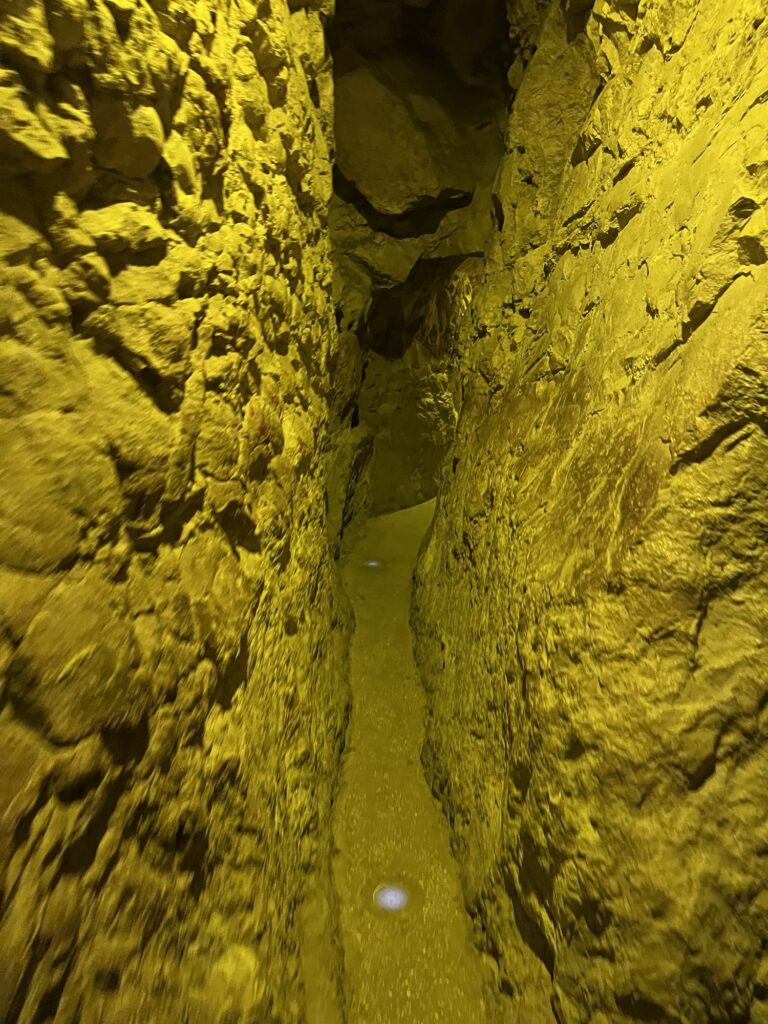
To understand the historical reality of the ancient Near East, we often have to look below the theological surface of the biblical text. Sometimes, quite literally. Deep beneath the modern streets of Jerusalem lies one of the most astonishing engineering feats of the ancient world: a 533-meter subterranean aqueduct carved entirely through solid bedrock.
Known as Hezekiah’s Tunnel, this winding passageway is not a monument to royal vanity. It is a monument to sheer geopolitical panic. It is the physical scar left behind by a city bracing for the arrival of the most ruthless military machine the ancient world had ever seen.
The Problem: Water and Warfare
The year was 701 BCE. The Neo-Assyrian Empire, commanded by King Sennacherib, was systematically crushing a regional rebellion in the Levant. Having already destroyed dozens of fortified Judean cities (including the major stronghold of Lachish), the Assyrian army turned its sights on the capital: Jerusalem.
King Hezekiah of Judah knew a siege was imminent. A walled city can stockpile grain and reinforce its gates, but its ultimate vulnerability is always water. Jerusalem’s primary water source, the Gihon Spring, was located at the bottom of the Kidron Valley, just outside the city’s defensive walls. If the Assyrians laid siege to the city, they would have unlimited access to fresh water, while the trapped Judeans would quickly die of thirst.
According to 2 Chronicles 32, Hezekiah executed a desperate, brilliant tactical maneuver: “Why should the kings of Assyria come and find plenty of water?” he asked. He ordered his engineers to completely conceal the Gihon Spring from the outside and redirect its water deep underground, safely inside the city walls, to the Pool of Siloam.
The Engineering Miracle
Digging the tunnel was a race against time. To speed up the process, two teams of laborers started digging from opposite ends—one team starting at the spring, the other at the pool.
Even with modern GPS and surveying equipment, having two teams tunnel blindly through solid limestone and meet perfectly in the middle is a difficult task. The ancient Judeans managed to do it using only hand-held iron pickaxes and oil lamps. The tunnel is not a straight line; it follows an S-shaped curve, likely navigating around natural fissures in the rock or avoiding tombs from the surface above. The gradient is also a masterpiece of ancient engineering: the elevation drops a mere 30 centimeters over the entire 533-meter length, allowing the water to flow in a gentle, continuous stream.
The Siloam Inscription: A Voice from the Rock
For thousands of years, the tunnel kept its greatest secret hidden in the dark. In 1880, a teenage boy was wading through the water near the southern exit and noticed strange carvings on the rock wall.
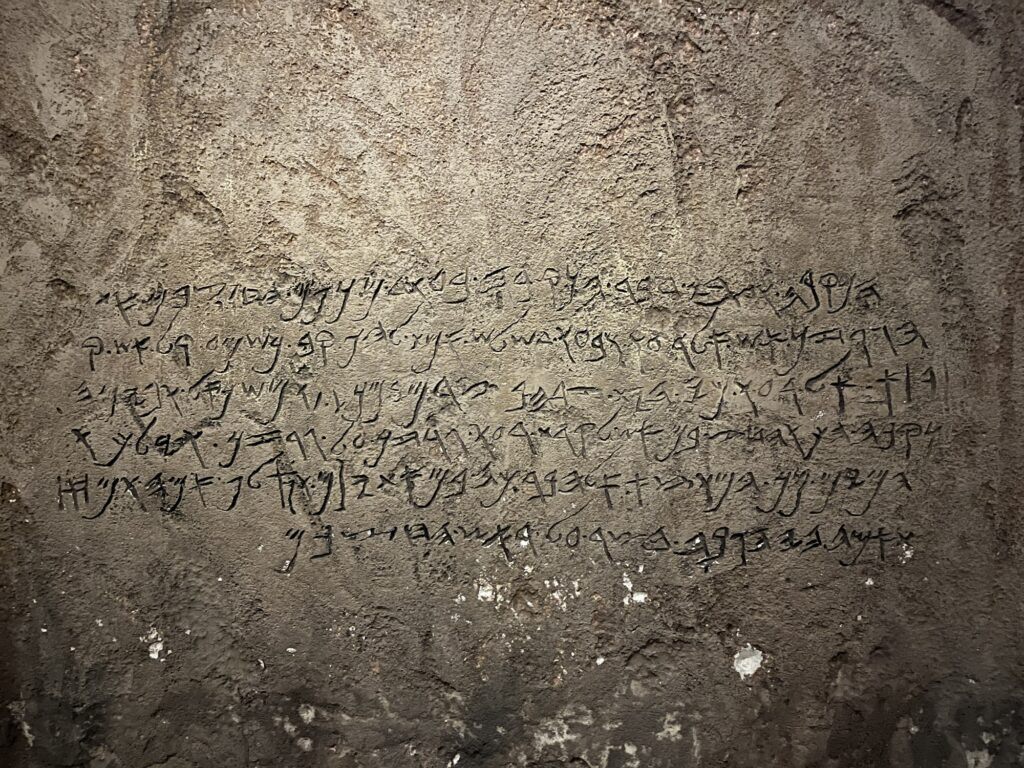
This carving became known as the Siloam Inscription. Written in Paleo-Hebrew (the ancient script used before the Babylonian exile), the plaque is unique in the ancient Near East. Most ancient inscriptions are royal propaganda, boasting of a king’s military conquests or divine favor. The Siloam Inscription, however, doesn’t even mention King Hezekiah. Instead, it is an anonymous memorial dedicated to the sheer emotional relief of the laborers themselves.
The text vividly describes the dramatic final moments of the excavation:
“…While the excavators were still lifting up their pickaxes, each toward his fellow, and while there were still three cubits to be excavated, there was heard the voice of a man calling to his fellow… And on the day they completed the breakthrough, the excavators struck each other, pickax against pickax, and the water flowed from the spring to the pool…”
It is a raw, historical snapshot of ancient workers hearing the muffled shouts of their comrades through the rock, striking the final blow, and watching the water rush through.
Where is the Plaque Today?
Unfortunately, the original inscription is no longer in the tunnel. In 1890, unknown individuals secretly hacked the inscription out of the rock wall, breaking it into pieces in the process. The Ottoman authorities—who ruled Jerusalem at the time—recovered the fragments and transferred them to the imperial capital.
Today, the original Siloam Inscription resides in the Istanbul Archaeology Museums in Turkey. It is however, not on display there. If you visit Hezekiah’s Tunnel in Jerusalem today, you will see a replica mounted in the exact spot where the original was carved.
Walking Through History
Can you still visit the tunnel? Absolutely. It is one of the most immersive archaeological experiences in the world. Located in the City of David archaeological park, visitors can descend into the ancient shaft and wade through the entire 533-meter length of Hezekiah’s Tunnel.
The water flows year-round, usually reaching knee-deep, and the tunnel is pitch black (visitors must bring flashlights). As you run your hands along the walls, you can still feel the jagged, directional marks left by the iron pickaxes over 2,700 years ago. Midway through, you can even see the jagged point where the ceilings change height—the exact spot where the two frantic teams finally broke through to meet each other, ensuring the survival of Jerusalem.
-
Beyond Abstinence: Defining the Architecture of Purity Culture
For many raised in late-20th-century evangelicalism, “abstinence” and “purity culture” are frequently treated as exact synonyms. However, while abstinence is a private historical ethical choice, purity culture is a modern, highly visible sociological construct. This article examines the architecture of the 1990s movement—from purity pledges to the courtship model—and explains why disentangling the ancient ethic from the modern subculture is the crucial first step in understanding its lasting psychological impact.
-
How Can Modern Churches Build Strong Communities Without Sacrificing Intellectual Honesty?
Can a church remain strong when its members question traditional interpretations of the Bible?Discover how shared values, meaningful relationships, and intellectual honesty can help modern Christian communities thrive without demanding agreement on every question.
-
A Voice from the Dust: How the Discovery of Ugarit Rewrote Biblical Scholarship
The accidental discovery of the ancient city of Ugarit in 1928 transformed biblical scholarship. Its texts provided crucial insights into Biblical Hebrew, uncovered the mythology of ancient Canaan, and revealed how Israelite religion developed within the wider cultural world of the ancient Near East.
-
Did Paul Believe Christians Go to Heaven? Paul’s Cosmos, Christology, and Hope of Resurrection
What did Paul think heaven was, who did he believe Jesus was, and what did he expect to happen after death? Explore Paul’s first-century Jewish apocalyptic worldview, his complex understanding of Jesus, and his expectation of bodily resurrection and the liberation of creation.
-
The Whistleblower in the Dirt: Unearthing the Socio-Economic Reality of the Talents
What’s the Parable of the Talents really about? Squadering your abilities or is there more? Let’s dig a little deeper.